Dog Walking Tool Selector
Answer these questions to find the best walking tool for your situation. This guide considers both traditional and modern approaches.
What is your experience level with dog training?
How does your dog behave on walks?
What is your preferred training philosophy?
Have you tried other solutions first?
Your Recommended Tool
There is a moment in almost every dog owner’s journey where the leash feels like it’s made of lead. You pull, your dog pulls harder, and you end up walking backward down the sidewalk while neighbors stare. It’s frustrating, embarrassing, and exhausting. When that happens, many people turn to Cesar Millan, the so-called "Dog Whisperer," for answers. But when you ask him about one of the most controversial tools in the dog training world-the prong collar-his answer might surprise you. It’s not a simple yes or no. It’s a nuanced stance rooted in his philosophy of energy, movement, and calm-assertive leadership.
The Core Philosophy: Energy Over Equipment
To understand what Cesar Millan says about prong collars, you first have to understand how he views dog behavior. Millan doesn’t see dogs as problem-solvers; he sees them as pack animals who need clear leadership. His entire methodology rests on three pillars: exercise, discipline, and affection-in that specific order. If a dog isn’t physically tired and mentally settled, no amount of verbal commands or fancy gear will fix the underlying issue.
This is why Millan rarely focuses on the tool itself. For him, a leash is just an extension of your arm, and a collar is just a point of contact. The real work happens in your body language and your emotional state. If you are anxious, angry, or inconsistent, even the gentlest harness will fail because the dog senses your lack of confidence. Conversely, if you are calm and assertive, you can manage a strong puller with minimal equipment. This perspective shifts the blame from the dog’s "bad behavior" to the owner’s inability to provide structure.
Does Cesar Millan Use Prong Collars?
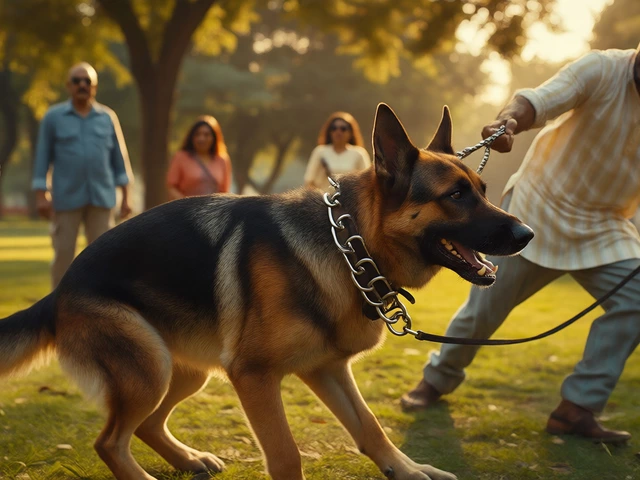
Yes, he does. But there’s a catch. Millan has used prong collars (also known as pinch collars) extensively throughout his career, particularly in his early years working with high-drive breeds like German Shepherds and Rottweilers. However, he never presents them as a magic bullet. In his books and television appearances, he often demonstrates their use only after establishing that the owner needs immediate physical feedback to stop dangerous pulling.
The key distinction Millan makes is between punishment and correction. He argues that a properly fitted prong collar delivers a sharp, brief sensation that mimics the pressure of another dog’s teeth on the skin-a natural communication method in canine packs. It’s not meant to hurt; it’s meant to interrupt. When the dog stops pulling, the pressure disappears instantly. This creates a clear association: pulling equals discomfort, stopping equals relief. Millan emphasizes that this must be paired with consistent leadership, or the tool becomes meaningless.
The Conditions for Using Aversive Tools
Millan’s stance on prong collars comes with strict conditions. He doesn’t believe they should be the first line of defense. Before reaching for any aversive tool, he insists owners try positive reinforcement, redirection, and basic obedience drills. If those fail, and the dog poses a risk to itself or others due to excessive pulling, then a prong collar may be appropriate-but only under specific circumstances.
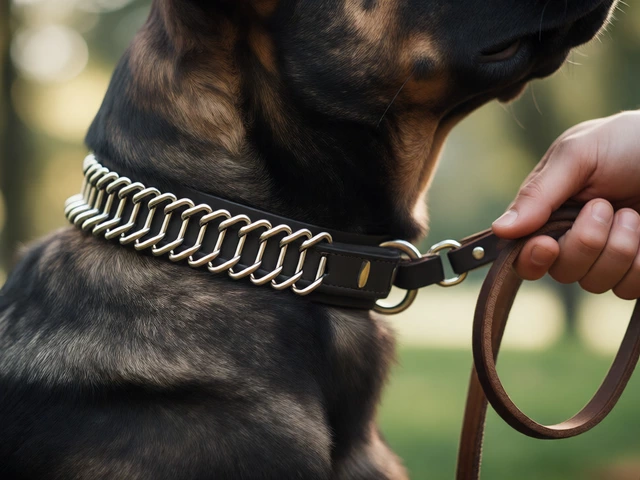
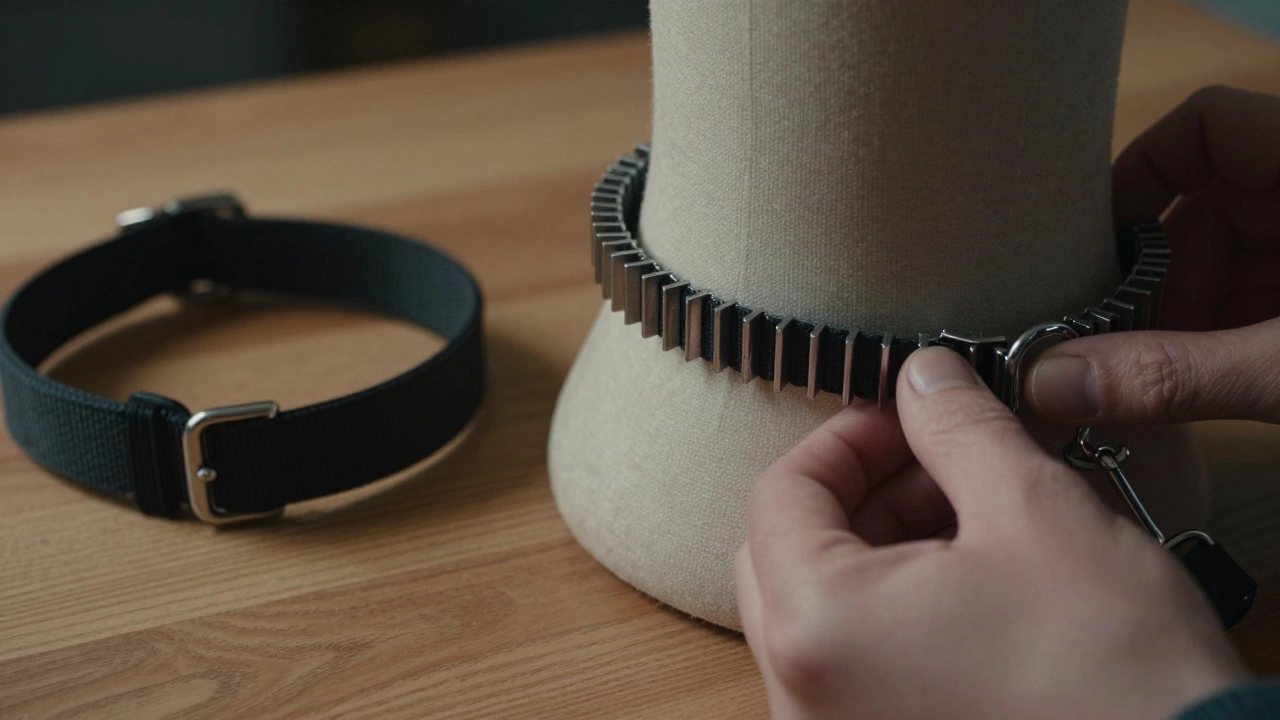
- Proper Fit Is Non-Negotiable: The collar must sit high on the neck, just behind the ears, not low on the throat. If it’s too loose, it won’t work. If it’s too tight, it causes injury. Millan often adjusts collars himself to ensure the prongs don’t dig into the skin but still provide tactile feedback.
- Never Left On Unsupervised: Like choke chains or slip leads, prong collars are training aids, not everyday accessories. Leaving one on while the dog is unsupervised can lead to entanglement, choking, or accidental self-inflicted injuries.
- Used With Calm Energy: The owner must remain emotionally neutral. Yelling or jerking the leash while using a prong collar amplifies fear and aggression, which defeats the purpose of creating calm submission.
These rules highlight Millan’s belief that tools amplify the user’s intent. A skilled trainer uses a prong collar to teach boundaries. An unskilled owner uses it to vent frustration. The difference lies in knowledge, patience, and self-control.
Why So Many Experts Disagree With Him
If you browse modern dog training forums or consult certified professional dog trainers (CPDTs), you’ll hear a very different story. Many experts strongly oppose the use of prong collars, citing research that shows aversive methods can increase stress hormones, suppress warning signs before bites, and damage the human-animal bond. Organizations like the American Veterinary Society of Animal Behavior (AVSAB) recommend against aversive tools, favoring force-free alternatives instead.
So why does Millan stick with his approach? Partly because he works with severe cases that haven’t responded to other methods. He often deals with dogs that have been through multiple failed training attempts, where standard positive reinforcement hasn’t yielded results. In these scenarios, he argues that temporary use of a prong collar can break the cycle of dominance and allow the dog to relax enough to learn.
But here’s the crux of the debate: Millan’s methods were developed decades ago, based on pack dynamics theories that modern ethology has largely debunked. Dogs aren’t wolves, and they don’t view humans as alpha competitors. They’re social companions who thrive on trust and cooperation. Critics argue that relying on pain-based corrections ignores this fundamental shift in understanding canine psychology.
Alternatives That Align With Modern Science
If you’re hesitant about prong collars-or want to avoid them entirely-there are effective, science-backed alternatives that don’t rely on discomfort. These options focus on rewarding desired behaviors rather than punishing unwanted ones.
| Tool Type | How It Works | Best For | Potential Risks |
|---|---|---|---|
| Prong Collar | Applies pressure via metal prongs when tension increases | High-drive dogs, experienced handlers | Pain, fear, suppressed warning signals |
| Front-Clip Harness | Redirects forward motion by clipping leash to chest ring | Beginners, small-to-medium dogs | Can encourage leaning if misused |
| Head Halter | Controls direction by guiding the head, similar to horse bridles | Strong pullers, large breeds | Neck strain if jerked abruptly |
| Standard Flat Collar + Clicker | Rewards loose-leash walking with treats/clicks | Motivated dogs, long-term learning | Requires consistency and time |
Notice how none of these alternatives require inflicting discomfort. Instead, they leverage mechanics and motivation to guide behavior. Front-clip harnesses, for example, make pulling ineffective by turning the dog toward you. Head halters give precise control without choking. And clicker training builds a cooperative relationship where the dog chooses to walk nicely because it benefits them.

What Should You Do As a Dog Owner?
Here’s the honest truth: there’s no one-size-fits-all solution. If your dog gently trots beside you, great. Keep doing what you’re doing. If your dog drags you across parking lots, you need a strategy-and that strategy depends on your skill level, your dog’s temperament, and your willingness to invest time.
Before buying any tool, ask yourself:
- Have I ruled out medical issues? Pain or thyroid problems can cause sudden behavioral changes.
- Am I providing enough mental and physical stimulation? A bored dog is a destructive dog.
- Do I understand how to use this tool correctly? Misuse turns any device into a weapon.
- Is my goal short-term compliance or long-term trust?
If you’re considering a prong collar because you’ve tried everything else, proceed with caution. Watch videos from reputable sources, read manuals thoroughly, and ideally, work with a certified trainer who can demonstrate proper technique. Never buy one online without trying it on your dog first. Fit matters more than brand name.
And remember: tools change over time. What worked for Millan in 2004 may not align with today’s best practices. The field of animal behavior evolves constantly, driven by new studies and deeper insights into canine cognition. Staying informed means questioning old assumptions-even those held by famous figures.
Final Thoughts: Leadership Without Fear
Cesar Millan’s legacy isn’t defined by whether he uses prong collars. It’s defined by his emphasis on calm, confident leadership. Whether you choose a prong collar, a front-clip harness, or nothing at all, the core principle remains the same: your dog looks to you for guidance. If you project uncertainty, they’ll fill the void with anxiety. If you project clarity, they’ll follow.
The best training outcomes come from combining structure with kindness. Discipline teaches boundaries. Affection builds connection. Exercise releases pent-up energy. When all three elements are present, most behavioral issues resolve naturally. Tools become secondary. Your presence becomes primary.
So next time you feel frustrated by your dog’s pulling, take a breath. Step back. Ask yourself what your dog really needs-not just right now, but in the long run. Then act accordingly. Because true leadership isn’t about controlling your dog. It’s about earning their respect.
Does Cesar Millan recommend prong collars for all dogs?
No. Millan recommends prong collars only for specific cases where other methods have failed and the dog exhibits extreme pulling or aggression. He stresses proper fit, supervision, and pairing the tool with calm-assertive leadership.
Are prong collars considered cruel by veterinarians?
Many veterinary organizations, including AVSAB, advise against aversive tools like prong collars due to potential physical harm and psychological stress. They prefer force-free methods that build trust rather than fear.
Can I use a prong collar if I’m a beginner?
It’s not recommended. Beginners often misuse prong collars, leading to injury or worsened behavior. Start with front-clip harnesses or head halters, which are safer and easier to master. Seek professional help before escalating to aversive tools.
What’s the difference between a prong collar and a choke chain?
A prong collar applies distributed pressure around the neck via metal tips, mimicking bite pressure. A choke chain tightens uniformly around the trachea, risking airway damage. Both are aversive, but prong collars are generally less dangerous if used correctly.
Why do some trainers still support Cesar Millan’s methods?
Supporters value Millan’s focus on calm energy and structured leadership. They argue his methods address root causes of behavior rather than symptoms. However, critics note his reliance on outdated pack theory and aversive techniques contradicts modern ethical standards.