Airline Pet Carrier Fit Checker
Carrier & Pet Details
Measure including handles, wheels, and latches.
Combined weight of pet + carrier.
Analysis Result
Enter your details to see if your pet can fly in the cabin.
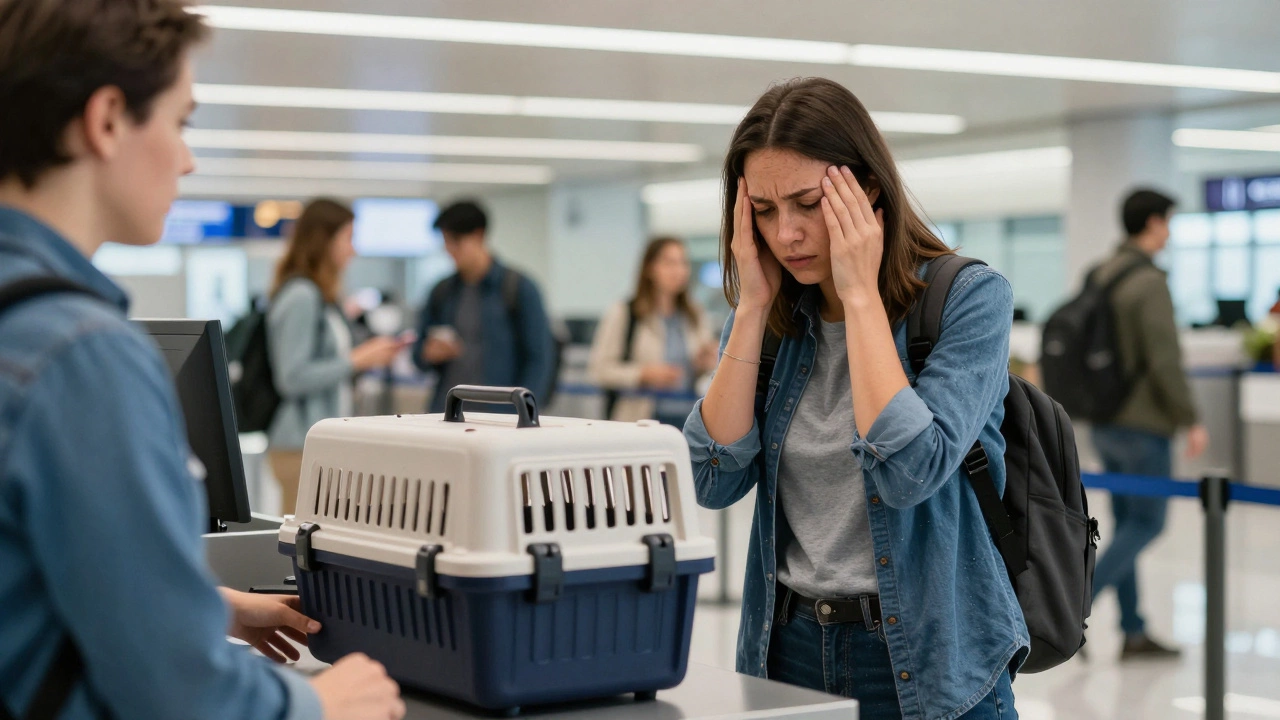
You pack your bags, print your boarding pass, and head to the gate. But then you hit a wall at the check-in counter. The agent looks at your carrier, shakes their head, and says it doesn't fit under the seat. This is the nightmare scenario for any pet owner planning a flight. You aren't just fighting for space; you are fighting against strict, often confusing airline regulations that determine whether your furry friend travels with you or gets shipped as cargo.
The short answer to "what size pet can fit in an airline cabin" isn't a single number. It depends on the specific dimensions of the airline's under-seat space, the type of carrier you use, and increasingly, the breed of your animal. However, there are general industry standards that apply to most major carriers. If you want to avoid last-minute surprises, you need to understand these limits before you book.
Standard Carrier Dimensions for Airline Cabins
Most airlines require pets to stay in an approved carrier under the seat in front of you. They do not allow pets on your lap during takeoff or landing due to safety regulations. Because legroom varies by aircraft and class of service, airlines set maximum dimensions for these carriers.
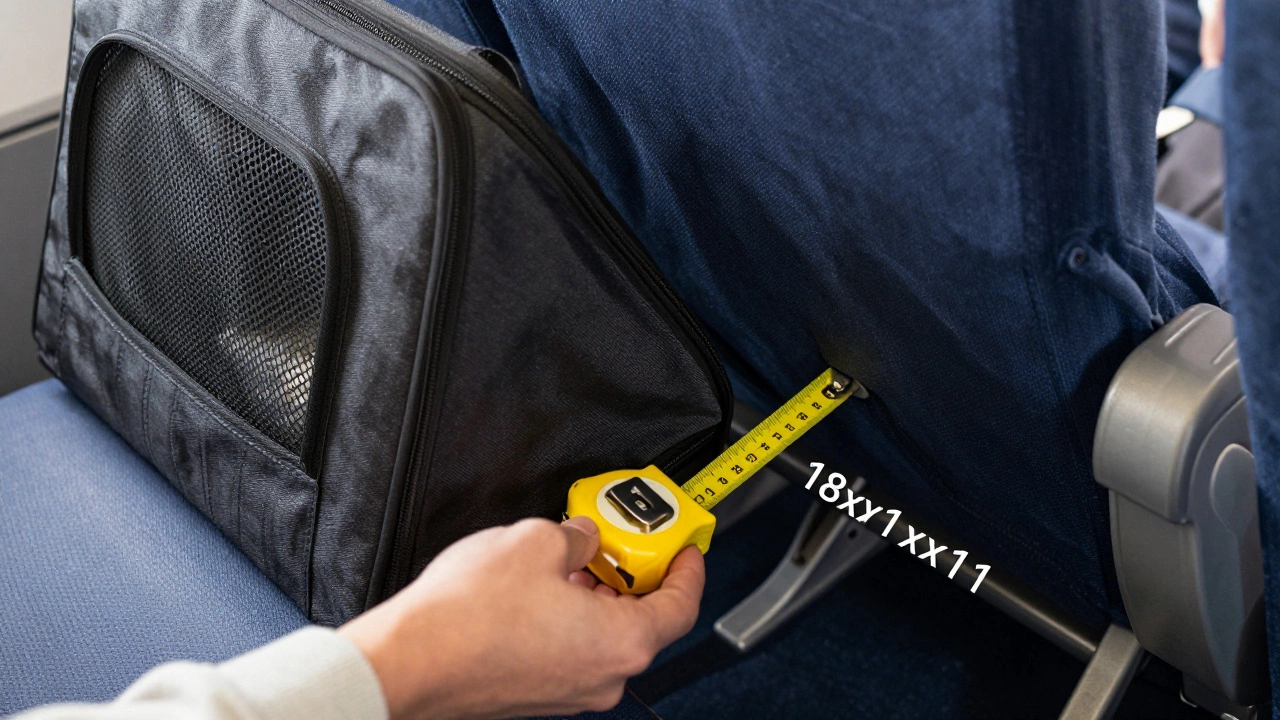
The most common standard across major US and international carriers (like Delta, American, United, and Lufthansa) hovers around 18 x 11 x 11 inches (45 x 28 x 28 cm). Some budget airlines or smaller regional jets might have tighter restrictions, closer to 17 x 10 x 10 inches. Conversely, some airlines with newer wide-body aircraft might allow slightly larger soft-sided carriers, up to 19 x 13 x 10 inches, provided they can compress into the space.
| Airline Type | Max Length (in) | Max Width (in) | Max Height (in) | Notes |
|---|---|---|---|---|
| Major US Carriers | 18 | 11 | 11 | Must fit under seat without blocking aisle |
| Budget/Regional | 17 | 10 | 10 | Tighter spaces on older planes |
| International Premium | 19 | 13 | 10 | Often requires soft-sided carrier |
It is crucial to measure your carrier with the wheels included if it has them. Airlines measure from the outermost points. A hard-sided plastic crate that measures 18 inches internally might be 20 inches externally due to the shell thickness and latches. That extra two inches will get you denied boarding. Soft-sided carriers are generally safer bets because they can be squished slightly to fit into tight gaps, whereas rigid crates are unforgiving.
Weight Limits: Is Your Pet Too Heavy?
Size isn't the only factor. Weight matters too, both for the carrier's structural integrity and for the airline's liability policies. Most airlines cap the combined weight of the pet and the carrier at 15 to 20 pounds (approximately 7 to 9 kg). This means if your carrier weighs 4 pounds, your pet needs to weigh no more than 11-16 pounds to stay within the limit.
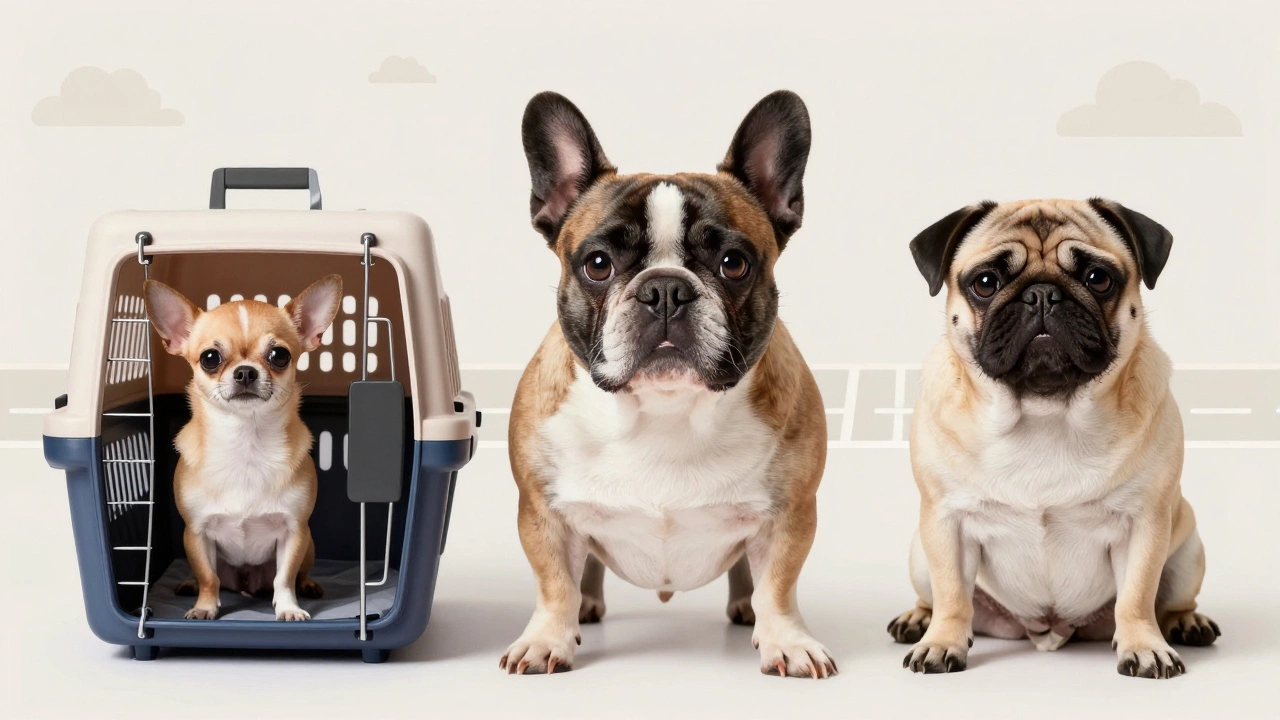
Why does this matter? If your pet is heavy but small (think a dense French Bulldog or a muscular Corgi), they might fit in the box but exceed the weight policy. Conversely, a large, fluffy Poodle might look big but weigh very little. Always check the specific weight policy of your airline. Exceeding the limit usually forces you to pay for checked baggage fees for the pet, which can run $100-$200 each way, or worse, refuse transport entirely if the plane is full.
Breed Restrictions: The Brachycephalic Problem
This is where the rules get complicated. Even if your pet fits in the carrier and meets the weight limit, they might still be banned from the cabin. Many airlines have implemented bans on brachycephalic breeds-dogs and cats with short noses and flat faces. This includes Pugs, Bulldogs, Boston Terriers, Persian Cats, and Exotic Shorthairs.
These breeds are prone to respiratory distress. The pressure changes and stress of flying can cause them to stop breathing. While some airlines ban them from cargo holds entirely, others restrict them from cabins due to insurance liabilities or specific health concerns. For example, Delta and American Airlines have specific guidelines regarding brachycephalic dogs. Always verify if your specific breed is allowed on your chosen airline. This rule is non-negotiable and overrides size constraints.
Choosing the Right Carrier for Cabin Travel
To maximize your chances of fitting in the cabin, you need a carrier designed specifically for air travel. Not all pet carriers are created equal. Here is what you should look for:
- Soft-Sided Material: Nylon or canvas carriers can flex. When you slide it under the seat, you can press down on the top to reduce height. Hard plastic crates cannot do this.
- Mesh Panels: Look for carriers with mesh windows on multiple sides. This provides ventilation and allows your pet to see out, reducing anxiety. It also helps the carrier appear less bulky to gate agents.
- Internal Leash Clip: Safety first. Ensure the carrier has a secure clip inside so you can tether your pet. This prevents them from jumping out if the carrier door opens accidentally.
- Comfortable Base: The floor should be waterproof and padded. Pets spend hours in these boxes. A comfortable base encourages them to stay calm.
Avoid carriers that are marketed as "backpacks" unless they meet the dimensional requirements. Many stylish backpack carriers are too tall or too wide to fit under standard economy seats. Measure the interior of your car's backseat or a similar confined space to test the carrier's flexibility before buying.
How to Verify Fit Before You Fly
Don't guess. Don't assume. Take these steps to ensure your pet makes the flight:
- Check the Airline Website: Go to the "Traveling with Pets" section. Download the PDF guide if available. Note the exact dimensions and weight limits.
- Call Customer Service: Speak to a human. Ask them: "Does my carrier model [Model Name] fit under the seat on your [Aircraft Type, e.g., Boeing 737]?" Get a reference number for the call if possible.
- Measure Your Carrier: Use a tape measure. Measure length, width, and height including handles and wheels. Compare these numbers to the airline's limits.
- Practice Packing: Put your pet in the carrier. Zip it up. Try to slide it under a chair in your home. Does it fit comfortably? Is there room for your feet?
- Book Early: Airlines limit the number of pets per cabin (usually 4-6). Once those spots are filled, later passengers must check their pets. Booking early secures your spot.
What Happens If Your Pet Doesn't Fit?
If your pet exceeds the size or weight limits, or if the cabin is full, you have limited options. First, you can try to rebook on a different flight with more availability. Second, you can ship your pet as cargo. This is expensive ($500-$1,000+) and stressful for the animal. Third, you can leave the pet behind with a sitter. This is often the safest and cheapest option if the airline refuses cabin transport.
Never attempt to hide a pet in your personal bag or clothing. TSA agents and airline staff are trained to detect this. If caught, you could face fines, be removed from the flight, and potentially be banned from the airline. It is a serious security violation.
International Travel Considerations
If you are flying internationally, size limits are just the beginning. Countries like New Zealand, Australia, and the UK have strict biosecurity laws. You may need import permits, microchips, rabies titers, and quarantine periods. Even if your pet fits in the cabin, they might not be allowed to enter the country without extensive paperwork. Check the government website of your destination country well in advance. Some countries do not allow pets in the cabin at all, requiring them to fly as manifest cargo regardless of size.
Can I bring a large dog in the cabin if it fits in a small carrier?
No. Airlines prioritize the welfare of the animal. If a dog is too large to stand, turn around, and lie down comfortably in the carrier, it will be rejected. Staff may ask you to demonstrate this at the gate. Squeezing a large dog into a small carrier is considered animal cruelty and violates airline policies.
Do service animals count toward the pet limit?
In many regions, including the US and EU, properly trained service animals are not counted toward the pet limit and do not need to be in a carrier. However, emotional support animals (ESAs) are no longer treated as service animals by most major airlines. ESAs must now travel as regular pets, adhering to size, weight, and fee requirements. Always carry documentation for service animals.
What is the best carrier brand for airline travel?
Brands like Sherpa, Petmate Sky Kennel, and Sleepypod are highly rated for meeting airline dimensions. Sherpa carries are known for being lightweight and flexible. Petmate offers durable hard-sided options for smaller pets. Always verify the specific model's dimensions against your airline's current rules, as designs change.
Can I put a blanket in the carrier for my pet?
Yes, but keep it minimal. A thin, absorbent pad or a small towel is recommended. Bulky blankets can make the carrier too stiff to fit under the seat or reduce ventilation. Avoid loose strings or tags that your pet could chew off and swallow.
How much does it cost to bring a pet in the cabin?
Fees vary by airline. In the US, typical fees range from $95 to $125 each way. International flights may charge more, sometimes over $200. These fees are non-refundable and must be paid at check-in. Some airlines include pet travel in premium ticket classes, so check for promotions.