Indoor Collar Risk Evaluator
Use this tool to evaluate how safe it is for your dog to wear a collar indoors. Select the options that match your situation to see a personalized risk assessment.
Risk Analysis
Fill out the form and click "Assess Risk Level" to see the safety analysis for your pet.
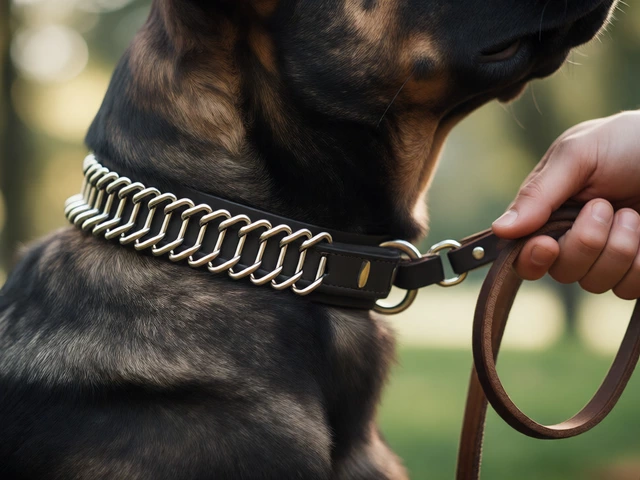
To get this right, we need to look at dog collars is a band of material fastened around a dog's neck, typically used for identification and control during walks. Also known as neck collars, they serve a vital purpose outdoors, but the home environment changes the risk profile completely.
The Danger of Snagging and Entanglement
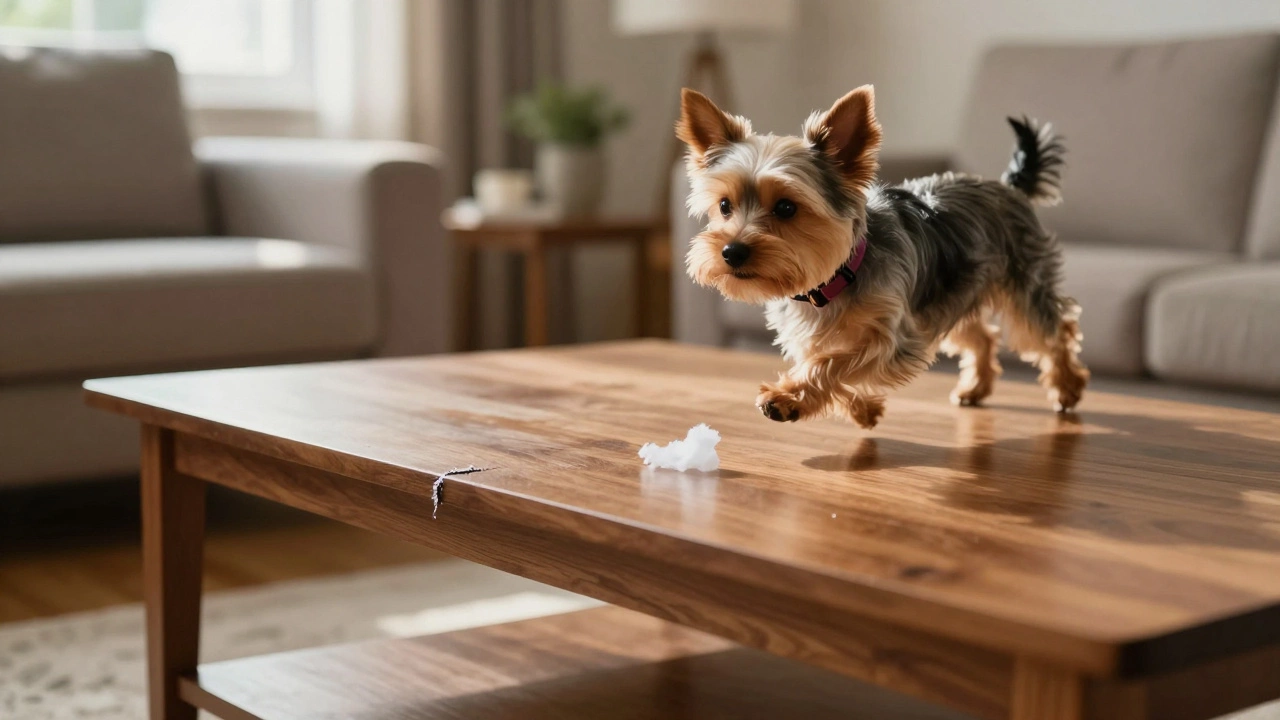
The biggest worry isn't a slow slide; it's the sudden snap. Your home is filled with "snag points"-things you don't even notice until they become a problem. Think about the edge of a wooden chair, the gaps in a wrought-iron banister, or even a loose thread on a chunky knit blanket. If a dog's collar gets caught while they are moving at full speed, they can easily experience a tracheal collapse or severe neck bruising.
I've seen cases where a dog jumped off a couch and the collar looped around a table leg. The dog's instinct is to pull away, which only tightens the loop. Because dogs don't have the dexterity to unbuckle themselves, they can enter a state of high stress or, worse, start to suffocate. This is especially dangerous for smaller breeds or those with narrow tracheas, like Yorkshire Terriers or Chihuahuas, where even a mild tug can cause permanent respiratory damage.
Skin Irritation and Coat Damage
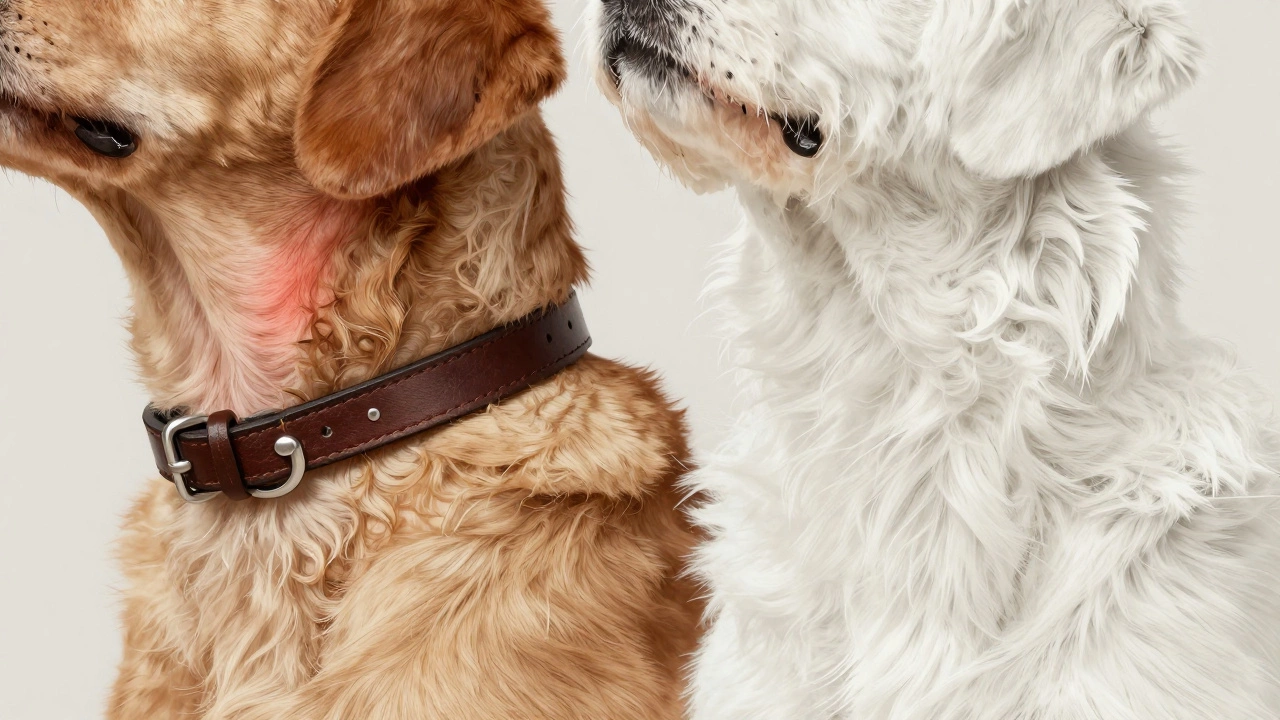
Even if your dog never gets stuck on a piece of furniture, the constant friction of a collar is a problem. A collar that stays on all day, every day, rubs against the skin. Over time, this leads to "collar sores"-red, irritated patches of skin where the material chafes. This is a common issue with Nylon or Leather materials that don't breathe well.
Then there's the hair. If you have a long-haired breed, a collar acts like a permanent divider. It mats the fur underneath the band and can cause "rub-off" patches where the hair simply stops growing or breaks away. When you finally take the collar off after weeks, you might find a ring of thinning fur or a buildup of dead skin and oils that can attract bacteria and lead to fungal infections.
| Material | Skin Irritation Risk | Snag Potential | Breathability |
|---|---|---|---|
| Nylon | High (Chafing) | Medium | Low |
| Leather | Medium | Low | Medium |
| Fabric/Soft | Low | Medium | High |
Hygiene and the "Gunk" Factor
Let's be honest: dog collars get gross. They collect dust, dander, and moisture from the air. When a collar stays on indoors, it traps a layer of moisture against the skin. This creates a perfect breeding ground for Bacteria and yeast. If your dog likes to roll in the grass outside and then wears that same collar on your sofa for twelve hours, you're essentially trapping outdoor contaminants against their neck.
Many owners notice a distinct "dog smell" emanating from the neck area. This isn't just a natural scent; it's often the result of oils and sweat getting trapped under the collar band. Without the chance for the skin to breathe and the fur to dry completely, you're looking at a recipe for dermatitis. Giving the neck a break allows the skin to aerate and keeps your home smelling a bit fresher too.
The Psychological Aspect of "Off-Duty" Time
Dogs are incredibly sensitive to the cues we give them. For many, the act of putting on a collar is the signal that it's time to work, walk, or be on their best behavior. Conversely, taking the collar off can be a powerful psychological signal that they are "off-duty" and safe in their den.
When a dog is collar-free, they can fully relax their neck and shoulder muscles. Think about how you feel when you get home and take off a tight tie or a restrictive bra; it's a physical relief. Dogs experience a similar sense of liberation. By removing the collar, you're telling them that the rules of the outside world don't apply here-they can flop, roll, and sleep in any position without a piece of hardware digging into their throat.
Dealing with the ID Tag Dilemma
The most common argument for keeping collars on indoors is the identification tag. "What if there's a fire and the dog gets out?" it's a valid concern. However, there are much safer ways to ensure your dog is identifiable without risking a choking hazard in the living room.
The gold standard for indoor safety is the Microchip. A microchip is a permanent, subcutaneous identification method that doesn't require a collar. It's a tiny electronic chip injected under the skin that stores a unique ID number linked to your contact details. Since it's internal, it can't get snagged on a chair leg or cause a skin rash.
If you're still worried about immediate identification, consider a Breakaway Collar. These are designed with a safety clasp that releases under a certain amount of pressure. While more common for cats, some versions exist for dogs. However, for the safest home environment, a microchip combined with a "collar-on-demand" policy (where the collar only comes out for the door) is the smartest move.
How to Transition to a Collar-Free Home
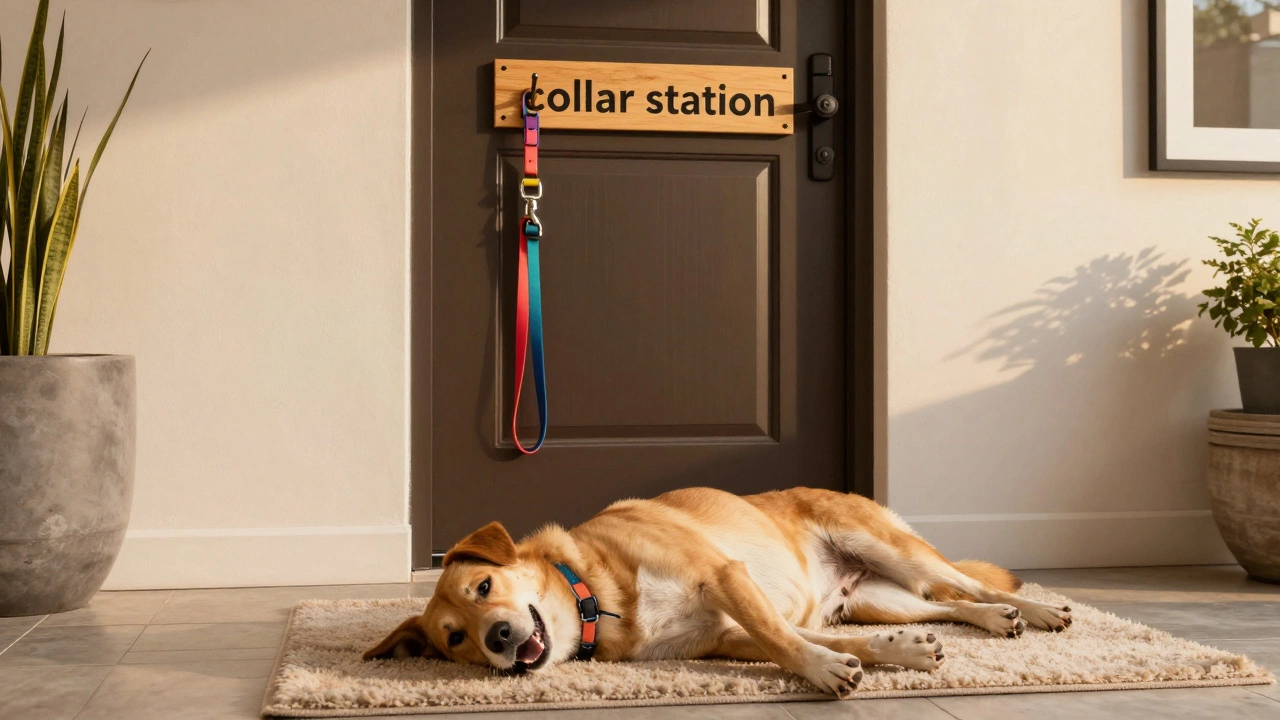
If you've always left the collar on, you might feel a bit anxious about taking it off. Start by creating a "collar station"-a specific hook or basket right by the front door. This makes the transition a ritual. When you come inside, the collar comes off and goes on the hook. When it's time to go out, the collar goes back on.
Train your dog to recognize the collar as the "walk signal." This actually makes your walks more exciting because the dog knows that once the collar is clicked into place, something fun is about to happen. If you have a multi-dog household, this also prevents collars from getting tangled during indoor play-wrestling, which is another common source of neck injuries.
Will my dog feel "naked" or stressed without a collar?
Actually, it's usually the opposite. Most dogs feel more relaxed without a collar. They don't have the same concept of "clothing" or "accessories" that humans do; they perceive a collar as a physical constraint. Removing it is generally a relief for them.
Is a harness safer to wear indoors than a collar?
While a harness removes pressure from the trachea, it's still not ideal for indoor wear. Harnesses can be even more prone to snagging on furniture, and they trap even more heat and moisture against the dog's chest and armpits, increasing the risk of skin fold infections.
What if my dog is a "door bolter"?
If your dog tends to run out the door, the safest strategy is a strict "collar first" rule. The collar must be secured before you even touch the doorknob. This ensures that if they do bolt, they are already identified and you have a handle to grab them by.
Do I need to worry about collars for very small dogs specifically?
Yes, small breeds are at a much higher risk. Their tracheas are smaller and more fragile. A snag that might just startle a Golden Retriever could actually collapse the windpipe of a Pomeranian or a Chihuahua.
How often should I clean the collar if I do choose to keep it on?
If you insist on indoor wear, you should clean the collar and the dog's neck area at least once a week. Use mild soap and water to remove the buildup of oils and bacteria to prevent dermatitis.
Final Thoughts on Home Safety
Your home should be a sanctuary for your dog-a place where they can be completely free. By removing the collar, you're eliminating a variety of physical risks, from choking to skin infections. Pair this with a reliable microchip, and you've got the perfect balance of safety and security. Your dog's neck will thank you, and you'll have one less thing to worry about while they're zooming around the living room.