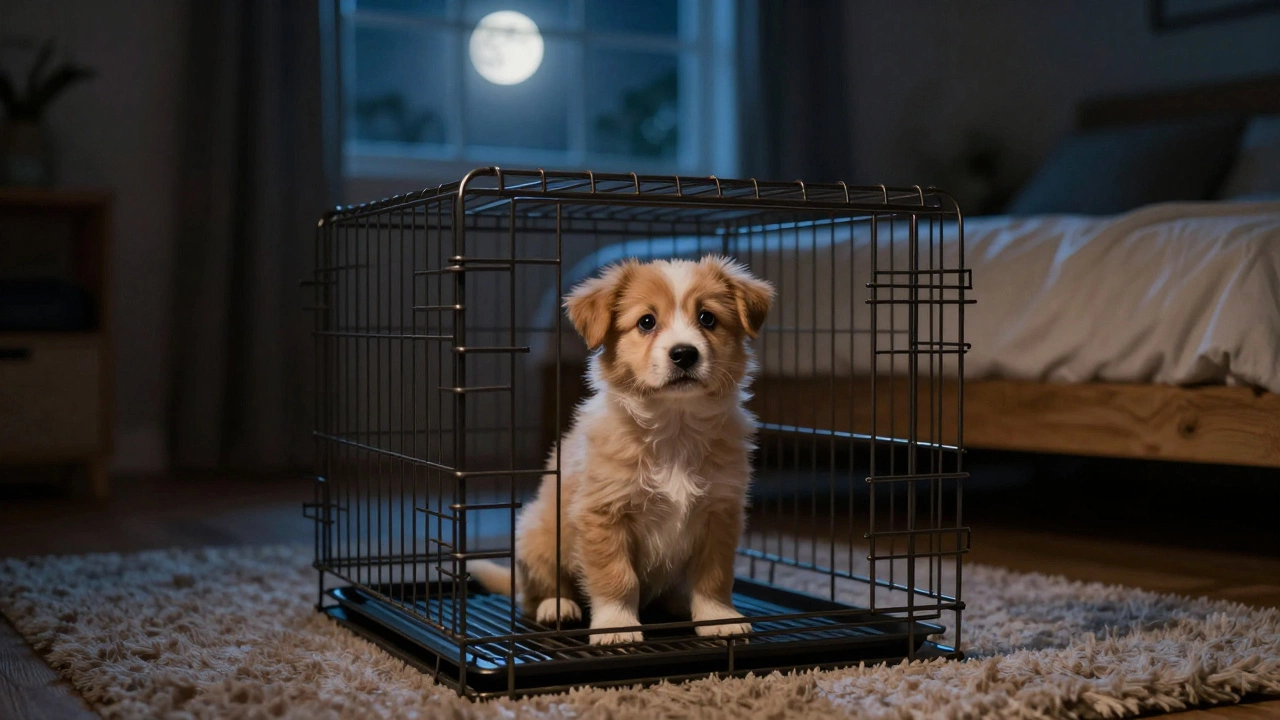
Puppy Nighttime Crying Analyzer
Select all factors that apply to your current situation.
| Symptom | Likely Cause | Action |
|---|---|---|
| Frantic Scratching | Needs Potty | Take Out Immediately |
| Soft Whimpering | Settling/Anxiety | Reassure Gently |
| Pacing/Standing | Discomfort/Energy | Check Environment |
| Crying > 3 Weeks | Medical/Deep Anxiety | Consult Vet/Trainer |
It is 2:00 AM. The house is silent except for one piercing sound: your new puppy is crying, whining, or howling from their crate. You are exhausted. You want to sleep. Part of you wants to walk away and hope they settle down on their own. But another part of you worries that ignoring them might cause anxiety or damage their trust in you. So, is it okay to ignore your puppy crying at night?
The short answer is no, not entirely. Ignoring a puppy’s distress signals can lead to long-term behavioral issues, but responding incorrectly can create dependency. The key lies in understanding why the puppy is crying and responding with consistency, patience, and proper sleep training protocols. This guide breaks down the science behind puppy crying, when to intervene, and how to help your dog learn to self-soothe without causing emotional harm.
Why Does Your Puppy Cry at Night?
Puppies do not cry to be malicious. They cry because they are overwhelmed by a sudden change in environment. When you bring a newborn puppy home, you are removing them from their mother and littermates-their entire world for the first six to eight weeks of life. This separation triggers a primal fear response known as separation anxiety.
- Separation Anxiety: The puppy feels isolated and unsafe without their pack.
- Physical Discomfort: Cold floors, hard surfaces, or an uncomfortable crate can cause distress.
- Biological Needs: Puppies under four months old cannot hold their bladder through the night. They need to eliminate.
- Boredom or Energy: If the puppy did not burn enough energy during the day, they may be too wired to sleep.
- Hunger: Low blood sugar can cause restlessness and whining.
Understanding the root cause is the first step in solving the problem. If you ignore a puppy who needs to pee, you are teaching them that holding it until they have an accident is the norm. That is a recipe for failed house training.
The Risks of Completely Ignoring Your Puppy
Some older training methods suggested “cry it out” strategies borrowed from human infant sleep training. These methods are largely outdated and potentially harmful for dogs. Dogs are social animals with a strong pack instinct. Ignoring a distressed puppy can lead to several negative outcomes:
| Risk Factor | Ignoring the Puppy | Proper Response |
|---|---|---|
| Anxiety Levels | Increases significantly; creates fear-based behavior | Decreases over time with consistent reassurance |
| Trust Bond | Weakened; puppy views owner as unreliable protector | Strengthened; puppy learns owner provides safety |
| Sleep Quality | Poor; chronic stress disrupts growth hormones | Improved; secure environment promotes deep rest |
| Behavioral Issues | May develop destructive chewing or excessive barking | Leads to calm, confident adult dog |
A study published in the Journal of Veterinary Behavior found that puppies subjected to prolonged isolation without comfort showed higher cortisol levels (the stress hormone) compared to those given gentle, non-reinforcing comfort. High cortisol interferes with learning and immune function. In simple terms, a stressed puppy learns less and gets sick more often.
When Should You Respond?
You should not respond to every single whimper if the puppy is simply adjusting to silence. However, you must respond to specific cues. Here is how to distinguish between attention-seeking noise and genuine need:
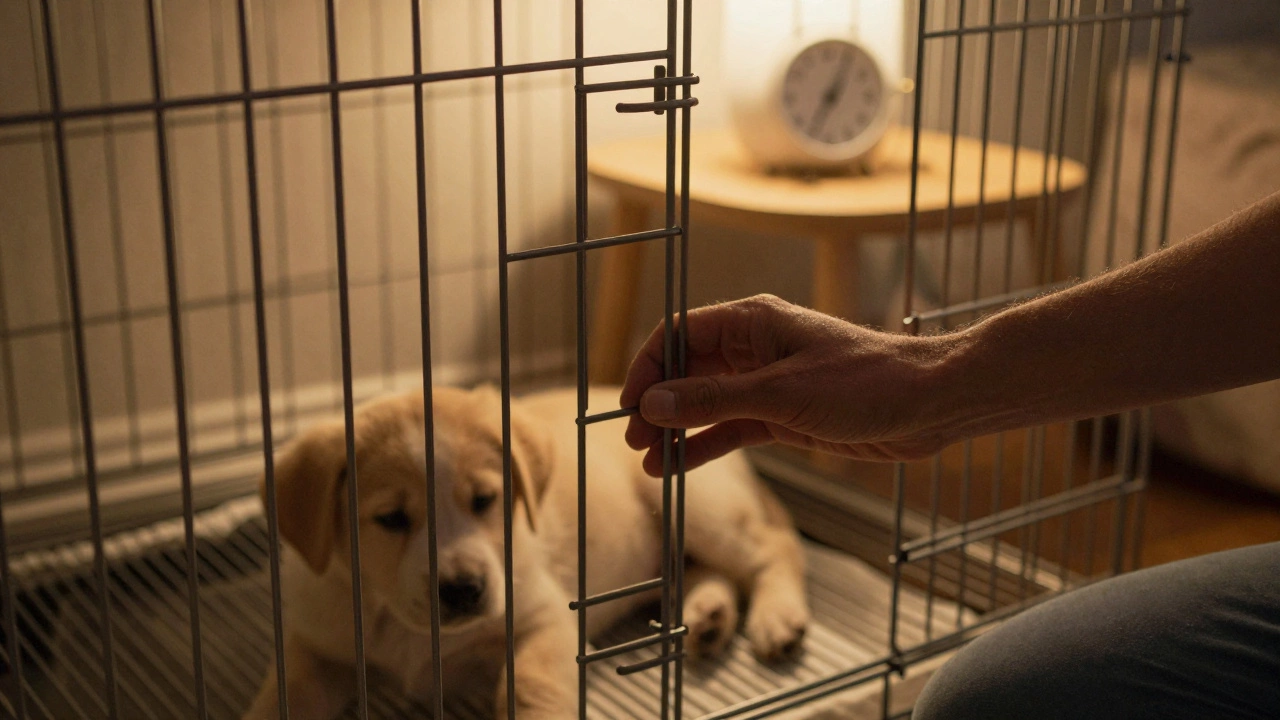
- The First Few Nights: Expect crying. This is normal. Do not ignore it completely. Place a hand on the crate door to let them know you are there, but do not pick them up or take them out unless necessary.
- Urgent Whines: If the whining escalates to frantic scratching or howling, assume they need to eliminate. Take them outside on a leash immediately. Keep interactions boring-no play, no treats. Just business.
- Calm Whimpering: If the puppy is lying down but making soft sounds, they are likely just settling. Use a white noise machine or a ticking clock to mimic littermate heartbeat sounds. This helps soothe them without direct interaction.
The goal is to teach the puppy that the crate is a safe den, not a prison. Consistency is critical. If you ignore them one night and pick them up the next, you create confusion. Confusion leads to more anxiety.
How to Set Up the Perfect Sleep Environment
Prevention is better than reaction. Setting up the right environment reduces the likelihood of crying before it starts. Consider these factors:
1. Crate Training Basics
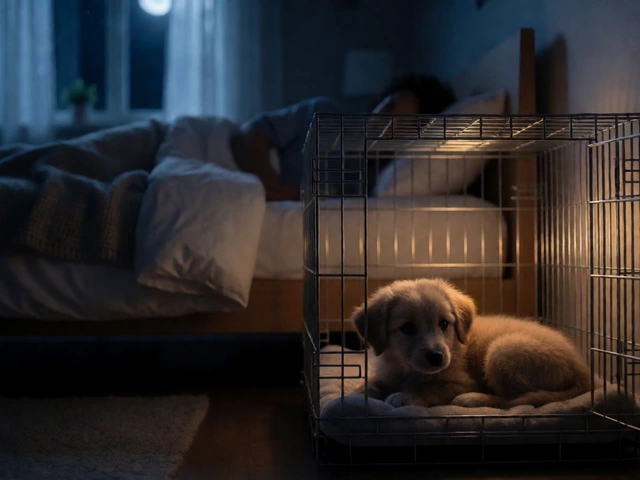
The dog crate should be viewed as a safe haven, not a punishment zone. Ensure the crate is the correct size. If it is too large, the puppy will use one corner for sleeping and the other for eliminating, which defeats the purpose of house training. Use a divider if you have a large crate to make the space cozy and secure.
2. Comfort Items
Add familiar scents to the crate. A t-shirt worn by you or a blanket from the breeder can provide comfort. Avoid plush toys with squeakers, as these can trigger predatory instincts or become choking hazards. Instead, opt for a chew toy like a Kong filled with frozen peanut butter. Chewing releases endorphins and calms the nervous system.
3. Location Matters
Place the crate in your bedroom or just outside the door during the first few weeks. Puppies need to feel connected to their pack. Isolating them in a basement or garage amplifies their fear. Hearing your breathing and movements provides subconscious reassurance.
Step-by-Step Nighttime Routine
A predictable routine signals to your puppy that it is time to wind down. Start this process two hours before bedtime:
- Last Potty Break: Take the puppy out 30 minutes before bed. Keep it calm and quiet.
- No Heavy Meals: Feed the last meal at least three hours before bedtime to allow for digestion and elimination.
- Reduce Activity: No rough play or high-energy games after dinner. Switch to gentle petting and quiet time.
- Final Elimination: Take them out again right before placing them in the crate.
- Crate Entry: Give them a chew toy and dim the lights. Say a consistent cue like “Goodnight” and leave calmly.
If they cry, wait 30 seconds to see if it settles. If it continues, place your hand on the crate and say “Shhh” softly. Do not open the crate unless you suspect a bathroom emergency. If you do take them out, keep the lights off and speak in a monotone voice.
Common Mistakes to Avoid
Even well-meaning owners make errors that prolong the crying phase. Watch out for these pitfalls:
- Inconsistency: Sometimes ignoring, sometimes comforting. Pick a strategy and stick to it for at least two weeks.
- Punishment: Never yell or punish a crying puppy. This increases fear and damages the bond.
- Too Much Attention: When taking them out for potty, do not engage in play. Make it boring so they associate the crate with sleep, not party time.
- Ignoring Medical Issues: If the crying persists despite proper training, consult a veterinarian. Pain, parasites, or illness can cause nighttime distress.
When to Seek Professional Help
If your puppy cries excessively for more than three weeks despite consistent training, or if they show signs of extreme distress (vomiting, diarrhea, self-harm), seek help from a certified dog trainer or veterinary behaviorist. Early intervention prevents entrenched anxiety disorders that are much harder to fix in adulthood.
Remember, the first few nights are the hardest. As your puppy grows, their bladder control improves, and their confidence builds. By providing a safe, consistent environment, you are not just stopping the crying-you are building a foundation for a happy, well-adjusted adult dog.
How long does it take for a puppy to stop crying at night?
Most puppies adjust within 3 to 7 days if you remain consistent. Some may take up to two weeks. The duration depends on the puppy's age, previous exposure to crates, and the consistency of your routine.
Should I put my puppy in the same room as me?
Yes, for the first few weeks. Keeping the crate in your bedroom helps reduce separation anxiety. Once they are comfortable, you can gradually move the crate to another room over several weeks.
What if my puppy pees in the crate?
Clean the crate thoroughly with an enzymatic cleaner to remove odors. Ensure the crate is the right size-not too big. If accidents persist, check for medical issues like urinary tract infections or consult a trainer.
Can I give my puppy a treat when they cry?
No, giving treats for crying reinforces the behavior. Only reward calm behavior. If you must take them out for potty, keep the interaction boring with no treats or praise.
Is it okay to let my puppy sleep in my bed?
While co-sleeping is a personal choice, many trainers recommend against it initially. It can make crate training difficult later. If you choose to co-sleep, establish clear boundaries early to prevent bad habits.