
Dog Blueberry Serving Calculator
Enter Your Dog's Details
Results & Guidelines
Safety Tips
- Always wash fresh blueberries thoroughly.
- Introduce slowly to avoid digestive upset.
- Whole berries are fine for most breeds.
- Blueberries should not exceed 10% of daily calories.
It’s a common scene in any dog-owning household: you’re snacking on fresh fruit, your pup gives you that soul-piercing stare, and you wonder if sharing is safe. If you’ve ever wondered, can dogs eat blueberries? The short answer is yes. In fact, they are one of the safest and most nutritious human foods you can share with your canine companion. Unlike grapes or raisins, which are toxic to dogs, blueberries offer a sweet treat packed with health benefits without the dangerous side effects.
However, just because something is safe doesn’t mean it should become a staple meal. Understanding how much to feed your dog, when to introduce them, and what signs to watch for is crucial. This guide breaks down everything you need to know about adding blueberries to your dog’s diet, from their nutritional profile to potential pitfalls like sugar content and choking hazards.
The Nutritional Profile of Blueberries for Dogs
Blueberries aren't just empty calories; they are nutrient-dense superfoods. For dogs, these small berries provide a concentrated source of vitamins and minerals that support overall health. When you feed your dog a handful of blueberries, you are essentially giving them a natural multivitamin supplement.
| Nutrient | Amount per Cup | Benefit for Dogs |
|---|---|---|
| Fiber | 3.6 grams | Aids digestion and promotes regular bowel movements |
| Vitamin C | 14.4 mg | Supports immune system function and skin health |
| Vitamin K | 28.6 mcg | Essential for blood clotting and bone health |
| Manganese | 0.5 mg | Helps regulate metabolism and supports brain function |
| Antioxidants (Anthocyanins) | High concentration | Fights cellular damage and reduces inflammation |
The star players here are the antioxidants, specifically anthocyanins. These compounds give blueberries their deep blue color and help fight free radicals in your dog’s body. Free radicals can cause oxidative stress, which contributes to aging and diseases like cancer and heart disease. By neutralizing these unstable molecules, blueberries may help extend your dog’s lifespan and improve their quality of life as they age.
Health Benefits: Why Your Dog Will Love Them
Beyond the basic nutrition, blueberries offer specific health advantages that make them a smart choice for treats. Here is how they impact different aspects of your dog’s well-being.
Dental Health: The texture of fresh blueberries requires some chewing. This mechanical action can help scrape plaque off teeth, acting as a mild natural toothbrush. While they don’t replace brushing, they complement good oral hygiene habits.
Digestive Support: The fiber content in blueberries helps maintain a healthy gut microbiome. A balanced gut is linked to better immunity and even improved mood in dogs. If your dog suffers from occasional constipation, a few blueberries can help get things moving naturally.
Brain Function: Emerging research suggests that the antioxidants in blueberries may protect against cognitive decline in senior dogs. Just as humans benefit from brain-healthy foods, older dogs can see improvements in memory and alertness with regular, moderate consumption of antioxidant-rich foods.
Weight Management: Blueberries are low in calories. One cup contains only about 85 calories. Compared to high-fat commercial treats, blueberries allow you to reward your dog during training sessions without blowing up their daily caloric intake. This makes them ideal for overweight dogs or those prone to obesity.
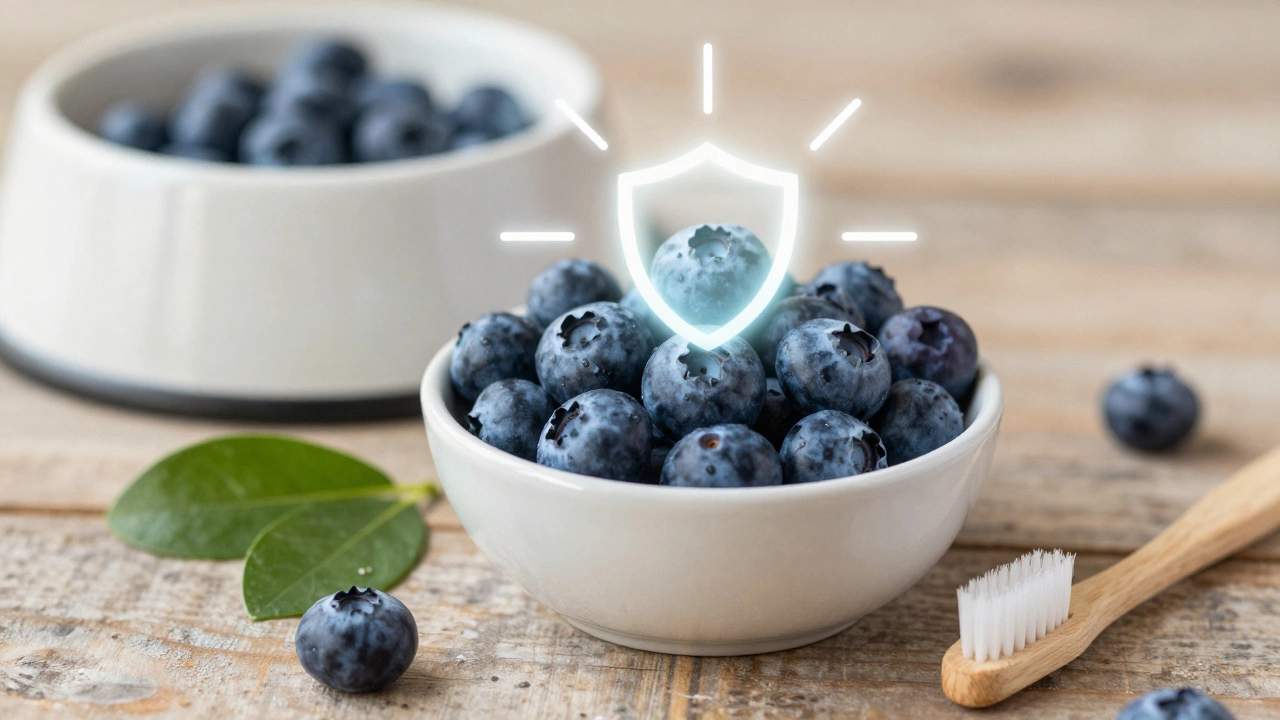
Safety First: Risks and Precautions
While blueberries are generally safe, there are important caveats. Not all blueberry products are created equal, and portion control is key.
Avoid Added Sugars: Never feed your dog blueberry muffins, pancakes, yogurt with added syrup, or dried blueberries with added sugar. High sugar intake leads to dental decay, obesity, and diabetes in dogs. Stick to fresh or frozen plain blueberries.
Choking Hazards: For very small breeds like Chihuahuas or Yorkies, whole blueberries can pose a choking risk. Always chop them in half or mash them before feeding them to tiny dogs. Larger breeds can usually swallow them whole, but supervision is always recommended.
Gastrointestinal Upset: Introducing any new food too quickly can cause diarrhea or vomiting. Start with one or two berries and monitor your dog for 24 hours. If they show no adverse reactions, you can gradually increase the amount. Remember, moderation is key-blueberries should never exceed 10% of your dog’s daily caloric intake.
Allergies: Though rare, some dogs can be allergic to fruits. Watch for signs like itching, swelling around the face, or difficulty breathing after the first introduction. If any of these occur, stop feeding immediately and consult your veterinarian.
How to Serve Blueberries to Your Dog
You have several options for serving blueberries, depending on your dog’s preferences and your convenience.
- Fresh: Rinse thoroughly under cold water to remove pesticides or dirt. Serve as a standalone treat or mix into their kibble.
- Frozen: Frozen blueberries are great for hot days. They act as a cooling chew toy and last longer in the mouth. Just ensure they are not coated in ice cream or other toppings.
- Mashed: Mix mashed blueberries into plain Greek yogurt or pumpkin puree for a tasty, nutrient-packed snack. Ensure the yogurt is unsweetened and xylitol-free.
- In Food: Chop them finely and add to homemade dog meals or baked dog biscuits. This ensures they get the benefits even if they pick at individual pieces.
A pro tip: Use blueberries as high-value rewards during training. Their strong scent and sweet taste make them more motivating than standard kibble for many dogs. This turns mealtime into an opportunity for mental stimulation and bonding.

Blueberries vs. Other Fruits: What’s Safe?
Not all fruits are dog-friendly. It’s vital to distinguish between safe options and toxic ones. Here is a quick comparison to help you navigate the produce aisle safely.
| Fruit | Safety Status | Notes |
|---|---|---|
| Blueberries | Safe | High in antioxidants, low calorie |
| Apples | Safe | Remove seeds and core (cyanide risk) |
| Bananas | Safe | High in potassium, but also high in sugar |
| Grapes/Raisins | Toxic | Can cause acute kidney failure |
| Cherries | Unsafe | Pits and stems contain cyanide |
| Avocado | Unsafe | Contains persin, which can be toxic |
Always err on the side of caution. If you are unsure about a fruit, check with the ASPCA Animal Poison Control Center or your vet before offering it to your pet.
Special Considerations for Senior and Puppies
Puppies: You can introduce blueberries once your puppy has fully transitioned to solid food, usually around 8 weeks old. Start with tiny amounts to test tolerance. Their digestive systems are still developing, so sudden changes can lead to upset stomachs.
Senior Dogs: Older dogs often have reduced appetites or dental issues. Mashing blueberries makes them easier to eat and digest. The anti-inflammatory properties are particularly beneficial for seniors dealing with arthritis or joint pain, potentially reducing discomfort naturally.
Dogs with Diabetes: Even though blueberries are low-glycemic, they still contain natural sugars. Consult your veterinarian before adding them to the diet of a diabetic dog. They may need to adjust insulin dosages based on carbohydrate intake.
How many blueberries can I give my dog a day?
A general rule of thumb is one blueberry per 10 pounds of body weight. For example, a 50-pound dog can have up to five blueberries daily. However, this should be part of their total treat allowance, which shouldn’t exceed 10% of their daily calories. Always start with less and observe your dog’s reaction.
Are frozen blueberries safe for dogs?
Yes, frozen blueberries are perfectly safe and often preferred by dogs because they last longer in the mouth. Just ensure they are plain, without any added sugars, syrups, or coatings. Thaw them slightly if your dog has sensitive teeth.
Can blueberries cause diarrhea in dogs?
Yes, especially if introduced too quickly or fed in large quantities. The high fiber content can disrupt digestion if a dog isn’t used to it. Start with one or two berries and gradually increase the amount over a week to avoid gastrointestinal upset.
Is it okay to feed my dog blueberry muffins?
No, you should avoid feeding blueberry muffins. They typically contain high amounts of sugar, flour, and sometimes toxic ingredients like chocolate chips or xylitol (a sugar substitute). Stick to fresh, plain blueberries instead.
Do blueberries help with bad breath in dogs?
They can help mildly. The act of chewing fresh blueberries can mechanically remove some plaque and bacteria from teeth. Additionally, the vitamin C supports gum health. However, they are not a replacement for regular dental cleaning and brushing.