Canine Bed Shape Matcher
Not sure if your dog wants a donut or a rectangle? Answer these three questions to find the perfect shape for their comfort.
Select options to see recommendation
Circle Bed
High ConfidenceWhy this choice?
Reasoning will appear here.
Tips will appear here.
You’ve probably stood in the pet aisle, staring at a wall of plush rectangles and circles, wondering if your dog actually cares about geometry. They curl up on cold tiles, sprawl across hardwood floors, and squeeze into boxes that seem physically impossible for their hips to fit. So, when you finally decide to buy that expensive orthopedic mattress, does the shape matter? Spoiler alert: it absolutely does. But not for the reasons you might think.
The debate between circle beds (often called donut or bolster beds) and square beds isn't just aesthetic. It taps into deep-seated biological instincts rooted in canine evolution. Your dog’s preference usually boils down to one thing: how they sleep. Are they a "curler" who wants to feel protected, or a "sprawler" who needs room to stretch? Let’s break down what science and behaviorists say about which shape wins for different types of dogs.
Why Shape Matters: Instinct Over Aesthetics
To understand why a dog might reject a perfectly good memory foam rectangle, you have to look at their ancestors. Wolves and wild canids rarely sleep in open, flat spaces. In the wild, sleeping in an open area makes you vulnerable to predators from all sides. Instead, they seek out den-like environments-tight, enclosed spaces where they can see threats coming while keeping their back covered.
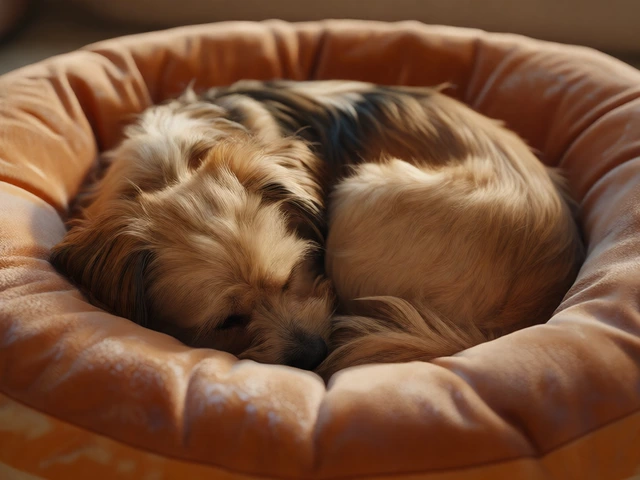
This instinct drives most canine sleeping positions. When a dog curls into a tight ball, nose tucked under tail, they are conserving body heat and protecting their vital organs. This is known as the "donut" position. Conversely, when a dog sleeps on its side with legs extended, it signals safety and comfort, but it requires significantly more surface area.
| Sleep Position | Instinctual Need | Best Bed Shape | Why? |
|---|---|---|---|
| Curling (Donut) | Security, warmth, protection of belly | Circle / Bolster | Bolsters act as walls, mimicking a den. |
| Side Sleeping | Comfort, temperature regulation | Square / Rectangle | Requires flat, unobstructed length. |
| Back Sleeping (Sphinx) | Thermal regulation, relaxation | Square / Rectangle | Needs space for limbs to splay out. |
| Stomach Sleeping | Rapid waking ability | Flat Mat / Square | No barriers to getting up quickly. |
The Case for Circle Beds: Security and Warmth
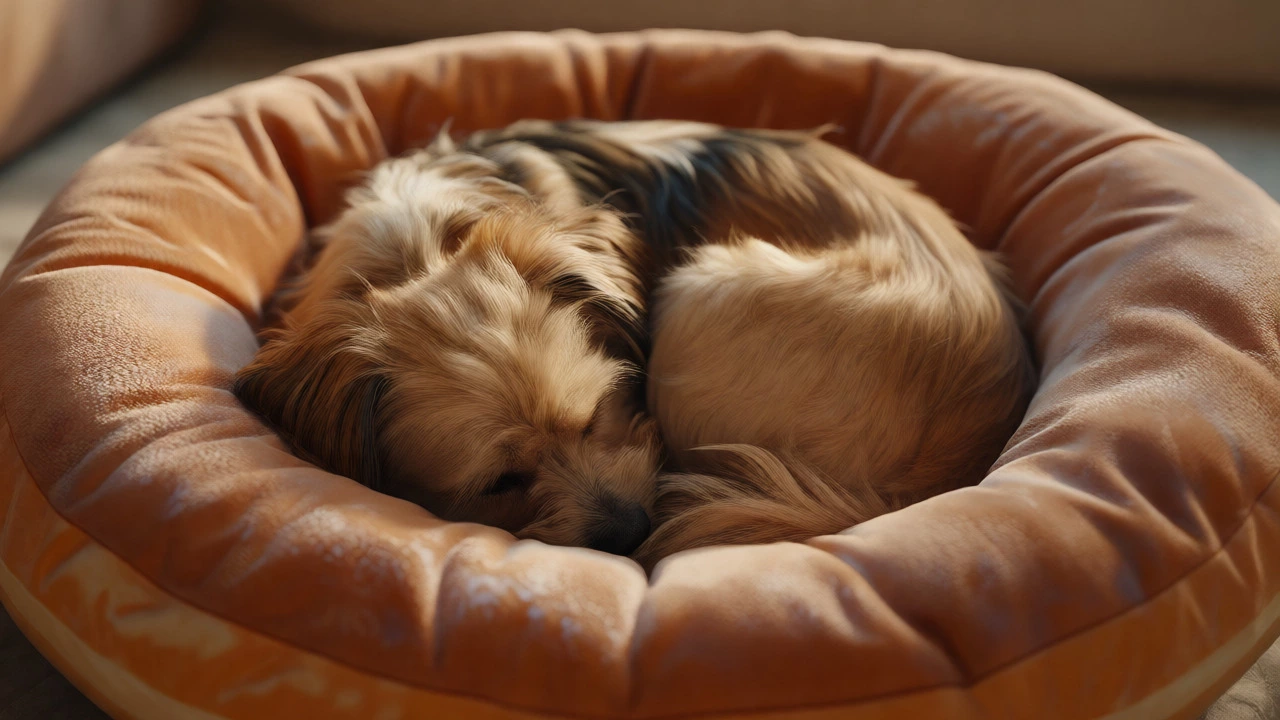
If your dog looks like a croissant when they sleep, they likely prefer a circular bed. These beds, often featuring raised rims or bolsters, provide a physical boundary that dogs find psychologically reassuring. Think of it as a hug. The raised edge supports the head and neck, allowing the dog to rest their chin comfortably without their head slipping off the edge.
From a thermal perspective, circle beds are superior for smaller breeds or short-haired dogs. By curling up against the bolster, the dog creates a microclimate. Their body heat gets trapped in the center, reducing energy expenditure needed to stay warm. This is particularly relevant here in Auckland, where winter nights can get damp and chilly, even indoors.
However, there is a catch. If you have a large breed, like a Great Dane or a Labrador, a standard circular bed might be too restrictive. Imagine trying to sleep in a bathtub sized for a toddler. If the diameter is too small, the dog cannot fully extend their spine, leading to joint stiffness upon waking. Always measure your dog from nose to tail-tip before buying a round bed.
The Case for Square Beds: Freedom and Orthopedics
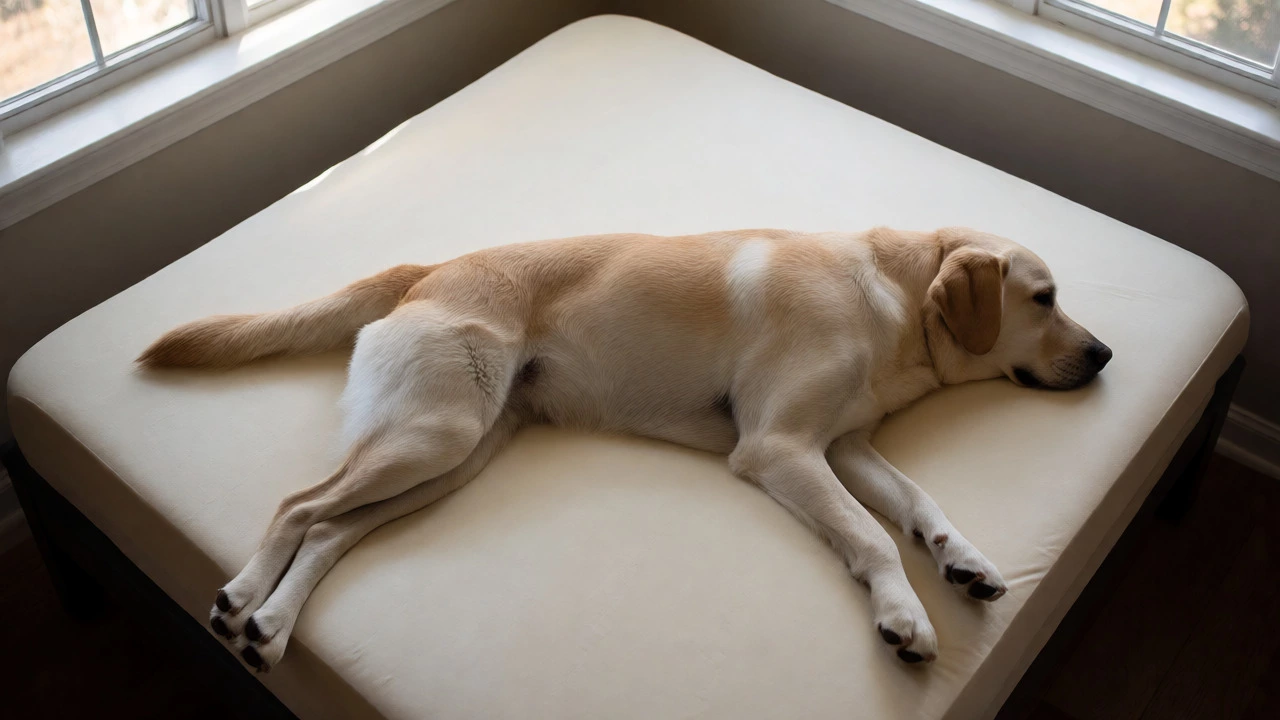
Square or rectangular beds are the champions for larger dogs, active breeds, and those who suffer from arthritis. Why? Because they offer real estate. There are no high walls to climb over or bump into. For a dog with hip dysplasia or senior joints, the ability to slide onto a flat surface without twisting their spine is crucial.
Orthopedic memory foam beds, which are almost exclusively rectangular, allow for even weight distribution. Without a bolster pressing into the shoulder or hip, the pressure points are minimized. If your dog wakes up stiff or limps slightly after a nap, try switching them to a low-profile square bed. You’ll often see an immediate improvement in mobility.
Additionally, square beds are easier to wash and maintain. Most circular beds have complex seams and hard-to-reach corners where fur and dander accumulate. A simple rectangular cover unzips and goes straight into the washing machine-a huge plus for hygiene-conscious owners dealing with allergies.
How to Test Your Dog’s Preference
You don’t need a degree in animal behavior to figure this out. You just need to observe. Here is a simple three-day test you can run at home:
- Day 1: Place a comfortable blanket on the floor in the shape of a square. Do not use a bed yet. Observe how your dog settles. Do they stretch out? Or do they try to make a nest by pushing the blanket edges up around them?
- Day 2: Introduce a cheap, soft circular cushion or a rolled-up towel forming a ring. See if they gravitate toward the enclosure. Do they tuck their nose in?
- Day 3: Compare the results. Did they spend more time in the open square setup or the enclosed circle setup?
Pay attention to the "settling" behavior. A dog that spins three times and then sighs deeply has found their spot. If they spin five times, adjust, and still stand up, the shape isn't working for them.
Breed-Specific Tendencies
While individual personality plays a huge role, certain breeds show strong trends based on their original purpose and anatomy.
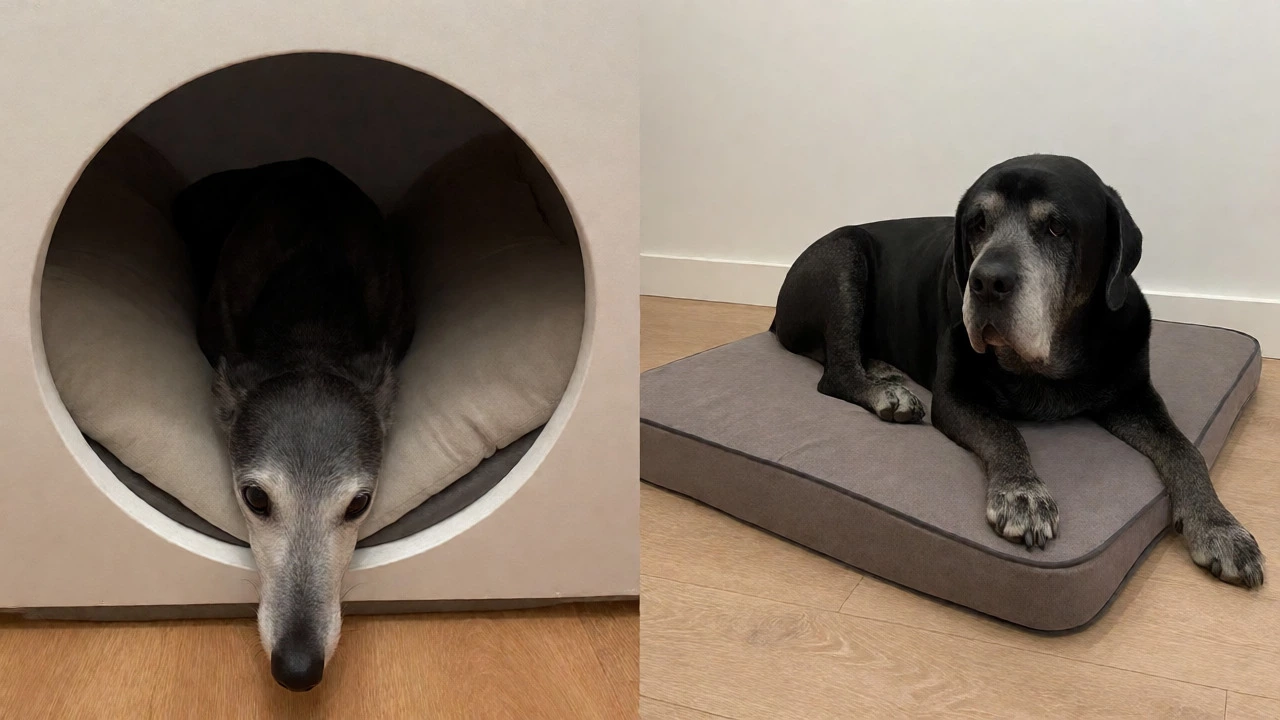
Hounds and Sight Hounds (Greyhounds, Whippets): These dogs are notorious burrowers. They love to snuggle under blankets and in enclosed spaces. A circular bed with high sides, or even a cave-style bed, is usually their favorite. They want to disappear into their sleep.
Working Breeds (Shepherds, Collies): Often more alert, these dogs may prefer a square bed that allows them to keep one eye open. However, many also enjoy bolsters for head support during light naps. A hybrid approach-like a rectangular bed with removable bolsters-is often the best compromise.
Mastiffs and Large Guardians: These giants value comfort above all else. They are prone to elbow calluses and joint issues. A large, flat, square orthopedic bed is non-negotiable. A circle bed will simply not accommodate their width.
Toy Breeds (Chihuahuas, Yorkies): Small dogs lose heat quickly. They almost universally prefer circular, hooded, or donut beds. The enclosed environment provides both warmth and security against perceived threats (like the family cat).
Material and Fill: The Hidden Variable
Shape is important, but it doesn’t exist in a vacuum. The fill material interacts with the shape to determine overall comfort. A circular bed filled with cheap polyester stuffing will flatten out within weeks, losing its structural integrity. The "walls" will sag, and the dog will end up sleeping on a flat mat anyway.
For circular beds, look for high-density foam bolsters or shredded memory foam that retains its shape. For square beds, solid memory foam is the gold standard. It contours to the dog’s body, relieving pressure points. If you’re on a budget, a sturdy egg-crate foam pad placed inside a square canvas cover works surprisingly well.
Also, consider the fabric. Dogs regulate temperature through their paws and panting, but their fur traps heat. Breathable covers (cotton or bamboo blends) are essential for both shapes. Synthetic fabrics can cause overheating, making a dog restless regardless of whether they’re in a circle or a square.
Common Mistakes Owners Make
One major mistake is buying a bed based on human aesthetics rather than dog ergonomics. That chic, minimalist gray cube might look great in your living room, but if it’s too hard or too shallow, your dog will ignore it. Another error is ignoring the size progression. Puppies grow fast. A bed that fits a 6-month-old Golden Retriever might be too small by month 12. Buy for the adult size, or choose a modular bed where you can add sections.
Finally, don’t assume one bed fits all scenarios. Many dogs prefer a circular bed for nighttime sleep (security/warmth) but use a square mat for daytime lounging (visibility/easy exit). Having two options is often cheaper than fighting with a single ill-fitting bed.
Frequently Asked Questions
Do dogs actually care about bed shape?
Yes, dogs care significantly about bed shape because it impacts their sense of security and physical comfort. Their preference is dictated by their natural sleeping position. Curlers prefer enclosed circular beds for warmth and protection, while sprawlers prefer open square beds for freedom of movement.
Are circular beds better for anxiety?
Generally, yes. Circular beds with raised bolsters mimic the feeling of being in a den, which can lower cortisol levels in anxious dogs. The enclosed perimeter provides a tactile boundary that helps dogs feel grounded and safe, especially during thunderstorms or fireworks.
Which bed shape is better for older dogs?
Square or rectangular beds are typically better for senior dogs, especially those with arthritis or hip dysplasia. High bolsters on circular beds can be difficult for stiff joints to climb over. A low-profile square bed allows for easy entry and exit, reducing pain and risk of injury.
Can I cut a square bed into a circle?
You can modify a square bed by adding a rolled towel or a separate bolster pillow to create a circular boundary. This is a cost-effective way to test if your dog prefers the enclosed feel without committing to a new purchase. Just ensure the added material is stable and won't collapse easily.
Do puppies need a specific bed shape?
Puppies often prefer circular or hooded beds initially because they miss the warmth and confinement of the whelping box with their littermates. As they mature and gain confidence, many transition to square beds. Start with a secure, enclosed option and monitor their growth and changing habits.