Cesar Millan's Collar Selector
Answer three simple questions to find the collar type Cesar Millan would likely recommend for your situation.
1. What is your dog's primary challenge?
2. How strong is your dog?
3. What is the training context?
Recommended Tool:
Walk into any pet store in Auckland or browse online, and you’ll see a dizzying array of training collars. From gentle flat collars to high-tech shock devices, the options are endless. But when you watch Cesar Millan, the "Dog Whisperer," on TV, he often seems to use tools that look intimidating to modern positive-reinforcement advocates. This sparks a common debate: does Cesar Millan actually use training collars? The short answer is yes, but not in the way most people assume. He doesn’t rely on pain-based compliance as his primary tool, nor does he use them as a crutch for lazy owners. Instead, his approach centers on specific types of collars designed for communication rather than punishment.
To understand why he uses certain gear, you have to look past the collar itself and focus on his philosophy. Cesar Millan views dogs through the lens of energy and leadership. He argues that many behavioral issues stem from a lack of clear structure, not just a lack of commands. For him, the collar is an extension of the leash, which is an extension of the handler’s arm. It’s about timing and intent, not just hardware. If you’re trying to replicate his methods at home, knowing exactly which collars he prefers-and why-is crucial for your dog’s safety and your own confidence.
The Core Philosophy Behind His Gear Choices
Cesar Millan’s methodology is often summarized by the mantra: Exercise, Discipline, Affection. Notice where discipline sits? It comes before affection. In his view, discipline isn’t about yelling; it’s about setting boundaries. This is where the equipment plays a role. He believes that a dog needs to feel safe, and they feel safe when they know who is leading. If a dog pulls hard on a standard flat collar, it can trigger a reflex called oppositional tension. The harder the dog pulls, the more the collar presses against their throat, causing them to pull even harder to relieve the pressure. This creates a feedback loop of stress and resistance.
This is why Millan often moves away from standard buckle collars for active training sessions. He isn’t looking to hurt the dog. He is looking to break that cycle of pulling. When he applies a correction, it’s a quick, sharp signal meant to redirect attention back to the human. Think of it like tapping someone on the shoulder to get their attention in a noisy room. It’s not a punch; it’s a notification. However, if you don’t have the timing right, even a gentle tap can feel like a shove. That’s why he emphasizes that the tool is only as good as the user.
The Prong Collar: Misunderstood but Essential
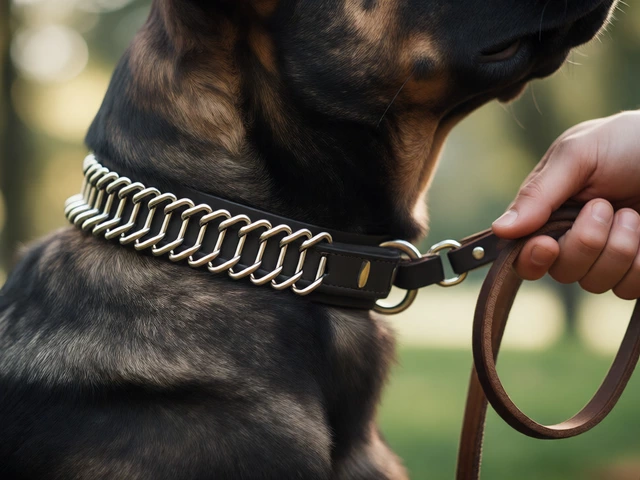
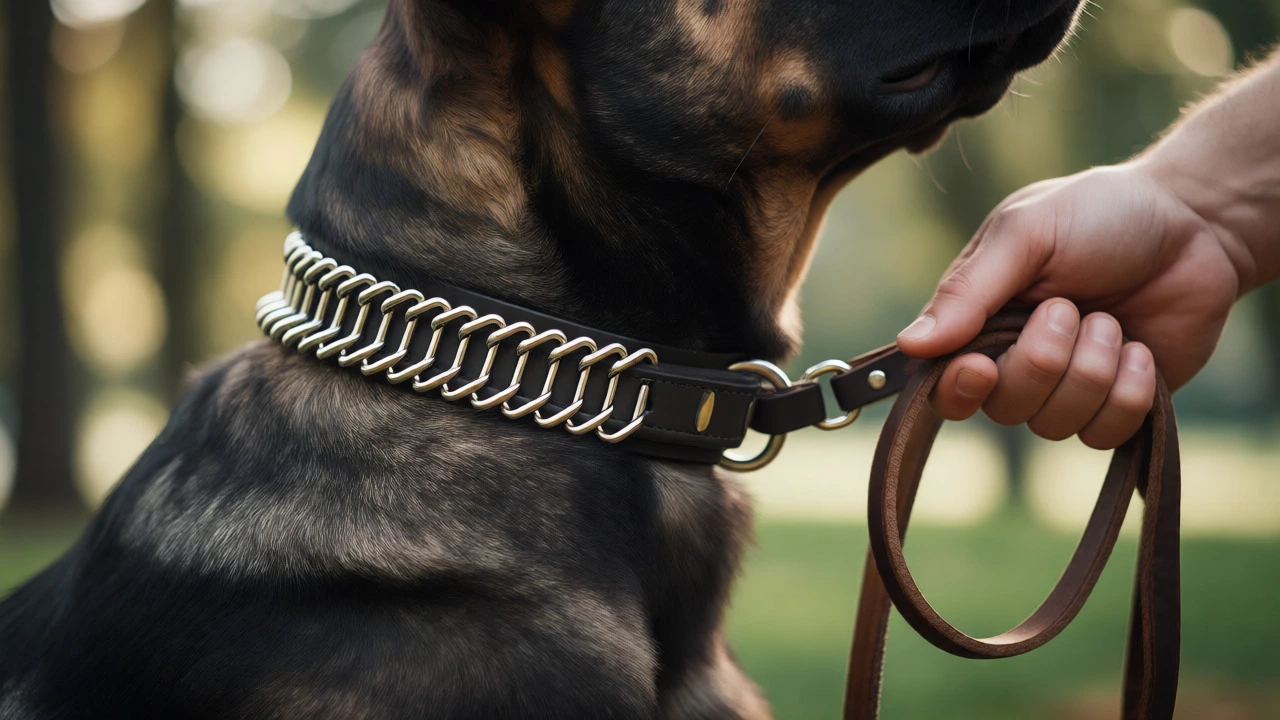
The prong collar (or pinch collar) is probably the piece of equipment most associated with Cesar Millan, and also the one most criticized. To the untrained eye, it looks medieval. Metal links with blunt prongs point inward toward the dog’s neck. Critics argue it causes pain. Supporters, including Millan, argue it mimics how mother dogs correct their puppies-by using pressure around the neck, not by biting the skin.
Millan uses prong collars primarily for large, strong breeds or dogs with severe reactivity issues. The logic here is mechanical advantage. A prong collar distributes pressure evenly around the entire circumference of the neck. Unlike a flat collar, which concentrates force on the trachea and thyroid gland, the prong collar spreads the load. This reduces the risk of injury to the windpipe while providing a clearer signal to the dog. When used correctly, the prongs do not puncture the skin. They press into the fur and muscle, creating a sensation that interrupts the dog’s current thought pattern.
| Collar Type | Primary Mechanism | Risk Level | Best For |
|---|---|---|---|
| Prong Collar | Distributes pressure evenly around neck | Low (if fitted correctly) | Strong pullers, reactive dogs |
| Martingale Collar | Tightens slightly to prevent escape | Very Low | Sighthounds, narrow-headed breeds |
| Head Halter | Controls head direction via muzzle loop | Low | Dogs needing directional control |
| Flat Buckle Collar | Concentrates pressure on trachea | Moderate (for pullers) | Well-behaved walkers, ID tags |
It’s important to note that Millan rarely recommends a prong collar for every dog. You won’t see him putting one on a calm Golden Retriever who walks nicely. He reserves it for situations where other tools have failed to manage energy levels effectively. If you decide to try one, fit is everything. The chain must sit high on the neck, right behind the ears. If it hangs low near the shoulders, it becomes ineffective and potentially dangerous because the dog can twist its head and slip out.

The Role of the Leash and Hand Position
You cannot talk about Cesar Millan’s collars without talking about his leashes. He almost exclusively uses fixed-length leather or nylon leashes, typically six feet long. He avoids retractable leashes during formal training. Why? Because a retractable leash gives the dog too much freedom to make decisions. If your dog sees a squirrel and bolts forward, the retractable mechanism locks, jerking the dog suddenly. This teaches the dog that pulling leads to unexpected consequences, not necessarily that pulling stops the walk.
Millan keeps the leash slack most of the time. The moment the dog starts to drift or fixate on a distraction, he applies a subtle tension. This isn’t a yank. It’s a steady increase in pressure until the dog breaks eye contact with the distraction and looks back at him. Once the dog complies, he instantly releases the tension. This release is the reward. The dog learns that paying attention to the leader brings relief and comfort. Without this precise hand position and timing, the collar alone does very little.
Electronic Collars: Does He Use Them?
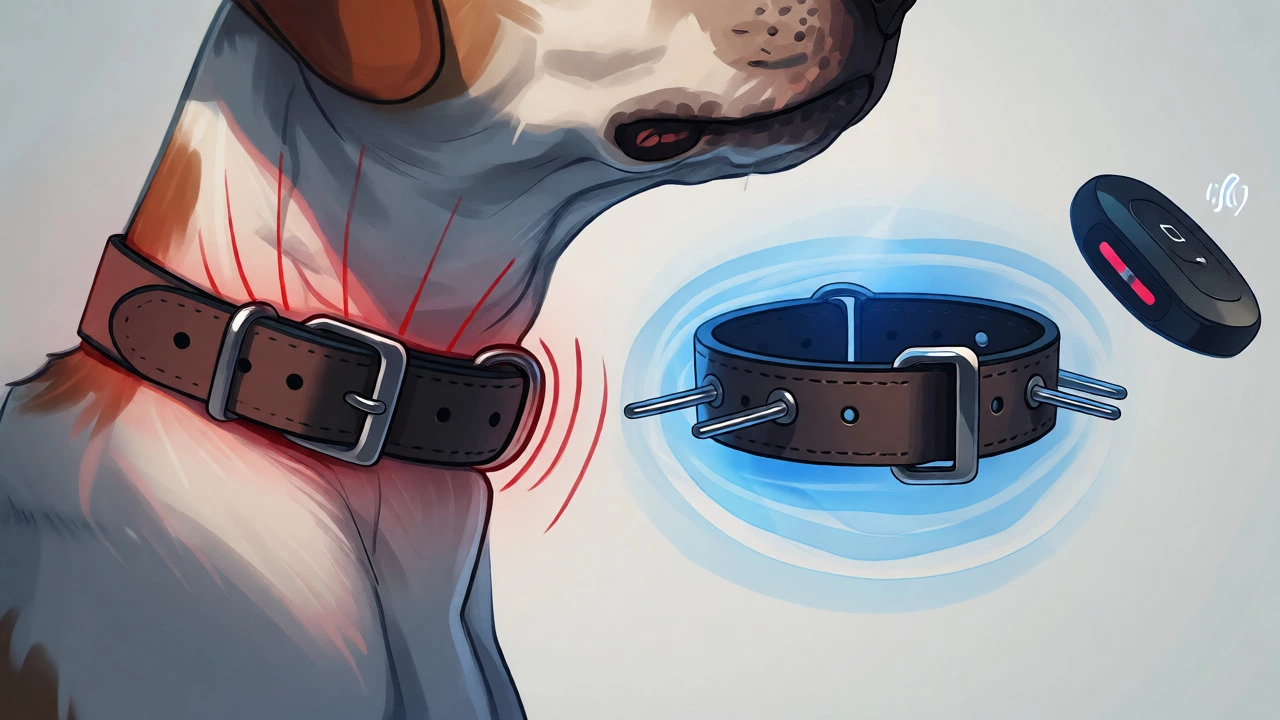
A frequent question is whether Cesar Millan uses electronic collars (e-collars or shock collars). The answer is nuanced. He has used them in specific cases, particularly for recall training in off-leash scenarios or for working dogs that need distance communication. However, he is critical of how the average owner uses them. Many people buy an e-collar and immediately start shocking their dog for minor mistakes, turning the device into a torture instrument rather than a training aid.
When Millan does utilize electronic stimulation, he sets the level extremely low-often to a vibration or a tingling sensation barely noticeable to humans. The goal is again redirection, not pain. He pairs the stimulus with a command so the dog associates the feeling with the action required. For example, if a dog ignores the "come" command, a low-level tone might be emitted. If the dog turns, the tone stops. Over time, the tone alone triggers the response. He warns that relying on e-collars without first establishing basic obedience on-leash is a recipe for disaster. You can’t teach a new skill with a shock; you can only refine a known behavior.
Positive Reinforcement vs. Balanced Training
Modern dog training communities often pit "positive-only" trainers against "balanced" trainers like Millan. Positive-only methods rely heavily on treats and toys to reward desired behaviors, avoiding any aversive stimuli. Millan falls into the balanced camp. He uses rewards, sure-he praises his dogs enthusiastically-but he also uses corrections. He argues that in the wild, dogs experience both social rewards (play, food) and social penalties (being growled at, pinned down). Ignoring the penalty side of canine communication can lead to confusion for dogs that need firm guidance.
For many owners, especially those with high-drive breeds like German Shepherds, Huskies, or Pit Bulls, pure positive reinforcement can sometimes hit a ceiling. These dogs may become over-aroused by treats, making them less focused. Millan’s use of collars helps lower that arousal state. By managing the physical energy through controlled walking and structured corrections, the dog becomes calmer and more receptive to learning. It’s not about suppressing the dog’s spirit; it’s about channeling their energy into productive outlets.
Common Mistakes Owners Make With Training Collars
If you’re inspired to adopt some of Cesar Millan’s techniques, beware of these common pitfalls. First, don’t jump straight to the strongest tool. Start with a martingale or a front-clip harness. Only escalate to a prong collar if necessary. Second, never leave a training collar on your dog unsupervised. Prong collars can snag on fences or crates, leading to panic injuries. Remove them after your training session.
Third, check your own emotional state. Dogs are incredibly sensitive to human energy. If you’re frustrated, angry, or anxious, your dog will mirror that. A correction delivered in anger feels different to a dog than one delivered with calm authority. Millan stresses that you must project "calm assertive energy." If you can’t maintain that, put the leash down and take a break. Finally, remember that no collar fixes a relationship problem. If your dog ignores you, it’s likely because you haven’t established yourself as a reliable leader yet. Spend time on exercise and bonding before worrying about the hardware.
Does Cesar Millan use shock collars?
Yes, but sparingly and carefully. He uses them primarily for recall training in open spaces or for working dogs. He insists on using the lowest possible setting, often just a vibration or tone, and always pairs it with verbal commands. He advises against using them for basic obedience or housebreaking.
Why does Cesar Millan prefer prong collars over flat collars?
He prefers prong collars for strong pullers because they distribute pressure evenly around the neck, reducing strain on the trachea. Flat collars concentrate force on the throat, which can trigger the oppositional reflex, causing the dog to pull harder. Prong collars provide a clearer, more humane signal for redirection.
Is Cesar Millan's method considered positive reinforcement?
No, it is classified as "balanced" training. While he uses praise and rewards, he also incorporates corrections (leash pops, touch, voice tones) to communicate boundaries. This differs from strictly positive-reinforcement methods that avoid all aversive stimuli.
Can I use a prong collar on a puppy?
Generally, no. Puppies have delicate necks and are still learning basic motor skills. Most experts, including those aligned with Millan’s school of thought, recommend starting with a flat collar or martingale. Prong collars are usually introduced once a dog reaches physical maturity, typically around 6 to 12 months depending on the breed size.
What kind of leash does Cesar Millan recommend?
He recommends a standard six-foot fixed-length leash made of leather or nylon. He avoids retractable leashes for training because they encourage pulling and reduce the handler's ability to provide immediate, consistent feedback.