🐕 Dog Grooming Difficulty Calculator
Estimated Time: ~30 minutes
Key Challenges
Recommended Frequency
Most people think the hardest part of dog grooming is getting a dirty dog clean. It’s not. The real struggle usually happens after the bath, when you’re trying to dry a wet, matted coat without making the dog panic or tearing out healthy hair. Whether you’re doing this at home or paying a pro, understanding where the friction lies helps you set realistic expectations and avoid costly mistakes.
The Silent Killer: Matting and Undercoat Traps
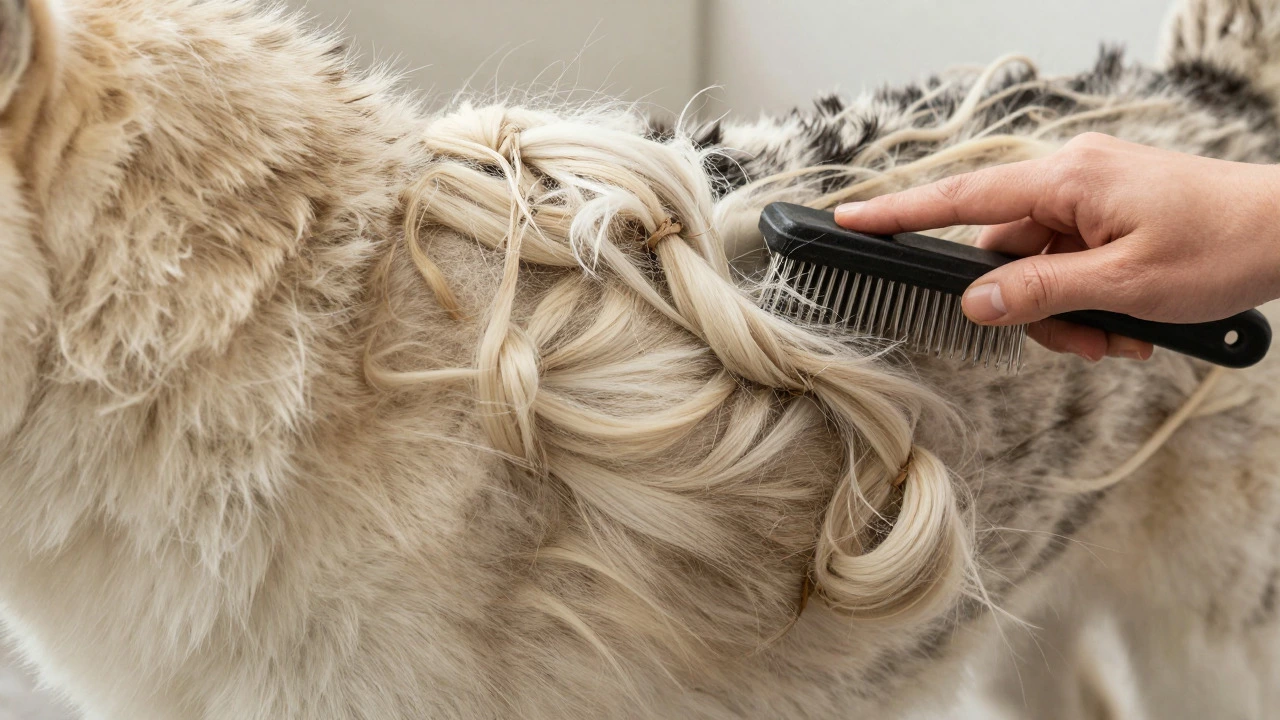
If you own a double-coated breed like a Husky, Golden Retriever, or Poodle mix, you know that fur doesn’t just sit on the skin-it grows in layers. The topcoat protects against weather, while the dense undercoat insulates. When these layers tangle, they form mats. A small knot today can become a painful, skin-tight mat tomorrow if ignored.
Matting is the single biggest time-consumer in any grooming session. For a severely matted dog, removing the knots can take three to five times longer than a standard trim. Worse, if a mat sits close to the skin, pulling it with a brush can cause bruising or even skin tears. This is why many owners assume their dog needs a full shave-down, but a skilled groomer often prefers to de-mat carefully to preserve the natural coat structure.
Navigating Sensitive Zones: Ears, Paws, and Nails
Beyond the body, specific areas trigger fear responses in almost every dog. The ears are particularly tricky because the canal is narrow, curved, and filled with wax and debris. Cleaning them requires gentle tools and a calm hand; one wrong move can scratch the eardrum or cause a head-shake that sprays water everywhere.
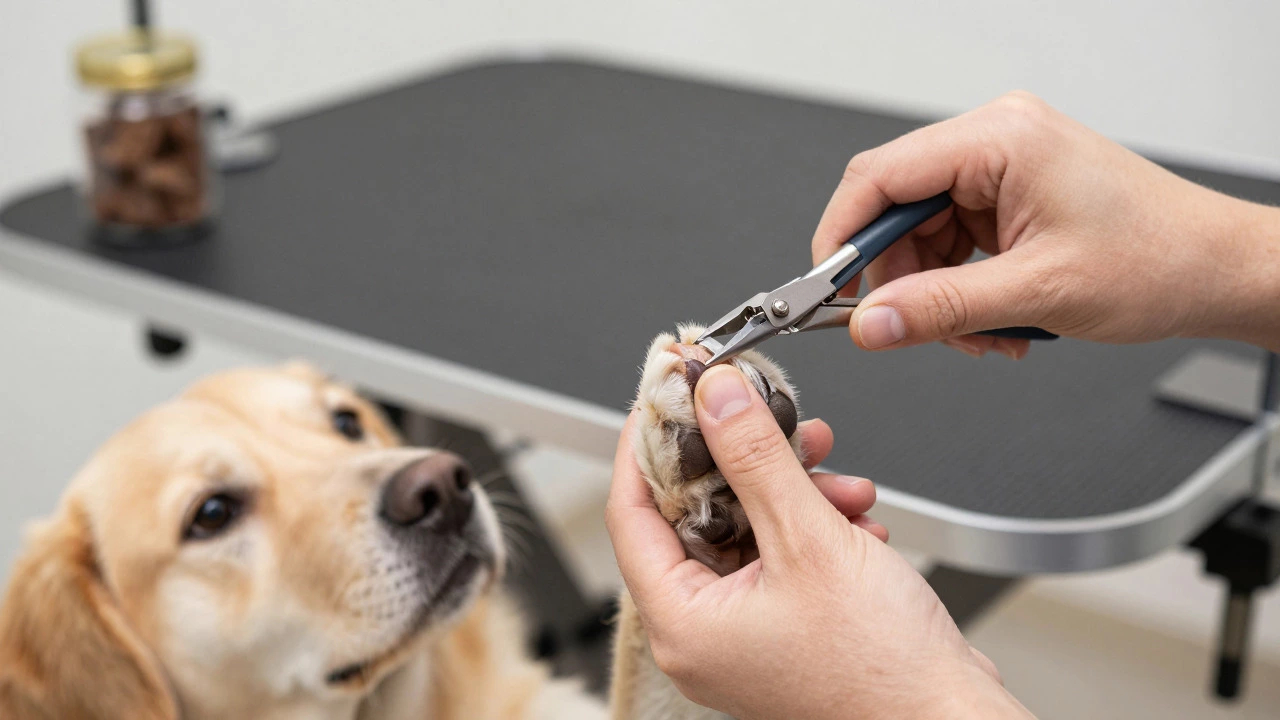
Paw pads are another hotspot. Dogs rarely like having their feet held still. Between the toes, dirt, grass seeds, and old nail clippings accumulate. If you miss a seed here, your dog might limp for days. Nail trimming adds another layer of complexity. Cutting too short hits the quick-the pink, nerve-filled center-which causes immediate pain and bleeding. For dogs with dark nails, finding the quick is guesswork unless you use a flashlight or clip incrementally.
Coat Type Dictates the Difficulty Curve
Not all coats are created equal. The difficulty of grooming depends heavily on the texture and growth pattern of the fur. Here’s how different coat types compare in terms of maintenance effort:
| Coat Type | Common Breeds | Main Challenge | Frequency Needed |
|---|---|---|---|
| Double Coat | Husky, German Shepherd | Shedding volume and undercoat matting | Weekly brushing |
| Curly/Wavy | Poodle, Bichon Frise | Tangling and maintaining shape | Daily brushing |
| Smooth/Short | Beagle, Boxer | Low maintenance, but high shedding | Bi-weekly brushing |
| Wired/Textured | Terriers, Schnauzers | Hand-stripping vs. clipping debate | Every 6-8 weeks |
Double-coated breeds shed seasonally, meaning two massive blowouts per year. During these times, daily brushing is non-negotiable. Curly coats, like those of Poodles, never stop growing. If left untrimmed, they drag on the floor and collect moisture, leading to yeast infections. Wired coats present a philosophical dilemma: traditional hand-stripping preserves the natural texture, but it’s slow and expensive. Clipping is faster but changes the coat’s feel permanently over time.
The Behavioral Hurdle: Keeping the Dog Still
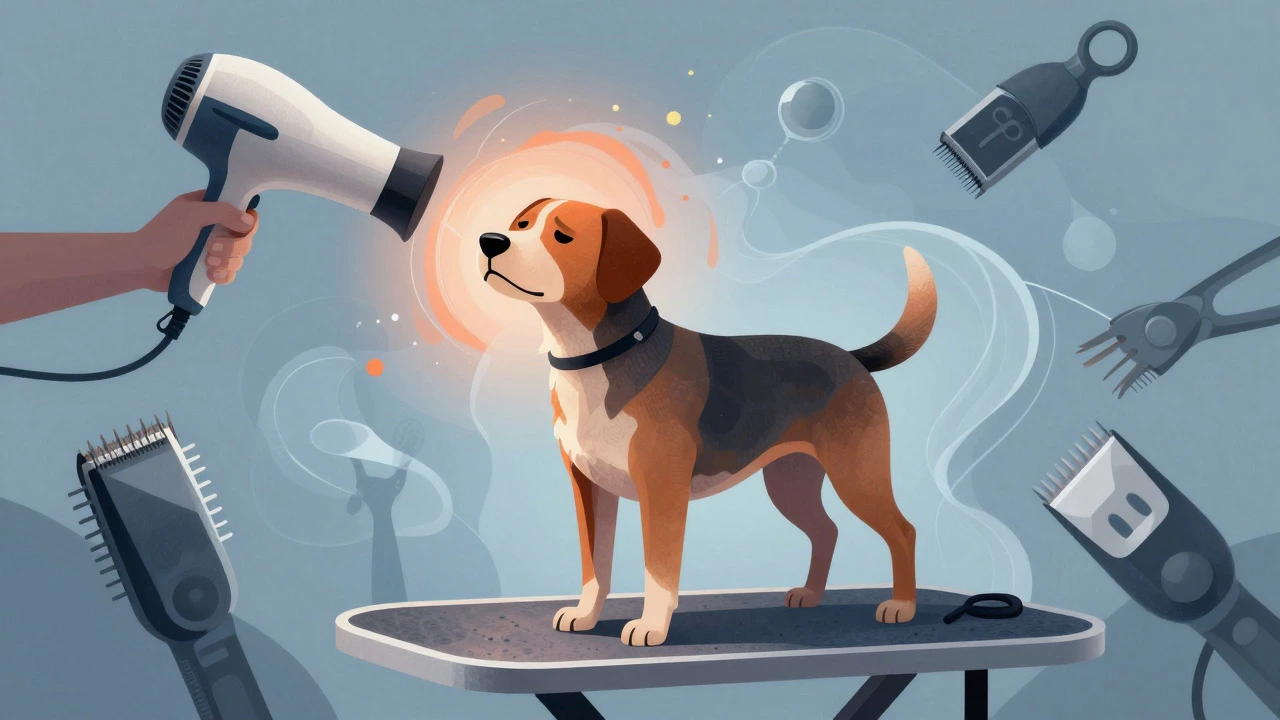
You can have the best clippers and brushes in the world, but if your dog won’t stand still, nothing works. Anxiety is the invisible barrier in grooming. Many dogs associate the grooming table with negative experiences-loud dryer noise, cold metal surfaces, or past painful mat removals.
A nervous dog moves unpredictably. One twitch during a nail trim can lead to a cut. A sudden lunge during ear cleaning can result in a scratched face. Professional groomers spend as much time on behavior management as they do on actual cutting. They use treats, positive reinforcement, and desensitization techniques to keep the dog relaxed. At home, this means breaking the process into tiny steps rather than trying to do everything in one go.
Tools That Make or Break the Session
Using the right equipment reduces physical strain on both you and the dog. Cheap clippers overheat quickly, causing burn marks on the skin. Blunt scissors tug at the hair instead of slicing cleanly. A poor-quality comb breaks easily when hitting a mat, leaving sharp plastic shards in the fur.
Investing in quality tools pays off. Self-healing blades last longer and cut smoother. Slicker brushes with fine teeth remove undercoat without damaging the topcoat. Detangling sprays reduce friction, making combing through knots less painful. Even the drying process matters: high-velocity dryers are fast but loud, while regular blow dryers are quieter but slower. Choosing the right tool for your dog’s temperament is key.
How to Tackle the Hard Parts Without Stress
You don’t need to be a professional to handle the tough aspects of grooming. Start by addressing the easiest parts first to build trust. Brush the back and sides before moving to the belly or legs. Use a treat jar within reach so you can reward calm behavior instantly.
For matting, never pull. Work from the tip of the mat toward the root, using a detangler spray and a pin comb. If a mat is tight against the skin, consider seeking professional help to avoid injury. For nails, trim one at a time, checking for the quick after each cut. If you’re unsure, err on the side of caution and leave them slightly long.
Finally, manage your environment. A non-slip mat on the table prevents slipping. Soft lighting reduces shadows that might scare the dog. And always have styptic powder ready for nail emergencies. Preparation turns a chaotic session into a manageable routine.
Frequently Asked Questions
Is it harder to groom a male or female dog?
Generally, males are slightly more challenging due to higher energy levels and potential marking behavior during handling. However, individual temperament matters more than gender. A well-socialized female may be calmer than an anxious male.
Why does my dog hate the dryer so much?
The combination of loud noise and strong airflow triggers fear in many dogs. The sensation of wind on wet fur can also feel unsettling. Desensitize your dog by running the dryer at low speed near them while giving treats, gradually increasing distance and volume over weeks.
Should I shave my dog if they have severe mats?
Only if the mats are touching the skin and cannot be combed out safely. Shaving removes the insulation layer, which can shock the dog’s temperature regulation system. De-matting is preferred if possible, though it takes longer and costs more.
How often should I brush a double-coated dog?
At least once a week, but twice a week is better during shedding seasons (spring and fall). Daily brushing is recommended if your dog spends time outdoors in grassy or wooded areas where burrs and seeds can get trapped.
What is the safest way to clean a dog's ears at home?
Use a vet-approved ear cleaner and cotton balls, not Q-tips, which can push debris deeper. Hold the ear flap up, apply a few drops of cleaner, massage the base of the ear for 30 seconds, then let the dog shake its head to expel loose debris. Wipe only the visible outer parts gently.