Dog Bed Replacement & Maintenance Calculator
Determine if it's time to replace your dog's bed based on material lifespan, maintenance habits, and health signs.
Analysis Result
That corner of the living room where your dog spends most of its day is supposed to be a sanctuary. But if you’ve ever picked up that worn-out cushion and caught a whiff of something less than fresh, you know it can quickly turn into a health hazard. We often think about replacing our own mattresses every seven years, but what about our dogs? The short answer is: it depends on the wear, the smell, and your dog’s specific needs. Generally, a high-quality dog bed lasts between one to three years, but some signs tell you it’s time to swap it out long before that.
Ignoring these signs isn’t just about aesthetics; it’s about your dog’s joint health, skin condition, and overall comfort. Let’s break down exactly how to spot the red flags, how to maintain the bed you have, and when it’s truly time to invest in a new one.
The Three Main Signs It’s Time for a New Bed
You don’t need a calendar to tell you when to replace your dog’s sleeping gear. You need your eyes, nose, and hands. If any of these three conditions are present, the current bed has failed its primary job: providing safe, comfortable support.
- Persistent Odors That Won’t Wash Out: Everyone knows dogs can get smelly. But if you’ve washed the cover multiple times and used enzymatic cleaners on the foam, yet that damp, musky smell lingers, bacteria and mold are likely growing deep inside the filling. This is especially common in humid climates or with older dogs who may have incontinence issues. No amount of surface cleaning will fix internal contamination.
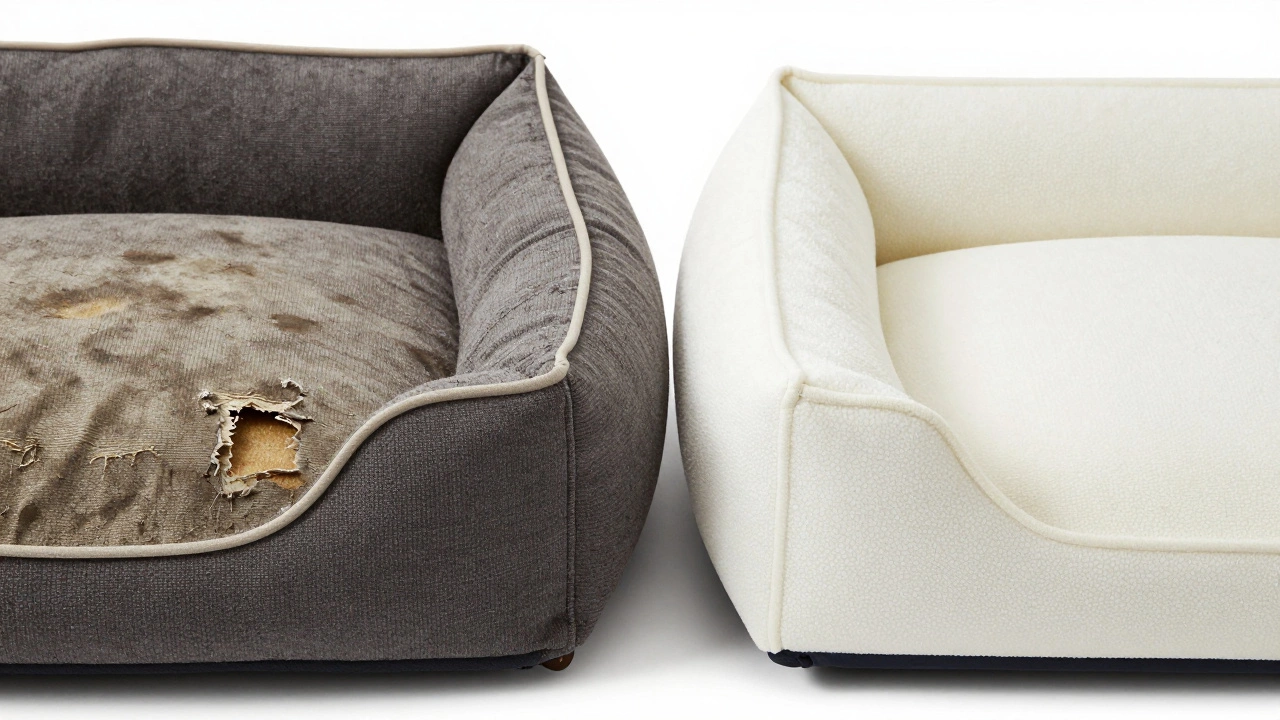
- Visible Damage to the Structure: Look closely at the edges and seams. Are there tears exposing the inner foam? Is the fabric pilling excessively? More importantly, press down on the center. Does it bounce back? If the foam has flattened completely and stays compressed, it no longer provides orthopedic support. For senior dogs or breeds prone to arthritis, like German Shepherds or Golden Retrievers, losing that support can lead to increased pain and stiffness.
- Allergic Reactions or Skin Irritation: If your dog starts scratching more frequently, develops hot spots, or seems restless when trying to settle down, the bed might be the culprit. Dust mites thrive in old bedding. Even if the bed looks clean, microscopic allergens accumulate over time. Switching to a fresh, hypoallergenic bed can sometimes resolve mysterious skin flare-ups.
Material Matters: How Long Different Beds Last
Not all beds are created equal. The lifespan of your dog’s bed is heavily dependent on the materials used in its construction. Understanding what you bought helps you predict when it will expire.
| Bed Type | Average Lifespan | Key Durability Factor | Best For |
|---|---|---|---|
| Memory Foam Orthopedic | 2-4 Years | Foam density (look for 3-5 lb density) | Senior dogs, large breeds, arthritis sufferers |
| Bolster/Donut Beds | 1-2 Years | Filling quality (shredded foam vs. polyester fiberfill) | Anxious dogs, small breeds, curlers |
| Cooling/Gel Beds | 1-3 Years | Gel layer integrity and cooling fabric weave | Dogs in hot climates, light-colored coats |
| Rough-and-Tumble Chewer Beds | 6 Months-2 Years | Vinyl or canvas material thickness | Puppies, aggressive chewers |
For instance, a budget bolster bed filled with cheap polyester fiberfill might clump up after just six months of heavy use. In contrast, a high-density memory foam bed with a removable, washable cover can last several years if maintained properly. If you have a powerful digger, look for beds with reinforced stitching and non-slip bottoms. These features extend life by preventing the bed from sliding around and tearing under stress.
Maintenance Tips to Extend Your Bed’s Life
Replacing a good bed is expensive. Before you toss it, try these maintenance steps to see if you can revive it. Regular care can add months or even years to the bed’s usability.
- Wash According to Label Instructions: Most modern beds have removable covers. Wash these every 1-2 weeks in warm water with a mild, fragrance-free detergent. Avoid bleach, which can degrade fabrics and irritate your dog’s skin. Tumble dry on low heat or air dry to prevent shrinking.
- Deodorize the Core: If the cover comes off, sprinkle baking soda over the exposed foam core. Let it sit for 15 minutes, then vacuum thoroughly. This absorbs odors and moisture without damaging the foam. Do this monthly.
- Use a Protective Layer: Consider placing a waterproof, breathable mattress protector between your dog and the foam core. This catches accidents, drool, and dander, keeping the actual foam clean. It’s cheaper to replace a $20 protector than a $100 orthopedic bed.
- Rotate the Bed: Just like human mattresses, dog beds sag where weight is concentrated. Rotate the bed 180 degrees every few weeks to ensure even wear across the surface.
When Size and Growth Dictate Replacement
Sometimes the bed is fine, but your dog has outgrown it. This is common during puppyhood or if you adopt an adult dog who was previously housed in a smaller space. A bed that is too small forces your dog to sleep curled up tightly, which can restrict breathing and circulation. Conversely, a bed that is too large for a small dog can feel insecure, leading to anxiety.
To measure correctly, have your dog lie down in their natural sleeping position. Measure from nose to tail. Add two inches to each end for comfort. If your dog is still growing-especially large breeds like Labradors or Great Danes-you might need to upgrade twice in the first year. Don’t buy a “grow-into-it” bed that is drastically oversized; it defeats the purpose of security and warmth.
Health Considerations for Senior and Special Needs Dogs
If your dog is aging, the stakes for having the right bed are higher. Arthritis, hip dysplasia, and general stiffness become common concerns. An old, flat bed offers no relief for pressure points. In fact, sleeping on hard floors or thin mats can exacerbate joint pain, leading to reduced mobility and lower quality of life.
Look for beds labeled “orthopedic” with CertiPUR-US certified foam, which ensures the foam is free from harmful chemicals. For dogs with limited mobility, consider beds with raised edges or ramps to help them get on and off easily. If your dog has cognitive decline, a familiar, comfortable scent in a clean bed can provide reassurance and reduce confusion.
Environmental Impact and Disposal
Throwing away a dog bed feels wasteful, and it is. Most beds are made of mixed materials-foam, fabric, zippers-that are difficult to recycle together. Here’s how to handle disposal responsibly:
- Donate: If the bed is clean and in good condition, local animal shelters often accept donations. Call ahead to check their current needs.
- Repurpose: Cut up old foam inserts to make DIY cushions for car seats or human floor pillows. The fabric covers can be used as rags for cleaning muddy paws.
- Recycle Components: Some specialized recycling programs accept foam. Check with local waste management facilities to see if they have textile or foam recycling options.
Choosing eco-friendly beds initially can also reduce future waste. Look for brands using recycled plastic bottles for filling or organic cotton for covers. While they may cost slightly more upfront, their durability and environmental footprint often justify the investment.
Can I put my dog bed in the washing machine?
It depends on the size and material. Small to medium beds with removable covers can usually go in the washer. Large orthopedic beds often cannot fit in standard machines. Always check the manufacturer’s label. If the entire bed must be washed, use a commercial laundromat machine with extra capacity. Never put memory foam cores in the washer; they absorb water and take forever to dry, leading to mold.
How do I remove stains from a dog bed?
Act quickly. Blot (don’t rub) the stain with a clean cloth. For urine or vomit, use an enzymatic cleaner specifically designed for pet messes. These break down the proteins causing the odor. Avoid ammonia-based cleaners, as they smell like urine to dogs and may encourage re-soiling. For grease or dirt, a mixture of mild dish soap and warm water works well. Test any cleaner on a small, hidden area first to ensure it doesn’t fade the fabric.
Is it better to buy one expensive bed or replace cheap ones often?
Generally, investing in one high-quality bed is more cost-effective and healthier for your dog. Cheap beds often use low-density foam that flattens quickly, offering poor support. They also tend to have weaker seams that tear easily. A premium bed lasting three years costs less per month than three cheap beds replaced annually. Plus, your dog gets consistent, proper support throughout those years.
Why does my dog’s bed smell bad even after washing?
If the smell persists after washing the cover, the issue is likely inside the foam core. Moisture from drool, humidity, or minor accidents can seep into the foam, creating a breeding ground for bacteria and mold. Surface cleaning won’t reach these deep layers. If the odor remains after trying baking soda and airing it out, it’s time to replace the bed to protect your dog’s respiratory health.
Do I need to replace my dog’s bed if they stop using it?
Not necessarily. Dogs change preferences based on age, health, and temperature. A young, active dog might prefer cool floors, while an older dog seeks softness. If your dog abandons the bed, check if it’s too hot, too firm, or simply uncomfortable. Try moving it to a quieter location or adding a fresh blanket. If they consistently avoid it despite attempts to adjust, they may prefer a different type of bed (e.g., switching from a bolster to a flat mat).