Puppy Sleeping Arrangement Planner
Tell Us About Your Puppy
Fill out the form to see where your puppy should sleep tonight.
Recommended Setup:
Key Tips for This Stage:
There’s a specific kind of silence that only exists at 3:00 AM when you’re lying awake, listening to the faint whimpers coming from a small crate on your bedroom floor. It’s a sound that triggers every parental instinct and every logical thought you have simultaneously. Should you get up? Should you let them cry it out? Or should you just bring the whole crate into bed with you?
The question should you sleep in the same room as your puppy doesn’t have a one-size-fits-all answer, but there is a clear path through the confusion. It depends less on what looks cute and more on what keeps everyone sane. In Auckland, where I’ve watched countless puppies transition from chaotic newborns to confident dogs, the consensus among trainers and vets leans heavily toward proximity, not necessarily contact. Here’s how to navigate those first few nights without losing your mind or your dog’s confidence.
The Case for Keeping Them Close (But Not in Bed)
For the first week or two, having your puppy in the same room as you is arguably the most effective strategy for successful housebreaking and bonding. Puppies are social animals; they spent their first eight weeks sleeping in a pile with their littermates. Being alone in a dark, quiet house feels unnatural and scary to them. When you’re nearby, even if they can’t see you, the scent and sound of your breathing provide a safety net.
This proximity makes potty training significantly easier. If you hear stirring, scratching, or whimpering, you can react immediately. Rushing downstairs from another part of the house often means arriving too late, resulting in puddles on the kitchen tile instead of grass outside. By keeping the crate in your bedroom, you shorten the reaction time to seconds, which helps the puppy associate the urge to go with going outside, rather than holding it until they inevitably fail.
| Arrangement | Best For | Main Risk | Success Rate |
|---|---|---|---|
| Crate in Bedroom | New puppies, anxious breeds, potty training | Noise disturbance | High |
| Crate in Hallway/Living Room | Older puppies (4+ months), independent dogs | Feeling isolated | Medium |
| Dog Bed Next to Yours | Confident puppies, no separation anxiety | Chewing furniture/bedding | Variable |
| In Your Bed | Small breeds, extreme cold weather | Behavioral issues later | Low (for long-term) |
Why Crate Training Works Best in the Bedroom
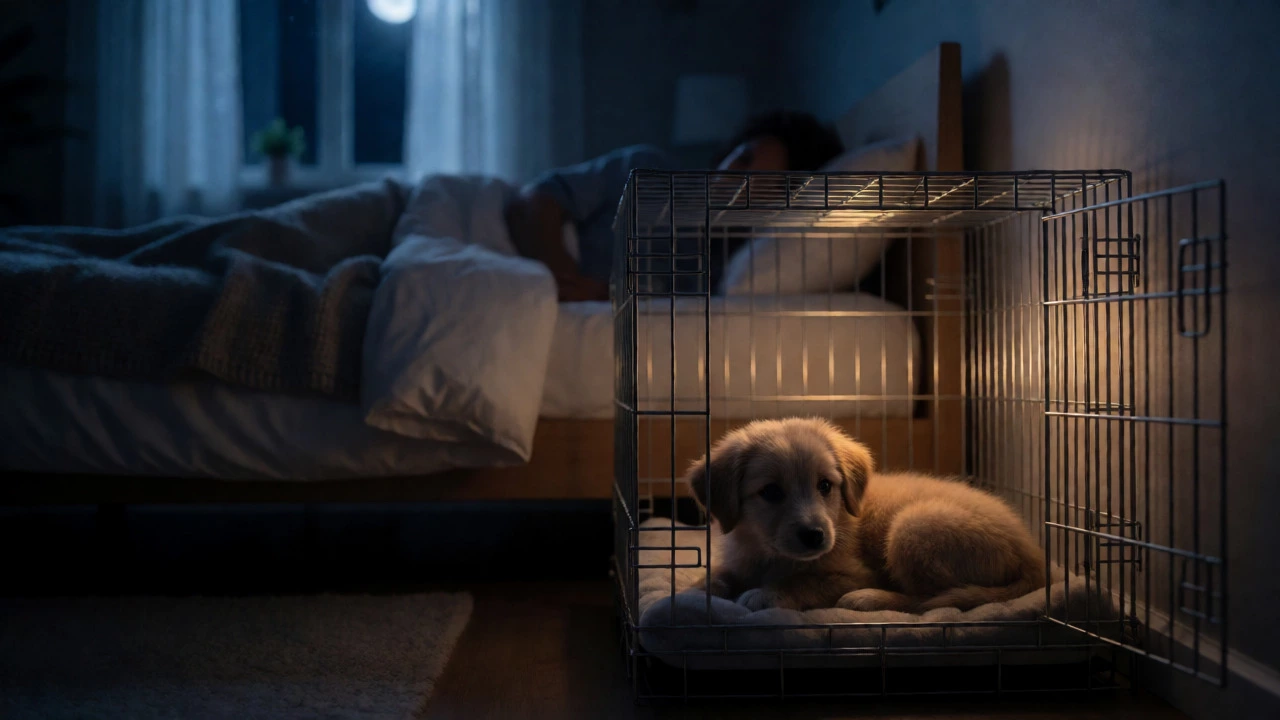
A crate isn’t a punishment cell; it’s a den. Dogs naturally seek enclosed spaces for sleep because it offers security. When you place this den in your bedroom, you leverage their pack instinct. They feel protected by your presence. This reduces crying because the isolation factor is removed. The puppy knows you are there, so they don’t need to bark to summon you.
However, placement matters. Do not put the crate directly next to your bed if your puppy is a light sleeper or if you toss and turn. The vibration and noise can wake them, leading to a cycle of waking up and barking. Instead, place the crate against a wall, perhaps near a bedside table, but far enough away that your movements don’t disturb them. Some owners find placing a ticking clock wrapped in a towel inside the crate mimics the heartbeat of a mother dog, which can be surprisingly soothing for young pups.
The Risks of Letting Them Into Your Bed Early
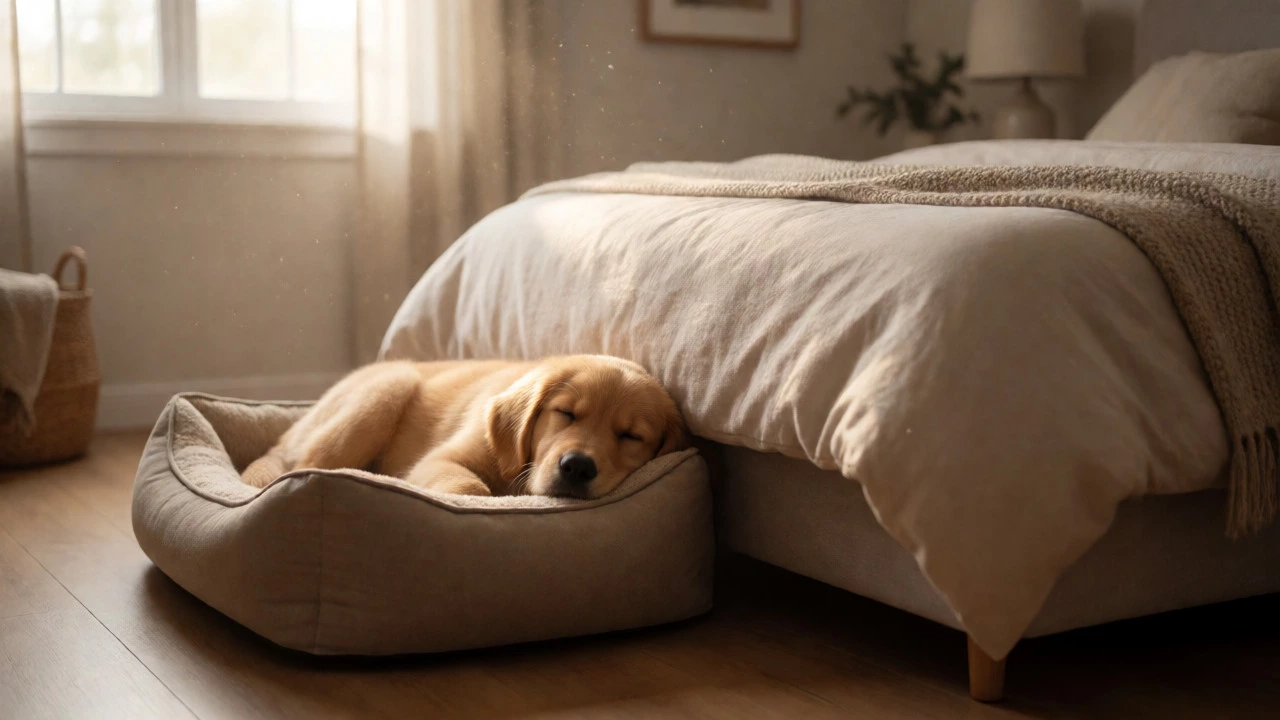
We’ve all seen the photos of tiny Golden Retrievers curled up on pillows. It’s adorable. But bringing a puppy into human beds before they are fully trained can create habits that are hard to break. First, there’s the accident risk. Bladders are tiny. A full bladder might result in a wet sheet rather than a wet crate pad. Cleaning urine out of a mattress is infinitely harder than washing a crate tray.
Secondly, it blurs boundaries. If a puppy learns that your bed is their bed, they may struggle to understand why they can’t jump up on guests or why they can’t chew the corner of the duvet during the day. While some people successfully co-sleep with adult dogs, starting this habit with an untrained puppy often leads to resource guarding or possessiveness over the sleeping space. If you plan to let them on the furniture eventually, wait until they understand commands like "off" or "place." Otherwise, keep the bed off-limits initially to establish clear rules.
Transitioning Out of the Bedroom
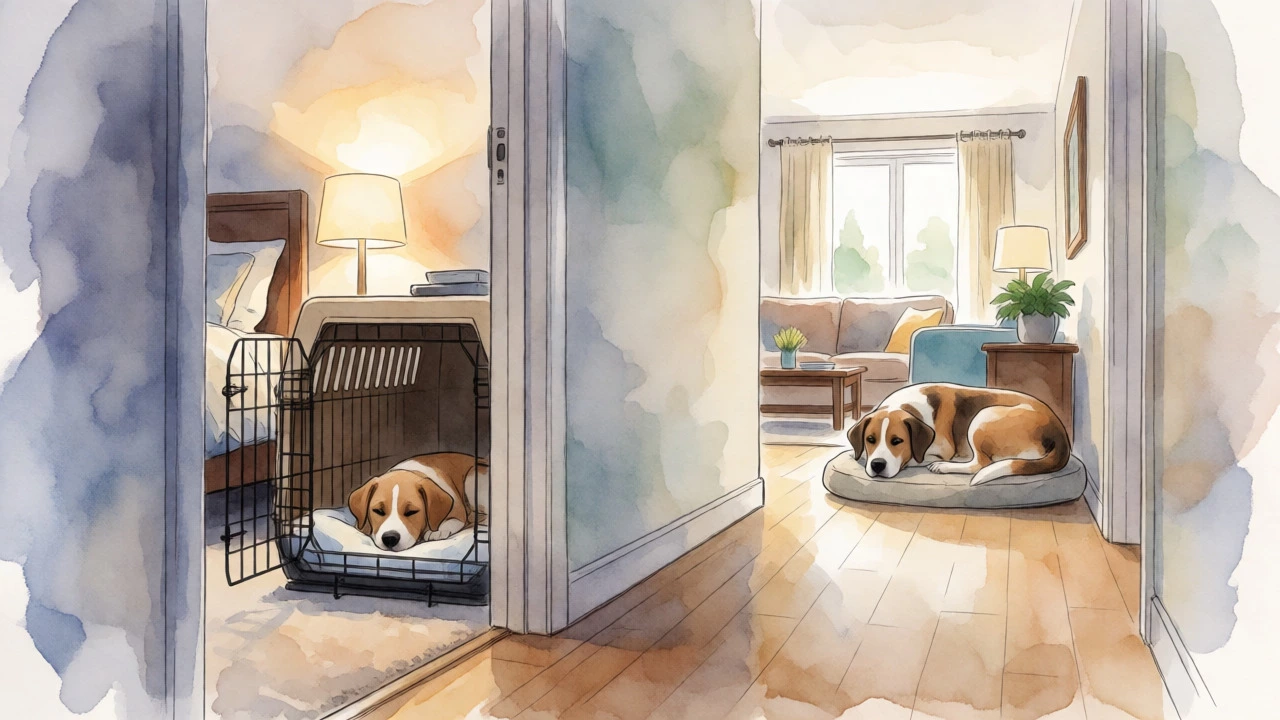
You won’t always want a crate taking up floor space in your master bedroom. As your puppy grows-usually around four to six months-they gain better bladder control and confidence. This is the time to consider moving their sleeping area. Don’t move them abruptly from the bedroom to the garage or a distant hallway. That sudden shift can trigger separation anxiety.
Start by moving the crate to the landing or hallway just outside your door. Keep the door open so they can still see and smell you. Over several nights, gradually move the crate further away. If they start whining, pause the progress. Wait a few days before moving it again. This gradual desensitization teaches them that being away from you is safe and temporary. Many owners find that once the puppy hits six months, they happily sleep in a living room crate while the family sleeps upstairs, provided the daytime routine is solid.
Dealing with Nighttime Whining
Whining is the biggest hurdle. It sounds desperate, and it makes you want to rush in. But rushing in reinforces the behavior. If you pick them up every time they squeak, they learn that squeaking equals attention. Instead, try these steps:
- Check needs first: Is the water bowl empty? Did they just eat? If yes, address it quietly and calmly.
- Ignore mild whining: If they are just settling down, ignore it. Turn on white noise or a fan to mask the sound.
- Address intense distress: If the crying is frantic, speak softly from your bed. Say "It's okay, settle." Do not get up unless necessary.
- Potty check: If it’s been three hours since the last potty break, take them out quickly and boringly. No play, no cuddles. Straight back to the crate.
Consistency is key. If you give in after twenty minutes of crying, you teach them that twenty minutes of crying gets results. If you hold out for thirty, they learn thirty minutes is the price of admission. Aim for consistency, not perfection.
Health and Hygiene Considerations
From a health perspective, keeping a puppy in your room allows you to monitor their breathing and movement. Young puppies are prone to hypothermia if left in drafty areas, and your body heat in the room helps regulate the ambient temperature. However, hygiene is crucial. Puppies shed dander and dirt from outdoor walks. If you have allergies, sleeping in the same room with a dog might worsen symptoms. Use a HEPA air purifier in the bedroom if you’re sensitive.
Also, watch for signs of illness. A healthy puppy should sleep deeply. If your puppy is restless, panting excessively, or refusing to settle, it could indicate pain, parasites, or digestive upset. Catching these signs early is easier when you’re in the same room. Vets recommend checking gums for color and ensuring hydration levels remain stable during the adjustment period.
Final Thoughts on Building Trust
Sleeping arrangements are about building trust, not just managing logistics. When a puppy learns that you respond to their needs appropriately-not by ignoring them completely, nor by coddling them constantly-they develop secure attachment. This security translates to better behavior during the day. A well-rested puppy is a trainable puppy. So, start with the crate in your room. It’s the safest bet for housebreaking and emotional stability. Once they’re reliable and older, you can decide together whether they belong in the hallway, the living room, or occasionally on the couch. But for those first critical weeks, stay close. Your presence is their anchor.
How long should a puppy sleep in my bedroom?
Most experts recommend keeping the puppy's crate in your bedroom for the first 3 to 6 months. This duration aligns with typical bladder control development and helps prevent separation anxiety. Once the puppy can hold their bladder for 6-8 hours overnight and shows no signs of distress when left alone, you can gradually move their sleeping area to a different location.
Is it bad to let a puppy sleep in my bed?
It isn't inherently "bad," but it is risky for new owners. Puppies lack bladder control, leading to potential accidents on bedding. Additionally, allowing a puppy on the bed can blur boundaries, making it difficult to enforce rules later, such as keeping them off furniture. If you choose to co-sleep, ensure the puppy is fully house-trained and understands basic commands like "off" to maintain control.
What if my puppy cries all night in the crate?
First, rule out physical needs like hunger or the need to urinate. If the puppy is comfortable, try using white noise to soothe them. Avoid picking them up immediately, as this rewards the crying. Speak calmly from your bed to reassure them. If crying persists for more than 15-20 minutes, take them out for a quick, boring potty break, then return them to the crate. Consistency is vital; if you let them out only when quiet, they learn that quietness brings freedom.
Can sleeping in the same room cause separation anxiety?
No, sleeping in the same room generally prevents separation anxiety by providing comfort and security. Anxiety arises when a dog is isolated too early or inconsistently. By gradually moving the crate out of the room over weeks, you desensitize the puppy to being apart from you. Sudden isolation causes stress; gradual distance builds independence.
Where exactly should I place the crate in my bedroom?
Place the crate against a wall, away from direct drafts and heavy foot traffic. Ideally, it should be within earshot of your bed but not so close that your movements wake the puppy. Some owners cover three sides of the crate with a blanket to create a darker, den-like environment, which encourages deeper sleep.