TSA Pet Carrier Size Checker
Check if your pet carrier meets TSA requirements for cabin travel. Most airlines require carriers to be under 17" L x 10" W x 7" H.
Standard airline requirements: 17" L x 10" W x 7" H
Hard-sided carriers only. No wheels or protruding handles.
Traveling with your pet through TSA doesn’t have to be a nightmare. Thousands of people do it every week-dogs, cats, even small rabbits-and most of them breeze through without stress. The key isn’t luck. It’s knowing exactly what to do, what to bring, and what to expect. If you’ve ever stared at a security checkpoint wondering if your dog’s carrier will get flagged, or if you need to take out your cat’s food, you’re not alone. This guide cuts through the noise and gives you the real steps that work right now in 2026.
Know Your Pet’s Category
TSA treats pets differently based on how they’re traveling. There are two main ways: in the cabin or in cargo. Most travelers go with cabin travel because it’s easier, cheaper, and less stressful for the animal. If your pet is small enough to fit in an approved carrier under the seat in front of you, that’s your best option. Airlines like Southwest, JetBlue, and Delta allow pets under 20 pounds (including carrier) in the cabin. Check your airline’s website before you book-rules change often.
If your pet is too big, you’ll need to ship them as cargo. That’s a whole different process. TSA doesn’t screen cargo pets the same way. They’re handled by airline staff and checked at the cargo terminal. This guide focuses on cabin travel because that’s where most people get stuck at security.
Choose the Right Carrier
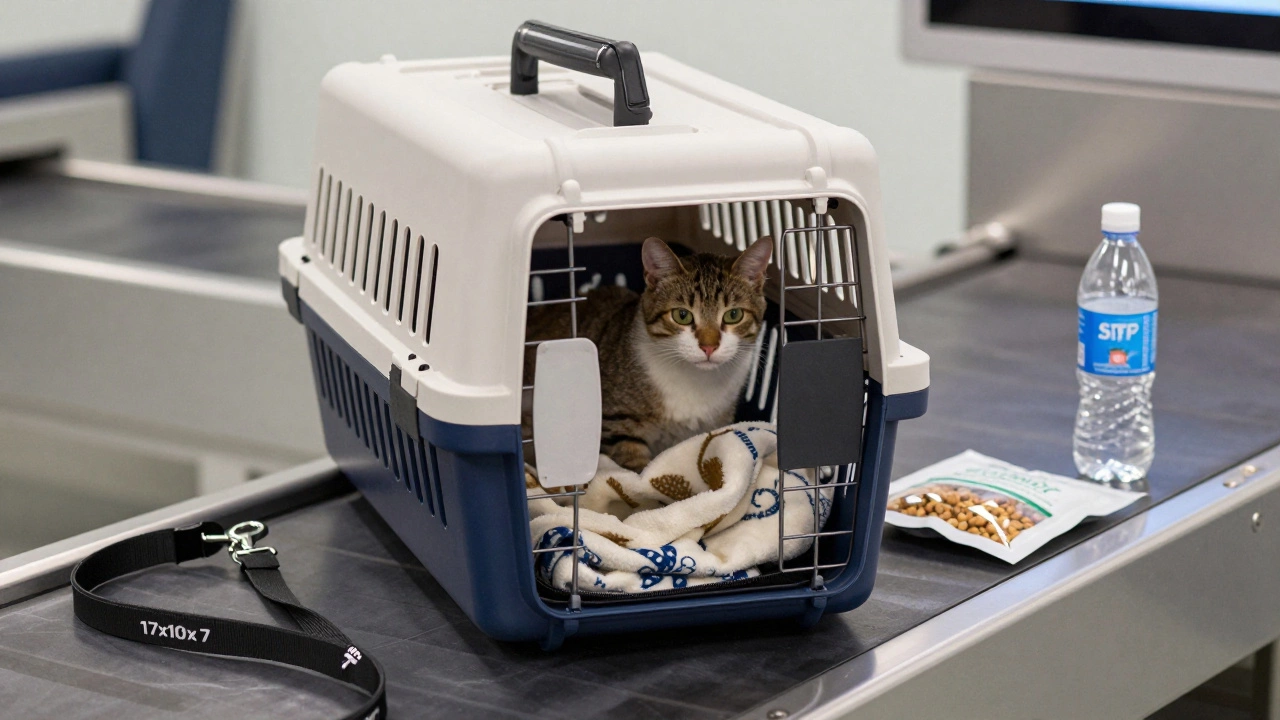
Your carrier isn’t just a bag-it’s part of your carry-on. TSA requires it to fit under the seat in front of you. That means dimensions matter. Most airlines allow carriers up to 17 inches long, 10 inches wide, and 7 inches high. Measure yours before you leave. If it’s too big, you’ll be turned away at the gate.
Hard-sided carriers are preferred. Soft-sided ones can collapse or get crushed. Look for one with a waterproof bottom, ventilation on three sides, and a secure zipper or latch. No wheels. No handles that stick out. TSA agents see hundreds of carriers a day. They know which ones are approved. If yours looks like a suitcase with a pet inside, you’ll get questioned.
Also, make sure the carrier has your name, phone number, and destination on it. TSA doesn’t require ID tags, but if your pet gets loose-even for a second-you’ll be glad you did.
Prepare Before You Arrive
You don’t need paperwork for domestic flights within the U.S. unless you’re flying to Hawaii or U.S. territories. But you do need to prepare your pet physically and mentally. Don’t feed your pet 4-6 hours before your flight. A full stomach means more accidents in the carrier. Offer water up until you walk into the airport.
Take your pet for a walk 30 minutes before you head to security. Let them go to the bathroom. If you’re at a large airport, most have pet relief areas near gates or in baggage claim. Google your airport’s name + “pet relief area” before you leave. Some even have fake grass or artificial turf.
Keep treats handy. Not for bribing-just for calming them down. A quiet pet is a smooth pet. If your dog gets anxious, try a calming vest or a familiar blanket. Don’t use sedatives. The FAA bans them for air travel. They can be dangerous at altitude.
At the Security Checkpoint
This is where people panic. Here’s what actually happens.
- Remove your pet from the carrier. TSA agents will ask you to do this. Don’t argue. They need to screen the carrier separately.
- Place the carrier on the X-ray belt. Your pet walks through the metal detector with you. No need to take off shoes or belts unless you’re flagged.
- Keep your pet on a leash. No harnesses. No retractable leashes. A standard 4-6 foot leash works best. Let them walk naturally. If they sit, that’s fine. If they sniff, that’s fine too.
- Don’t try to carry your pet through the scanner. Agents will stop you. They want to see your pet walk through on their own.
- After screening, you can put your pet back in the carrier. Most agents will help you zip it up. Just ask.
Food and water bowls? Leave them in the carrier. TSA doesn’t require you to take them out unless they’re liquids over 3.4 oz. If you’re bringing bottled water, pack it in your carry-on and give it to your pet after you pass security.
What You Can’t Bring
Some things seem harmless but will cause delays:
- Wet food in jars or pouches over 3.4 oz
- Large bags of dry food (stick to a single, sealed bag under 2 lbs)
- Extra collars or leashes (keep one on your pet, one in your bag)
- Toys with batteries (they set off the scanners)
- Calming sprays or diffusers (they’re considered liquids)
If you’re bringing treats, keep them in a small, clear plastic bag. TSA agents see hundreds of snacks. A clear bag makes their job easier-and yours too.
What to Do If You’re Delayed
Not every TSA agent knows the rules perfectly. If someone says your carrier is too big or your pet can’t walk through, stay calm. Ask to speak with a supervisor. Most supervisors have been trained on pet travel rules since 2023, after a major update from the FAA.
Bring a printed copy of your airline’s pet policy. Not the website-print it. Some agents will ask for it. Don’t argue. Just hand it over. You’ll get through faster.
If your pet barks or gets scared, apologize to those around you. Most people understand. A little empathy goes a long way. If someone complains, just say, “I’m sorry, we’re doing our best.” No need to explain further.
After Security
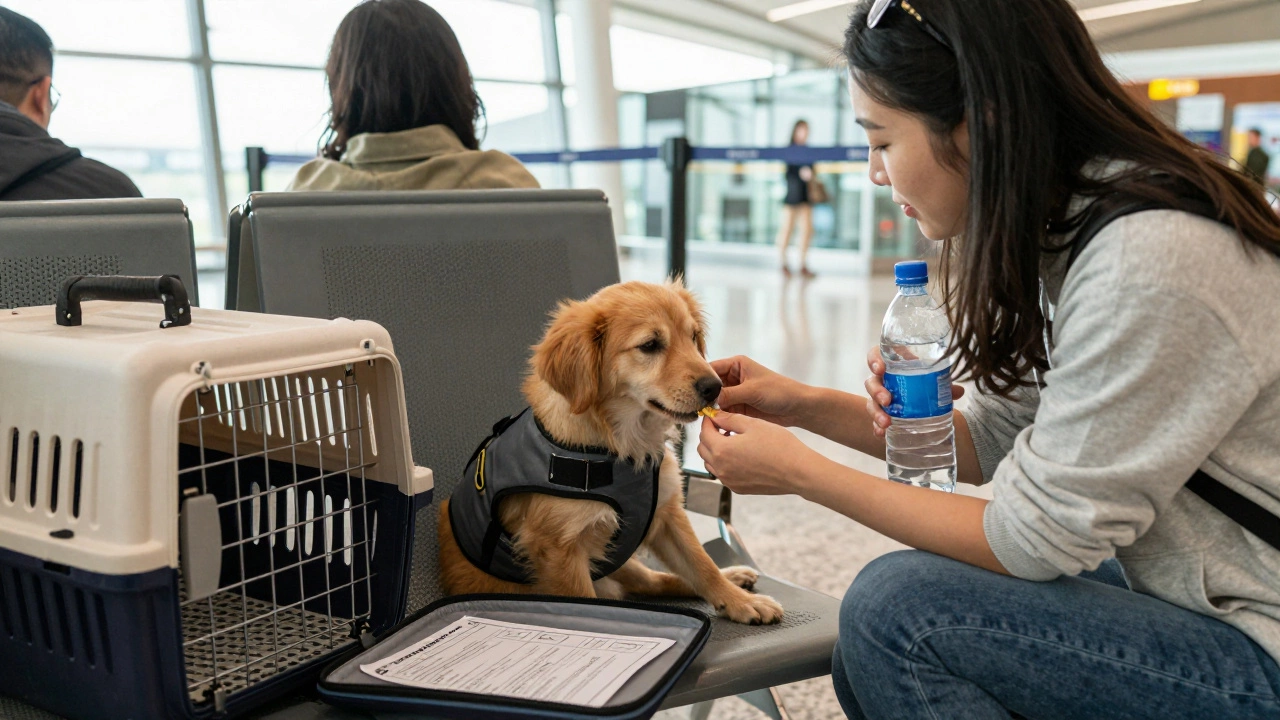
Once you’re through, find a quiet spot. Let your pet stretch. Give them water if you brought a bottle. Don’t rush to the gate. If you have time, walk around the terminal. A few minutes of calm helps reduce stress before boarding.
When you get to the gate, let the agent know you’re traveling with a pet. They’ll usually give you priority boarding. Most airlines let pet owners board before the main group. It gives you time to settle your pet without a crowd behind you.
On the plane, keep the carrier closed until the seatbelt sign turns off. Even if your pet is quiet, other passengers might be nervous. Keep treats ready for after landing too. The first thing your pet will want is a walk and a drink.
Final Tips
- Arrive 2 hours early. Domestic flights with pets need extra time.
- Don’t fly during holidays. More pets mean more delays.
- Check the weather. If it’s below 45°F or above 85°F, some airlines won’t let you check your pet-even in the cabin.
- Download your airline’s app. Some send real-time updates about pet policies.
- Bring a photo of your pet. In case the carrier gets lost, a picture helps.
Traveling with your pet isn’t about perfection. It’s about preparation. The more you practice-before you even leave the house-the smoother it’ll go. You’ve got this.
Do I need a health certificate to fly with my pet within the U.S.?
For most domestic flights, no. TSA doesn’t require health certificates. But your airline might. Some airlines ask for proof of vaccination or a vet exam within 10 days of travel. Always check with your airline directly. If you’re flying to Hawaii, Alaska, or U.S. territories, you’ll need a health certificate and possibly a quarantine period.
Can I bring my pet’s food on the plane?
Yes, but only in limited amounts. Dry food in a sealed bag under 2 pounds is fine. Wet food in containers over 3.4 oz must be placed in checked luggage. You can bring small portions of wet food in zip-top bags if they’re under 3.4 oz each. Just keep them in your carry-on and be ready to explain them to TSA agents.
What if my pet has anxiety during the flight?
Sedatives are banned by the FAA for air travel. Instead, use a calming vest, a familiar blanket, or a pheromone spray that’s not aerosol-based. Play quiet music through headphones near the carrier. Most dogs and cats calm down once they hear your voice. Talk to them gently during the walk through security and while boarding.
Can I carry my pet in my arms through security?
No. TSA requires pets to walk through the metal detector on their own. You must carry them in a carrier. If you try to hold your pet, agents will ask you to put them down. This rule is in place for safety and consistency. Even small cats and rabbits must be in approved carriers.
Are emotional support animals treated differently than service animals?
Yes. As of 2021, the Department of Transportation no longer recognizes emotional support animals as service animals. They’re now treated like regular pets. That means they must fit in an approved carrier under the seat. They don’t get priority boarding or special screening. Only trained service dogs (for physical, sensory, or psychiatric disabilities) are allowed to sit on your lap or walk freely.