Grooming Cost Estimator
Calculate Your Dog's Grooming Cost
Your Estimate
Estimated time: 0-2 hours
Included Services
- Bathing & Drying
- Brushing & De-matting
- Haircut/Trimming
- Nail Trimming
- Ear Cleaning
Walking into a pet salon and seeing a price tag can be confusing. You might wonder if that fee covers just a bath or if it includes the haircut you actually need. Understanding the specifics of a Full Dog Groom is a comprehensive service package that includes bathing, drying, brushing, haircutting, and essential health checks helps you avoid hidden costs and ensures your dog gets the care they require. Many owners book appointments expecting a quick wash, only to find out their dog needs mat removal or nail work that costs extra. Knowing exactly what happens during the appointment builds trust between you and the groomer.
A full groom is not just about making your dog look cute. It serves a critical health function. Mats can pull on skin, causing pain and infection. Overgrown nails alter your dog's gait, leading to joint issues. A professional service addresses these problems systematically. When you pay for this package, you are investing in hygiene and comfort, not just aesthetics. Let's break down every step of the process so you know exactly what your dog experiences.
The Pre-Groom Assessment and Brushing
Before the water even touches your dog, the process begins with a thorough inspection. The Groomer is a trained professional who evaluates the dog's coat condition and temperament before starting services will check for mats, skin irritations, or lumps you might have missed. This step is crucial because bathing a matted coat often makes the problem worse. Water tightens the knots, making them harder to remove and more painful for the animal.
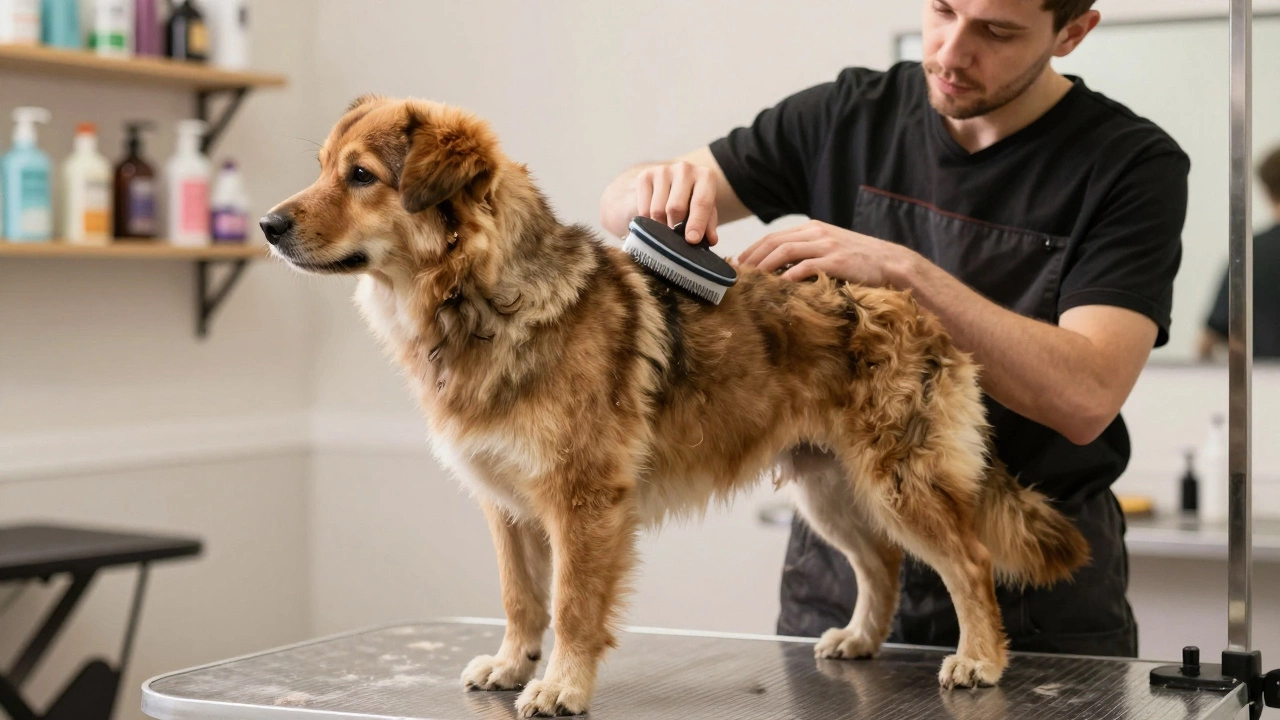
If your dog has a double coat, like a Golden Retriever or a German Shepherd, this brushing phase takes significant time. The groomer uses undercoat rakes and slicker brushes to remove loose fur from the dense underlayer. For single-coat breeds, like Poodles or Shih Tzus, they focus on detangling the long outer hair. This pre-bath brushing reduces the drying time later and prevents the hair from matting again while wet. If the mats are severe, the groomer might discuss shaving them down for your dog's safety.
Bathing and Drying Techniques
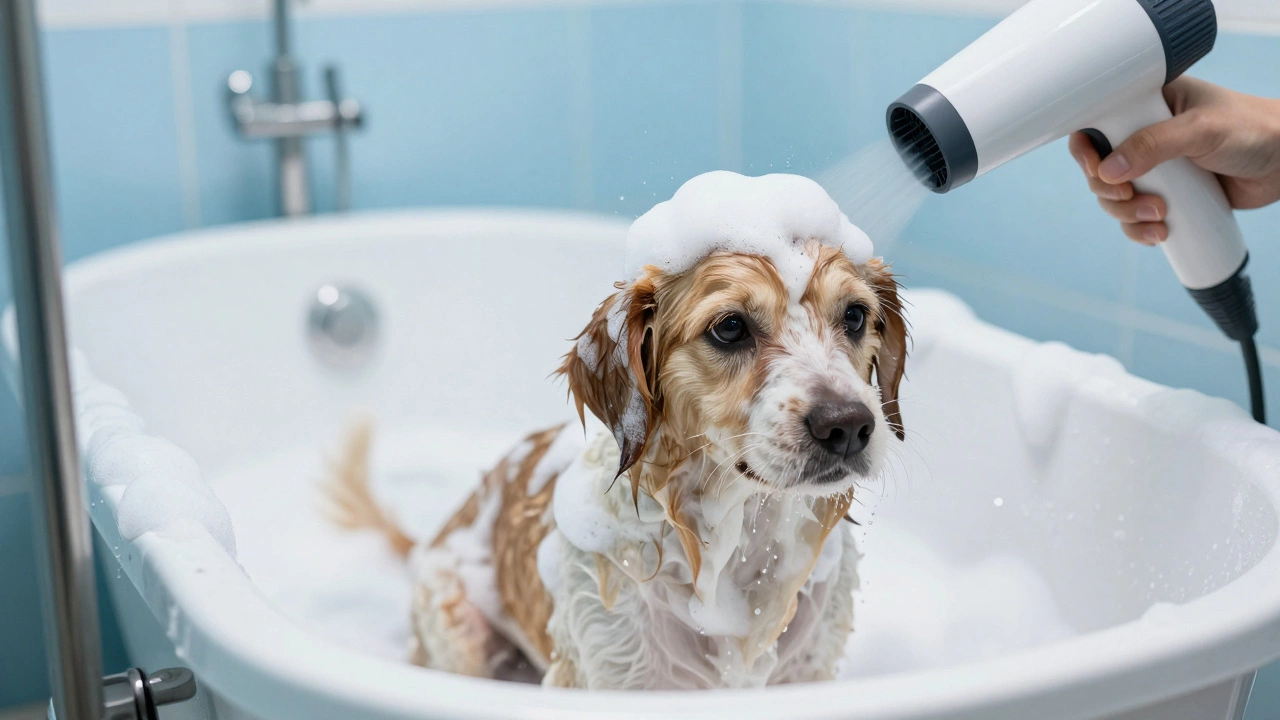
Once the coat is detangled, the bath begins. This is not just a rinse with plain water. Professional salons use specific Shampoo is a specialized cleaning solution formulated for canine skin pH and specific coat types based on your dog's needs. A standard bath uses a gentle cleanser to remove dirt and odors. If your dog has allergies or dry skin, they might use a hypoallergenic or oatmeal-based formula. For dogs with fleas or ticks, a medicated bath is necessary to treat the infestation safely.
After the shampoo, a conditioner is often applied. This makes the hair softer and easier to comb through for the cut. The drying process is just as important as the bath. Some salons use high-velocity dryers that blow the water out of the coat using air pressure. This method is faster but can be loud. Others use warm air dryers that fluff the coat gently. The groomer will towel dry first to remove excess moisture. Proper drying is essential because leaving a dog damp can lead to hot spots or fungal infections, especially in thick coats.
Haircutting and Styling Standards
The haircut is where the visual transformation happens. A full groom includes trimming the hair to a manageable length or a specific breed standard. The groomer uses Clippers is a motorized tool used for cutting large sections of hair quickly and evenly for the body and Scissors is a manual cutting tool used for precision trimming around the face, paws, and tail for detailed work. For example, a Poodle might get a specific clip pattern, while a Labrador might just get a tidy trim around the feet and tail.
Sanitary trims are a standard part of this service. This involves cleaning up the hair around the genital and anal areas. This keeps the dog clean and prevents feces or urine from sticking to the fur. It is a hygienic necessity rather than a cosmetic choice. If you have a specific style in mind, you should bring a photo before the appointment. However, the groomer will advise on what is practical for your dog's lifestyle. A long, flowing coat might look great but requires daily maintenance to prevent tangling.
Essential Health Checks and Add-ons
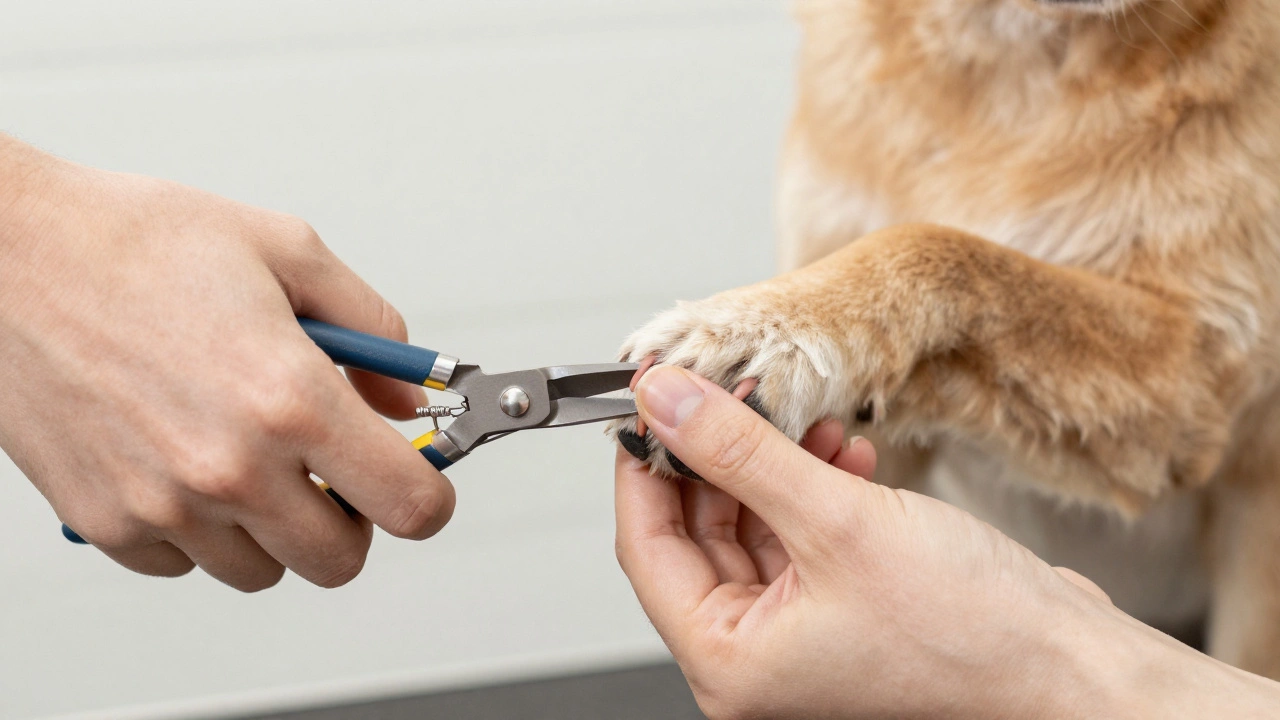
A true full groom goes beyond hair. It includes several health maintenance tasks that keep your dog comfortable. Nail Trimming is the process of shortening the dog's claws to prevent overgrowth and pain is almost always included. Long nails can curl and grow into the paw pad, causing severe pain. The groomer checks the quick (the blood vessel inside the nail) to avoid cutting too short. Some salons use a grinder to smooth the edges, which is less stressful than clipping for some dogs.
Ear Cleaning is a hygiene procedure that removes wax and debris from the ear canal is another standard inclusion. The groomer uses a cotton pad and a cleaning solution to wipe the visible parts of the ear. They do not insert anything deep into the canal, as this requires veterinary training. This step prevents ear infections and keeps the smell down. Finally, anal gland expression may be offered. This involves manually emptying the glands near the anus. It can be smelly and uncomfortable, but it prevents abscesses. Not all groomers do this, so you should confirm if it is part of your package.
Full Groom vs. Express Wash Comparison
Many salons offer different tiers of service. Understanding the difference helps you budget correctly. An express wash is a quick service for dogs that are already well-groomed. It usually includes a bath, blow dry, and a light brush. It does not include cutting or detailed nail work. A full groom is the comprehensive package. Below is a comparison to help you decide which service fits your current needs.
| Service Feature | Full Dog Groom | Express Wash |
|---|---|---|
| Bathing & Drying | Yes | Yes |
| Brushing & De-matting | Extensive | Light |
| Haircut/Trimming | Yes | No |
| Nail Trimming | Yes | Sometimes Extra |
| Ear Cleaning | Yes | No |
| Time Required | 2-4 Hours | 1-2 Hours |
Choosing the right service depends on your dog's current state. If you have been brushing them weekly, an express wash might suffice. If it has been months since their last appointment, a full groom is necessary to remove built-up dirt and mats. Always ask the salon for a written breakdown of what is included in their base price to avoid surprise fees at the end of the appointment.
Preparing Your Dog for the Appointment
You can make the process smoother for everyone by preparing your dog beforehand. Exercise your dog before dropping them off. A tired dog is less likely to be anxious or aggressive during the groom. Bring a favorite toy or blanket if the salon allows it. This provides comfort in a strange environment. Make sure your dog is up to date on vaccinations. Most salons require proof of rabies and distemper shots to protect all the animals on site.
Be honest about your dog's behavior. If your dog has bitten before or is fearful of clippers, tell the groomer immediately. They can take extra precautions or use a muzzle for safety. Do not feed your dog a large meal right before the appointment. An upset stomach can lead to accidents in the grooming tub. If your dog has specific health conditions, like hip dysplasia, mention this so the groomer handles them gently. Good communication ensures a safe experience.
Understanding Pricing and Value
Costs vary based on location, breed, and coat condition. A small dog might cost less than a large dog simply because it takes less time. However, a small dog with severe mats might cost more than a large dog with a clean coat. The difficulty of the job drives the price. In major cities, labor costs are higher, so expect to pay more. Don't choose a salon solely on the lowest price. Cheap grooming can lead to cuts, burns from clippers, or missed health issues.
Look for salons that are transparent about their pricing structure. Ask if nail trimming is included in the advertised price. Ask if there are extra charges for mat removal. A reputable groomer will explain why a price varies. They should be willing to show you the work before you leave. If you are unsure about the cut, ask for a consultation first. Investing in a quality groom saves money on vet bills later by catching skin or nail issues early.
How often should I book a full dog groom?
Most dogs benefit from a full groom every 4 to 6 weeks. Breeds with continuously growing hair, like Poodles, need more frequent visits. Dogs with shedding coats might only need a trim every 2 to 3 months, but regular brushing is still required between appointments.
Does a full groom include anal gland expression?
It depends on the salon. Many include it as a standard part of the full groom, while others charge it as an add-on service. You should confirm this with your groomer before booking to avoid unexpected costs.
Can I stay with my dog during the grooming?
Most professional salons do not allow owners to stay. The presence of an owner can distract the groomer and make the dog anxious. However, some places offer a waiting area where you can watch through a window.
What if my dog has severe mats?
If mats are close to the skin, the groomer may recommend shaving the dog down for safety. Removing mats with scissors can easily cut the skin. Shaving is often the safest and most humane option for severe cases.
Do groomers use anesthesia for aggressive dogs?
No, professional groomers do not use anesthesia. Only veterinarians can administer sedation. If your dog is too aggressive to be groomed safely, the groomer may refer you to a vet for a sedated grooming session.