Cat Night Feeding Advisor
Answer a few questions about your cat's profile to get a personalized recommendation on nighttime feeding.
Select options and click "Get Recommendation" to see advice.
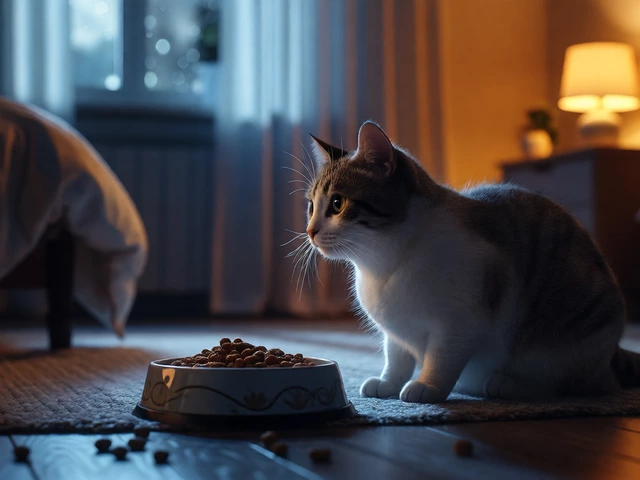
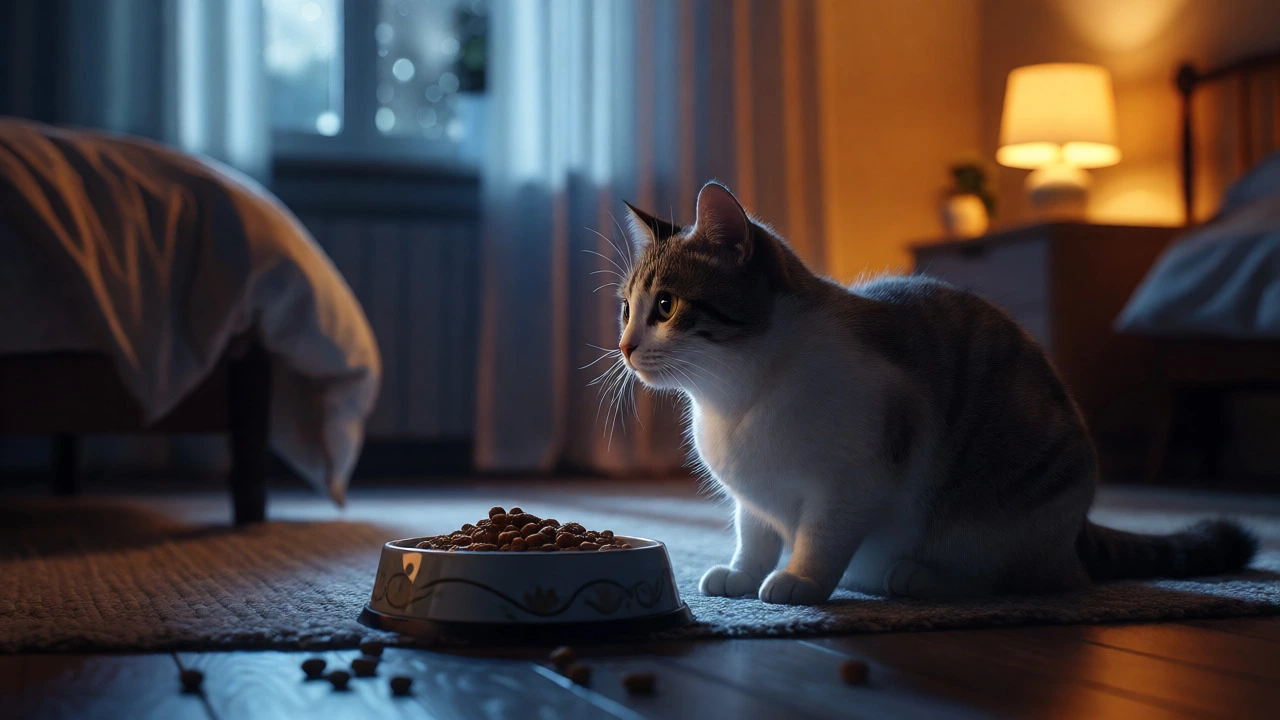
You’re lying in bed, the house is quiet, and then you hear it: the crunch, crunch, crunch of kibble hitting the floor. Your cat has decided that 2 AM is the perfect time to eat. You wonder if you should just leave the bowl full so they stop waking you up, or if you’re secretly fattening them up by letting them graze all night long. It’s a common dilemma for cat owners, and honestly, there isn’t one single rule that applies to every feline.
The answer depends entirely on your specific cat’s age, health, and personality. For some cats, leaving food out is a lifesaver that reduces stress and prevents early morning wake-up calls. For others, it’s a recipe for obesity and digestive upset. Let’s break down exactly how to decide what’s right for your pet, without the guilt trip.
Understanding Feline Feeding Instincts
To make a good decision, you have to look at how cats evolved. Unlike dogs, which are pack hunters that might gorge on a large kill once a day, cats are solitary predators designed to catch many small meals throughout the day. In the wild, a cat might hunt ten to twenty times in a 24-hour period, eating tiny portions each time. This biological wiring means most cats prefer free-feeding, where food is available whenever they want it, over two or three big meals.
When you restrict food to strict mealtimes, you’re fighting against millions of years of evolution. This can lead to anxiety, begging behavior, or even aggression around mealtime. However, modern domestic life doesn’t always align with these instincts. If you work nine-to-five and come home exhausted, the idea of hunting for your dinner at midnight sounds appealing, but for your cat, it’s just Tuesday.
The Pros of Leaving Food Out (Free-Feeding)
For many households, leaving dry food out overnight is the path of least resistance. Here is why it often works well:
- Reduces Early Morning Chaos: If your cat wakes you up at 5 AM screaming for breakfast, having food available means they can self-soothe and eat when hungry. This often stops the "starving artist" act before it starts.
- Lowers Stress: Cats that feel secure in their resource availability tend to be calmer. They don’t worry about when the next meal is coming because it’s always there.
- Convenience for Owners: Let’s be real-life gets busy. If you’re traveling for work or have unpredictable hours, knowing your cat can eat whenever they need to removes a huge layer of guilt and logistical stress.
- Mimics Natural Behavior: As mentioned, grazing aligns with a cat’s natural rhythm. It keeps their blood sugar more stable than large, infrequent boluses of food.
The Cons and Health Risks
It’s not all smooth sailing. Free-feeding comes with significant downsides that you need to watch out for, especially if you have multiple pets or a sedentary indoor cat.
- Obesity Risk: This is the biggest concern. Indoor cats burn far fewer calories than outdoor hunters. If food is always available, many cats will eat out of boredom rather than hunger. The National Research Council estimates that nearly 60% of adult cats in the US are overweight or obese. Constant access makes it hard to control calorie intake.
- Loss of Appetite Monitoring: One of the first signs of illness in a cat is a change in appetite. If you scoop food twice a day, you notice immediately if they skip a meal. With free-feeding, you might not realize your cat hasn’t eaten properly for days until they’ve already lost weight or become lethargic.
- Food Spoilage: Dry kibble can go stale or attract ants and other pests if left out too long, especially in humid climates like Auckland. Wet food left out overnight is a bacterial breeding ground within four hours.
- Bowl Bullying: If you have more than one cat, free-feeding rarely works unless you separate them. The dominant cat often guards the food source, leaving the shy cat underfed and anxious.
Who Should Definitely Eat at Night?
Some cats absolutely require nighttime access to food. If your cat falls into these categories, do not withhold food overnight:
| Cat Profile | Recommendation | Reasoning |
|---|---|---|
| Kittens (under 1 year) | Yes, leave food out | Kittens have tiny stomachs and high energy needs. They cannot fast for 8-12 hours safely. Low blood sugar (hypoglycemia) is a risk. |
| Senior Cats (15+ years) | Yes, usually | Older cats may have dental issues or kidney disease, making frequent small meals easier to digest and tolerate than large ones. |
| Diabetic Cats | Strict Schedule | Diabetics need precise timing between insulin shots and food intake. Free-feeding can cause dangerous glucose spikes. Consult your vet. |
| Overweight Adults | No, measure portions | Calorie restriction is essential. Use an automated feeder or timed meals to prevent overeating. |
| Healthy Adult (1-7 years) | Case-by-case | If they maintain a healthy weight and aren't bored-eaters, free-feeding is fine. If they gain weight, switch to scheduled meals. |
The Middle Ground: Automated Feeders
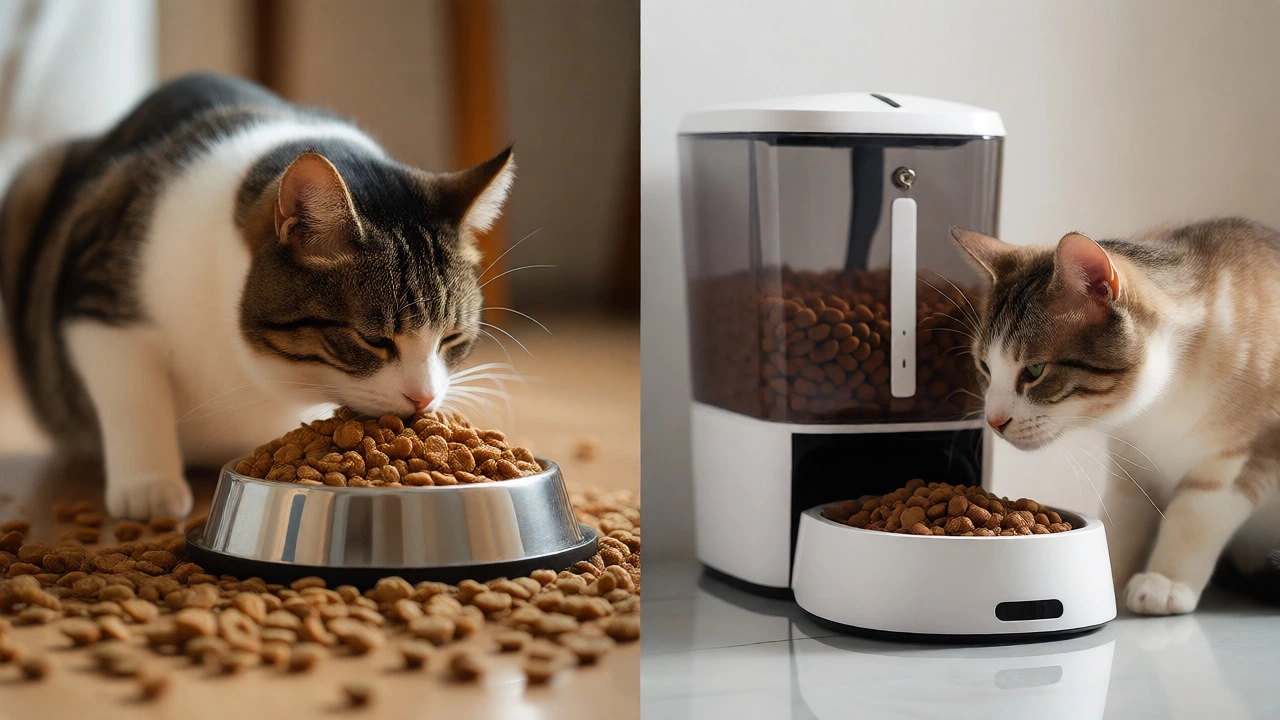
If you want the convenience of free-feeding without the obesity risk, technology has solved this problem. An automated cat feeder is a device that dispenses pre-measured portions of food at set intervals. This allows your cat to graze throughout the night, satisfying their instinct to hunt and eat small amounts, but strictly limits their total daily calorie intake.
These devices are game-changers for people who travel or work late. You program the feeder to drop 1/8th of a cup of food at 10 PM, midnight, and 2 AM. Your cat gets the satisfaction of a "hunt" and a snack, but you know exactly how much they ate. Many modern feeders also connect to Wi-Fi, sending you a notification when the bowl is filled, giving you peace of mind while you're away.
How to Transition Safely
If you’ve been free-feeding and want to switch to scheduled meals, or vice versa, don’t do it overnight. Cats hate sudden changes. Here is a safe transition plan:
- Weigh the Food: Before changing anything, measure exactly how much your cat eats in a day when free-fed. Write this number down. This is their baseline calorie need.
- Split the Portions: Divide that daily amount into three or four smaller meals. Place these out at specific times (e.g., 7 AM, 5 PM, 10 PM).
- Remove Uneaten Food: After 30 minutes, pick up the bowl. This teaches the cat that food isn’t always available, reducing grazing.
- Monitor Weight: Weigh your cat weekly. If they start losing weight too quickly, add a small bedtime snack. If they gain weight, reduce the portion size slightly.
What About Water?
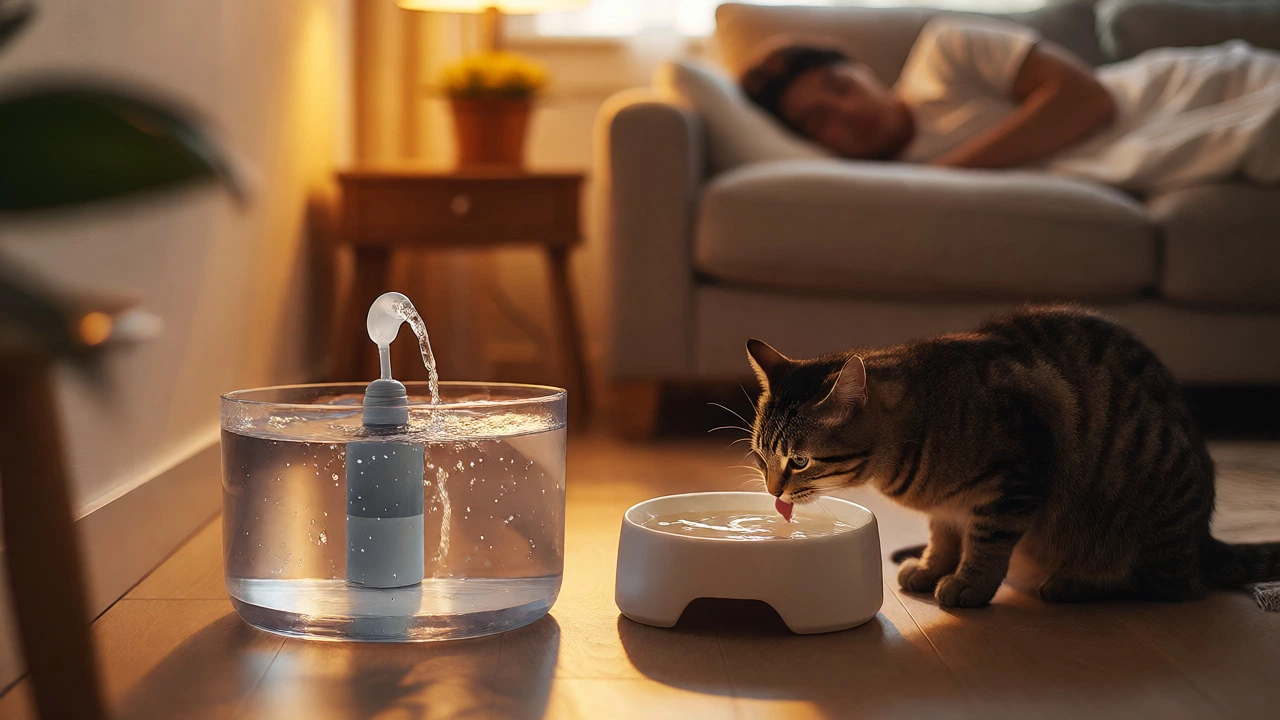
While food debates rage on, water is non-negotiable. Always leave fresh water out overnight. Dehydration is a silent killer for cats, particularly those prone to urinary tract issues or kidney disease. If you leave dry kibble out, ensure there is plenty of water nearby, as dry food contains only about 10% moisture compared to 70-80% in wet food. Consider using a pet water fountain, as many cats prefer running water and will drink more from a moving source, keeping their kidneys happy through the night.
Final Verdict: Listen to Your Cat
So, should you leave food out? If your cat is a healthy adult, maintains a good body condition score, and doesn’t wake you up screaming, yes, let them graze. It’s natural and low-stress. If your cat is gaining weight, has diabetes, or is a kitten, stick to measured meals or use an automated feeder. There is no moral failing in either choice; it’s about matching the feeding style to the individual animal’s biology and your lifestyle.
Is it bad to leave wet cat food out overnight?
Generally, yes. Wet food spoils quickly at room temperature due to bacteria growth. Most veterinarians recommend removing uneaten wet food after 30 to 60 minutes. If you must leave food out all night, stick to dry kibble or use a refrigerated feeder specifically designed for wet food.
Why does my cat wake me up for food if the bowl is full?
Cats are crepuscular, meaning they are most active at dawn and dusk. Even if the bowl is full, they may associate you waking up with playtime or attention, not necessarily hunger. Sometimes, they simply want to see you get up to check the food themselves, or they enjoy the routine of being fed by hand.
How do I stop my cat from eating too fast at night?
Eating too fast can lead to vomiting or choking. Try using a slow-feeder bowl with obstacles, or spread the dry kibble out on a flat surface instead of a deep bowl. Puzzle feeders are also excellent for slowing down consumption and providing mental stimulation during nighttime hours.
Can free-feeding cause behavioral problems?
Rarely. In fact, it often reduces behavioral issues related to hunger anxiety. However, if a cat becomes bored and uses food as entertainment, they may develop obesity-related lethargy. Ensure your cat has plenty of environmental enrichment, like toys and climbing trees, so they aren't eating just because they have nothing else to do.
What is the best time to give a cat their last meal?
For cats on a scheduled diet, the last meal should be close to your bedtime, around 9 PM or 10 PM. This helps satisfy their nocturnal hunger drive and encourages them to sleep through the night rather than waking you up at 4 AM demanding breakfast.