
Dog Vitamin D Dosage Calculator
Enter your dog's details below to determine their Recommended Dietary Allowance (RDA) and safe upper limits. This tool helps you avoid accidental overdose by accounting for fortified commercial diets.
If you are adding a supplement, use this table to adjust your dosage based on your dog's current diet:
| Diet Source | Estimated % of RDA Covered | Supplement Needed |
|---|---|---|
| High-Quality Commercial Food | ~100% | Usually None |
| Mixed / Partially Fortified | ~50% | Half RDA |
| Unfortified Raw / Homemade | ~0% | Full RDA |
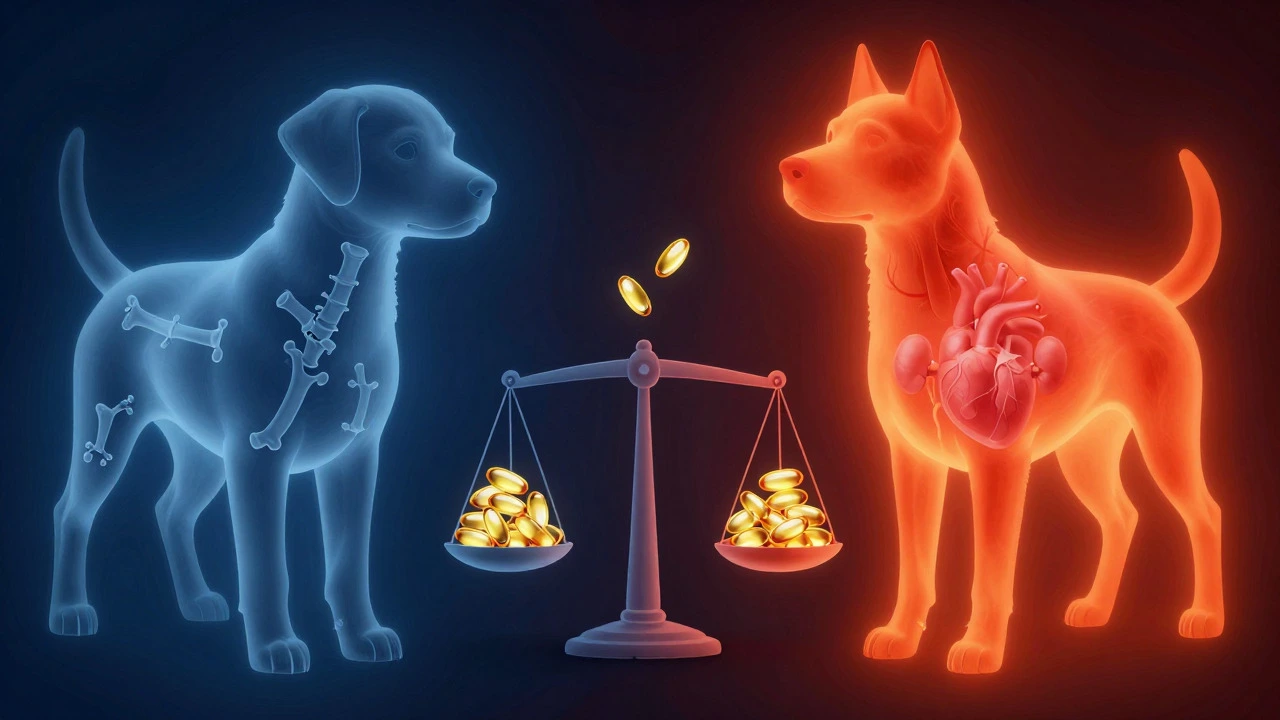
Most people assume that if a nutrient is good for humans, it’s automatically good for their pets. But when it comes to vitamin D, the rules change fast. While this fat-soluble vitamin is crucial for calcium absorption and bone health in both species, the margin for error in dogs is incredibly narrow. Too little leads to rickets or weak bones; too much causes toxic accumulation that can damage kidneys and heart rhythm.
The short answer? Vitamin D isn’t inherently "bad" for dogs, but it is unforgiving. Unlike water-soluble vitamins (like C or B) that your body flushes out through urine, vitamin D stores itself in fat tissues. This means if you over-supplement, the excess doesn't just disappear-it builds up until it reaches dangerous levels. If you are considering adding this supplement to your dog's routine, you need to understand exactly why they might need it, how much is actually safe, and what signs indicate something has gone wrong.
Why Dogs Need Vitamin D Differently Than Humans
Vitamin D is a group of fat-soluble secosteroids that includes cholecalciferol (D3) and ergocalciferol (D2), essential for maintaining adequate circulating concentrations of calcium and phosphorus. In humans, we get a significant portion of our daily requirement from sunlight exposure on our skin. Our bodies convert 7-dehydrocholesterol into previtamin D3 when UVB rays hit us. It’s a pretty efficient natural factory.
Dogs have this same biological machinery, but they use it less effectively. Their fur covers most of their skin, blocking the majority of UVB radiation. Furthermore, studies suggest that the conversion efficiency in canines is lower than in humans. This is why many veterinarians view dietary intake as the primary source for dogs rather than sunbathing. You won’t see a healthy dog running around with perfect bone density just because they spent an hour in the park. They need it in their food or via supplementation.
Here is where the danger lies: because dogs rely heavily on diet, owners often try to "top up" their pet's nutrition with human-grade multivitamins. Human supplements are dosed for a 60-80kg human body mass. A 10kg Chihuahua taking even half of that dose is receiving a massive overdose relative to its size. This mismatch is the leading cause of accidental vitamin D toxicity in companion animals.
The Danger Zone: Signs of Toxicity vs. Deficiency
It is easy to miss early signs because they mimic other common ailments. However, distinguishing between a lack of vitamin D and an excess is critical for treatment. Both conditions affect calcium metabolism, but in opposite directions.
| Condition | Mechanism | Common Symptoms | Long-term Risk |
|---|---|---|---|
| Deficiency | Low calcium absorption | Weakness, muscle tremors, poor growth in puppies | Rickets, osteomalacia, brittle bones |
| Toxicity | Hypercalcemia (high blood calcium) | Vomiting, excessive thirst, lethargy, loss of appetite | Kidney failure, cardiac arrhythmia, calcification of soft tissues |
If your dog suddenly starts drinking more water than usual and urinating frequently, don't just assume it's old age or diabetes. Check their energy levels. Are they sleeping more? Is their coat dull? These are subtle cues that calcium levels might be swinging out of control. In severe cases of toxicity, you might see white chalky deposits forming in the lungs, kidneys, or heart valves-a condition known as metastatic calcification. Once this happens, the damage is often permanent.
Safe Dosage: How Much Is Actually Enough?
This is the part where guessing gets dangerous. There is no single "one-size-fits-all" number printed on every bottle, but veterinary guidelines provide a clear range. The National Research Council (now the National Academies) sets the Recommended Dietary Allowance (RDA) for vitamin D in dogs at approximately 50 IU per kilogram of body weight per day.
Let’s break that down with real numbers:
- A 5kg small breed dog needs roughly 250 IU per day.
- A 25kg medium breed dog needs roughly 1,250 IU per day.
- A 45kg large breed dog needs roughly 2,250 IU per day.
Notice how quickly these numbers add up. Many high-quality commercial dog foods already contain fortified vitamin D. If you feed a balanced kibble or wet food that meets AAFCO standards, your dog is likely getting enough. Adding a separate supplement without checking the label could easily double or triple their intake.
When choosing a supplement, look specifically for Cholecalciferol (Vitamin D3). D3 is more potent and bioavailable than D2 (ergocalciferol). Always verify the concentration per capsule or milliliter. If a supplement says "contains 1,000 IU per capsule," do not give a whole capsule to a small dog unless directed by a vet. Splitting capsules can be tricky and inaccurate, which is why liquid formulations or pre-measured chewables designed for pets are often safer options.
Who Actually Needs Supplementation?
For the average healthy adult dog eating a complete commercial diet, extra vitamin D is usually unnecessary. However, specific groups face higher risks of deficiency or require careful monitoring:
- Puppies: Rapid growth demands precise mineral balance. Deficiency here leads to rickets, while excess can stunt growth. Puppies should only receive supplements under strict veterinary supervision.
- Senior Dogs: Aging kidneys may struggle to process nutrients efficiently. Before supplementing seniors, always run a blood test to check kidney function and baseline calcium levels.
- Dogs on Raw Diets: Home-prepared raw diets are notoriously inconsistent. Unless you are using a certified raw mix with verified nutrient profiles, your dog might be deficient. In these cases, targeted supplementation is often required, but it must be calculated based on the exact meat and organ ratios used.
- Black-Coated Breeds: Some anecdotal evidence suggests darker pigmentation reduces UVB penetration slightly, though diet remains the primary factor. Still, breeds like Labrador Retrievers or German Shepherds that are prone to hip dysplasia benefit from optimal bone support, making accurate vitamin D levels important.
If you aren't in one of these categories, ask yourself: is my dog showing symptoms of deficiency? If not, the safest route is often to stick with a high-quality complete food and skip the extra pill.
Common Mistakes Owners Make
Even well-meaning owners trip up on vitamin D administration. Here are the most frequent errors I see discussed in pet health forums:
- Using Human Multivitamins: This is the biggest red flag. Human formulas often contain iron, zinc, and other minerals in amounts toxic to dogs, alongside the vitamin D overload risk.
- Ignoring Food Fortification: Checking the ingredient list is step one. If the bag says "fortified with vitamins including D," you are starting from a base level. Add a supplement on top, and you are stacking doses.
- Assuming More Sun = More Vitamin D: While true in theory, practical application for dogs is minimal. Don't withhold supplements thinking your dog got enough from the beach. Conversely, don't over-supplement thinking the sun did nothing. Balance is key.
- Symptom Ignorance: Dismissing vomiting or lethargy as "just being tired." If you recently started a new supplement and these symptoms appear within 24-48 hours, stop the supplement immediately and call your vet.
Monitoring and Blood Work
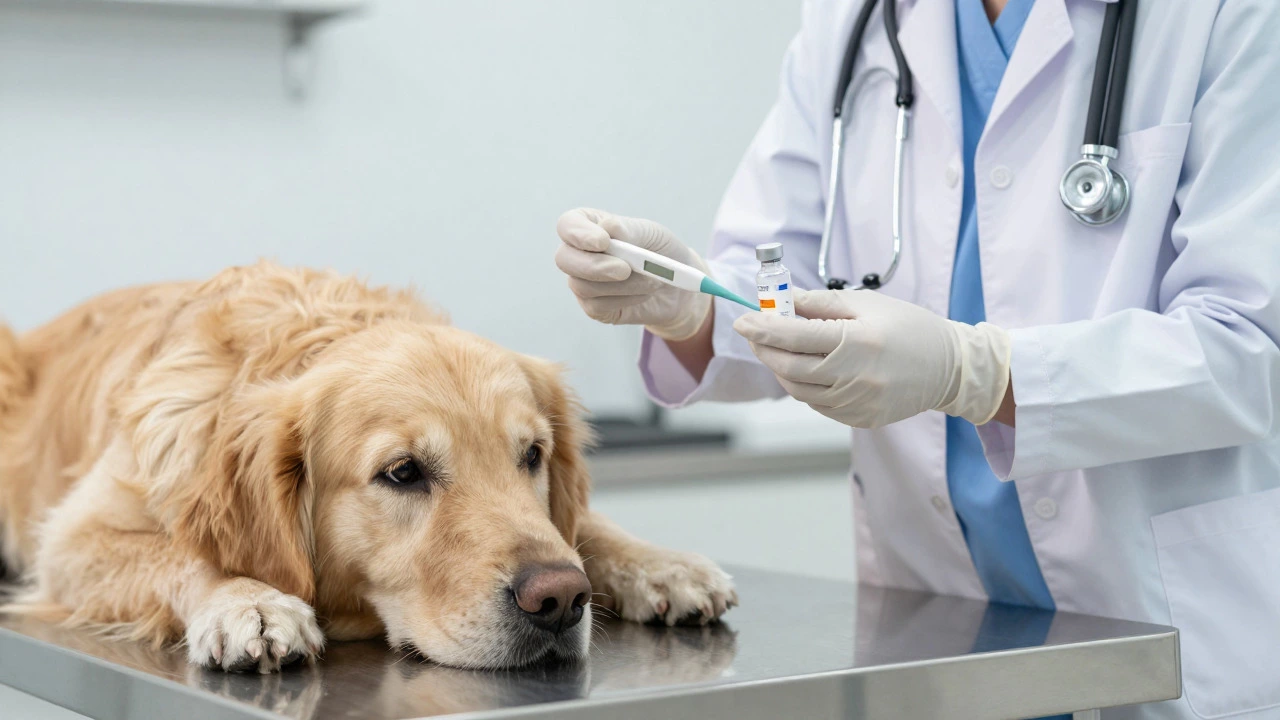
You cannot feel vitamin D levels in your dog. You can only measure them. The standard test is a serum 25-hydroxyvitamin D test. This measures the active form circulating in the blood. Normal ranges vary slightly by lab, but generally: * Deficient: Below 20 ng/mL * Optimal: 30-100 ng/mL * Toxic: Above 150-200 ng/mL (varies by individual tolerance) If you are supplementing, ask your veterinarian to include this panel in annual wellness exams. It provides a concrete data point rather than a guess. Pair this with a calcium and phosphorus test to ensure the ratio remains stable. High vitamin D drives calcium up; if phosphorus stays normal but calcium spikes, you know the issue is likely the vitamin D load.
Frequently Asked Questions
Can dogs get vitamin D from sunlight?
Yes, but inefficiently. While UVB exposure converts skin precursors to vitamin D, a dog's thick fur blocks most rays. Sunlight contributes a small fraction of total needs, so diet remains the primary source. Do not rely solely on sun exposure to prevent deficiency.
What is the maximum safe dose of vitamin D for dogs?
The upper tolerable limit is not strictly defined for all breeds, but toxicity typically begins above 2,000 IU per kg per day for sustained periods. For daily maintenance, staying under 100-200 IU per kg is considered safe. Always consult a vet before exceeding the RDA of 50 IU/kg.
Should I give my dog human vitamin D drops?
Only if carefully measured. Human drops are highly concentrated. A single drop might contain 400-1,000 IU. For a small dog, this could be an entire week's worth of vitamins in one go. Use a pet-specific formulation or divide human drops precisely using a syringe, but prefer products designed for canine metabolism.
How long does it take for vitamin D toxicity to show?
Acute toxicity (from a single large overdose) can show symptoms within 24-48 hours, including vomiting and lethargy. Chronic toxicity (from slight daily overdoses) takes weeks or months to manifest, often appearing as increased thirst, urination, and eventual kidney strain.
Do senior dogs need more vitamin D?
Not necessarily more, but they need consistent levels. As kidneys age, they may lose the ability to activate vitamin D properly. Instead of increasing the dose, ensure the food quality supports renal health. Blood tests are crucial for seniors to monitor both vitamin D status and kidney function simultaneously.