Puppy Sleep Schedule Calculator
Create a personalized sleep schedule for your puppy based on their age and ideal bedtime. This tool generates a sample routine using veterinary recommendations from the article.
Ever sat there at 7:45pm, watching your puppy bounce off the walls like a furry tornado, wondering if 8pm is too early to call it quits? You’re not alone. Most new puppy owners feel this tug-of-war: they want their pup to sleep through the night, but they also feel guilty shutting the door on a tiny ball of energy that’s still learning the world.
The truth? 8pm is not just fine-it’s often perfect. Puppies need way more sleep than adult dogs. A healthy puppy between 8 and 16 weeks old needs 18 to 20 hours of sleep every day. That’s not laziness. That’s growth. Their brains are wiring, their bones are lengthening, and their immune systems are building defenses. All of that happens while they’re snoozing.
Think of it like this: your puppy isn’t being stubborn or spoiled by needing bed at 8pm. They’re biologically wired to need it. If you’re waiting until 9 or 10pm, you’re not being patient-you’re fighting nature. And that fight? It usually ends with you exhausted, your puppy whining, and a broken sleep cycle for both of you.
Why Puppies Need Early Bedtimes
Puppies don’t have the same sleep patterns as adult dogs. Their cycles are shorter, more frequent, and deeply tied to their energy levels. A 10-week-old puppy can’t stay awake for 12 hours like you can. Their bodies are still developing, and overstimulation leads to stress, not playfulness.
Studies from the University of Pennsylvania’s School of Veterinary Medicine show that puppies with consistent, early bedtimes have fewer behavioral issues by 6 months old. Why? Because sleep regulates cortisol-the stress hormone. Too little sleep means too much anxiety. And anxious puppies chew shoes, bark at shadows, and have accidents indoors-not because they’re bad, but because they’re overwhelmed.
Put your puppy to bed at 8pm, and you’re giving them the best chance to grow into a calm, confident adult dog. It’s not about control. It’s about care.
What a Realistic Puppy Daily Schedule Looks Like
Here’s what a solid daily routine looks like for a puppy under 4 months:
- 6:30am: Wake up, quick potty break
- 7:00am: Breakfast
- 7:30am: Short play or walk
- 8:00am-10:30am: Nap time
- 10:30am: Potty break, then 20 minutes of training or enrichment (puzzle toy, sniffing game)
- 11:30am-1:30pm: Nap
- 1:30pm: Lunch
- 2:00pm: Walk or play
- 2:30pm-5:00pm: Nap
- 5:00pm: Potty break, then light play
- 6:00pm: Dinner
- 6:30pm: Potty break
- 7:00pm: Calm wind-down (no rough play, no TV noise, no chasing)
- 7:45pm: Final potty break
- 8:00pm: Bedtime
This schedule isn’t rigid. But it’s built on rhythm. Puppies thrive on predictability. If you change things every night, they’ll never learn when it’s time to settle. And if you’re running late because you’re working or cooking, that’s okay-just make sure the last potty break and wind-down are still happening.
What Happens If You Wait Until 9 or 10pm
Some people think keeping a puppy up late will help them sleep longer. It doesn’t. It does the opposite.
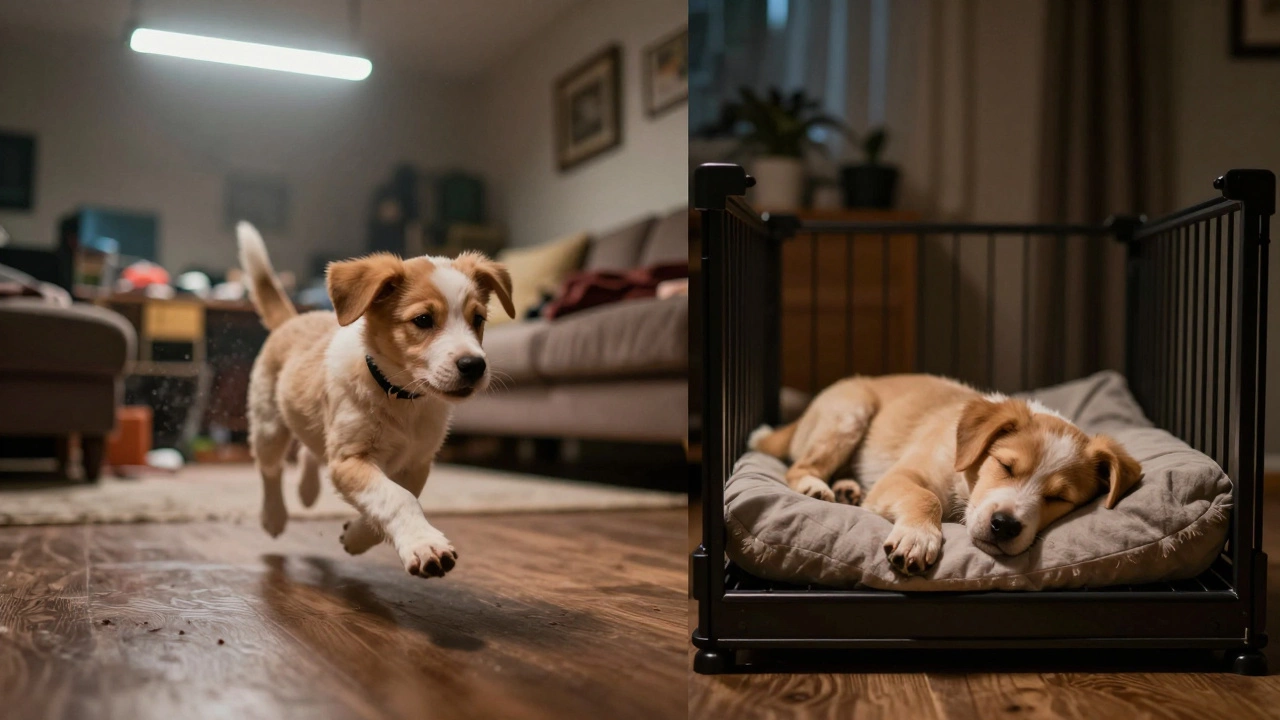
When a puppy stays awake too long, their nervous system gets overloaded. They start acting hyper, zooming around the house, barking at nothing, or nipping at your ankles. That’s not excitement-it’s exhaustion. You think they’re full of energy. They’re actually running on fumes.
By 9pm, they’re past their limit. Their body starts shutting down in chaotic bursts. They might pee on the rug because they’re too tired to hold it. Or they’ll cry in their crate because they’re scared, confused, and overwhelmed. You think you’re being kind by letting them stay up. You’re actually making bedtime harder.
And here’s the kicker: if you let them stay up until 10pm, you’re not training them to sleep through the night. You’re training them to be awake at 10pm. And when they wake up at 2am? That’s not a bad habit-it’s the result of your inconsistent schedule.
How to Make 8pm Bedtime Work
Getting your puppy to bed at 8pm isn’t about forcing them. It’s about setting them up for success.
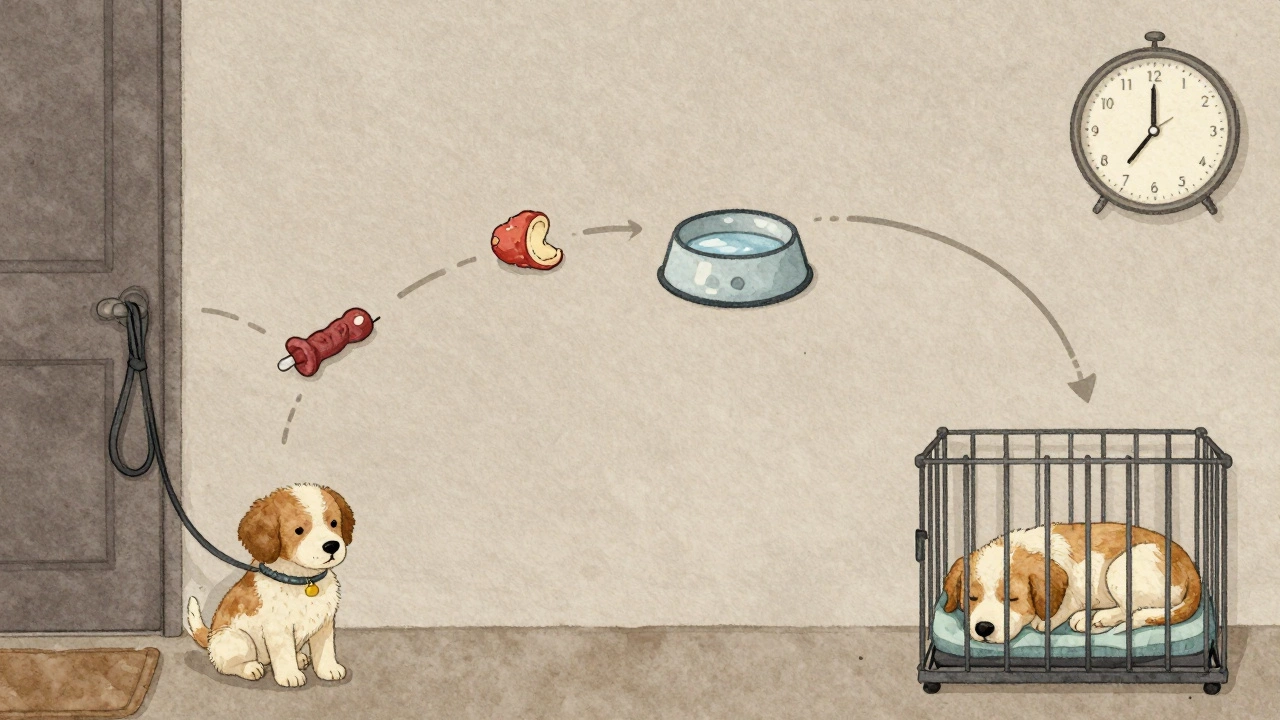
- Wind down 30 minutes before bed. No fetch. No tug-of-war. No loud music. Dim the lights. Play soft music. Sit with them on the floor while they chew a stuffed Kong. This tells their brain: it’s time to calm down.
- Take them out right before bed. Puppies have tiny bladders. Even if they went out at 7:30pm, they need one last chance. Bring them to the same spot every time. Use a cue like “go potty.” Praise them when they go.
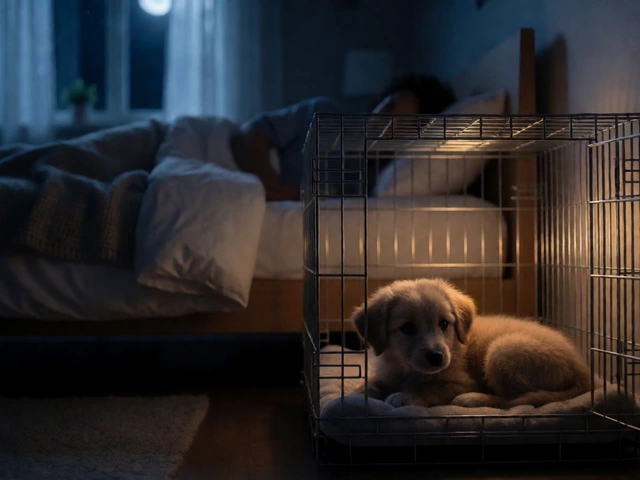
- Use a crate or confined space. A crate isn’t a punishment-it’s a den. Make it cozy with a soft blanket and a warm water bottle (wrapped in a towel). Never leave them in there for more than 4 hours at night until they’re 6 months old.
- Don’t respond to whining. If they cry at 8:15pm, don’t rush in. They’re testing you. Wait 5 minutes. If they’re still going, check if they need to go outside. If not, ignore it. Consistency builds trust.
- Be patient for 2-3 weeks. The first week is rough. The second week gets better. By week three, they’ll be curling up on their own before you even say “bedtime.”
What to Do When Your Puppy Wakes Up at 2am
It happens. Even the best routines have hiccups. If your puppy wakes up at 2am, don’t panic. Don’t turn on the lights. Don’t play. Don’t feed them.
Here’s what to do:
- Take them outside quietly. Use a leash. No talking. No eye contact.
- Wait. If they go, praise them softly and bring them right back inside.
- If they don’t go, bring them back anyway. Don’t let them roam the house.
- Put them back in their crate. No cuddles. No snacks. Just silence.
Most puppies will stop waking up at night after 2-3 weeks of consistent handling. If they’re still waking up after 8 weeks of this routine, check with your vet. There could be a medical issue-like a urinary tract infection or food sensitivity-that’s making them uncomfortable.
When to Adjust Bedtime
As your puppy grows, their sleep needs change. Around 4 months, they’ll start needing less sleep-maybe 14-16 hours. By 6 months, they’ll be closer to 12-14 hours. That’s when you can slowly shift bedtime to 8:30 or 9pm.
But don’t rush it. Every extra 15 minutes you push back bedtime should come after a full week of smooth nights. If they start whining again? Go back to 8pm. You’re not failing. You’re learning.
By 1 year old, most dogs can handle a 9-10pm bedtime. But even then, consistency matters. Dogs don’t care about your Netflix schedule. They care about safety, routine, and knowing what comes next.
Final Thought: It’s Not About You
It’s easy to feel like you’re missing out when your puppy goes to bed at 8pm. You want to watch TV. You want to relax. You want to feel like you’re living your life.
But here’s the thing: your puppy’s sleep isn’t a sacrifice. It’s an investment. The quiet nights now mean a calm dog later. The early bedtimes mean fewer accidents, less anxiety, and a stronger bond. You’re not giving up your evenings-you’re building a future where your dog sleeps peacefully beside you, without barking, without whining, without stress.
So yes. 8pm is not too early. It’s exactly right.