Dog Supplement Calculator
Supplement Calculator
How This Works
Based on veterinary guidelines, we calculate the correct daily amount of supplements for your dog's size.
Most dog owners know feeding kibble or canned food isn’t enough to keep their dog truly healthy. You see your pup wagging their tail, but are they getting everything they need? The truth is, even the best commercial dog foods are missing key nutrients that natural, whole foods can provide. You don’t need to cook elaborate meals or spend hundreds on fancy supplements. Just a few simple, affordable additions every day can make a big difference in your dog’s energy, coat, digestion, and long-term health.
Start with a Spoonful of Omega-3s
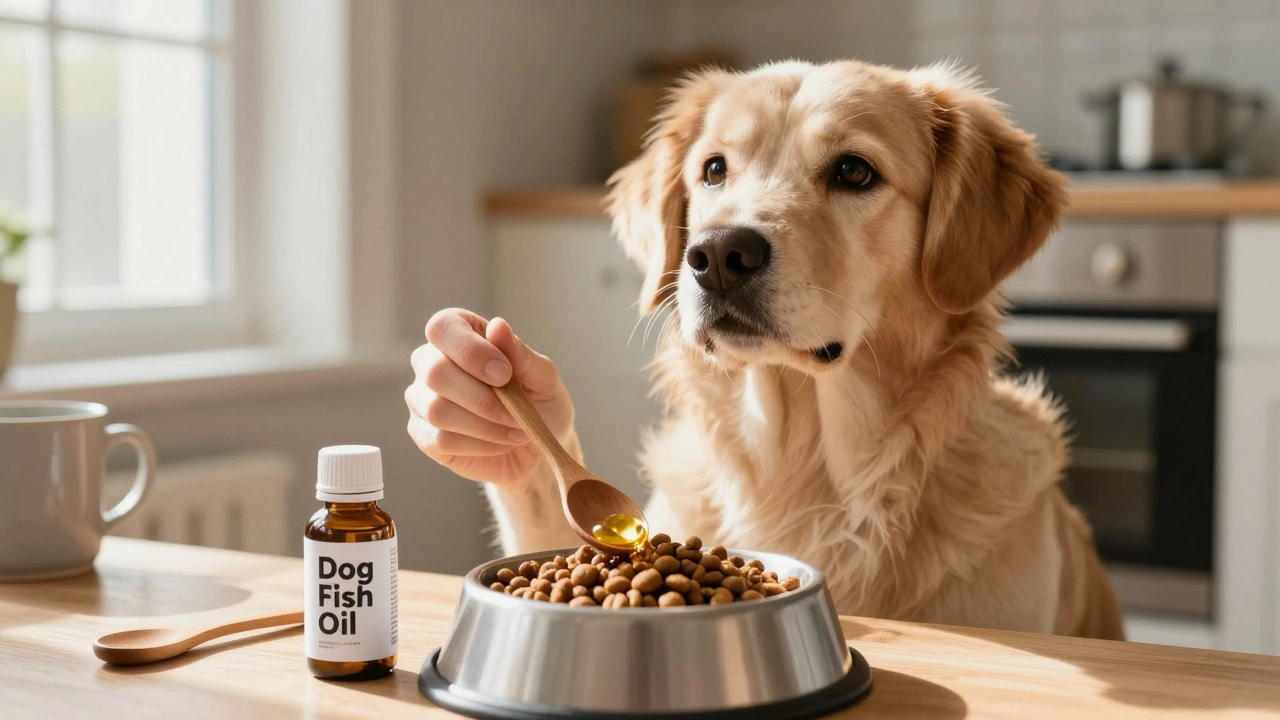
Fish oil is one of the most researched and effective additions to your dog’s diet. It’s rich in EPA and DHA - two omega-3 fatty acids that reduce inflammation, support brain function, and keep skin from flaking. A 2023 study from the University of Edinburgh found that dogs fed daily fish oil supplements showed a 40% improvement in skin health and reduced joint stiffness within just eight weeks. Look for cold-pressed, molecularly distilled fish oil labeled for dogs. Avoid flaxseed oil - dogs can’t convert ALA (the omega-3 in flax) into usable EPA and DHA. A teaspoon for a 30-pound dog, mixed into their food, is all it takes. For larger breeds, go up to a tablespoon.
Don’t Skip the Probiotics
Your dog’s gut is home to trillions of bacteria. When those get out of balance - from stress, antibiotics, or poor food - they can cause diarrhea, gas, or even skin allergies. Adding a daily probiotic helps restore that balance. You don’t need expensive capsules. Plain, unsweetened, live-culture yogurt works great. Just make sure it doesn’t have xylitol - that’s deadly for dogs. A tablespoon of yogurt mixed into their meal gives them billions of good bacteria. If your dog doesn’t like yogurt, try a powdered dog-specific probiotic. Look for strains like Enterococcus faecium and a type of beneficial bacteria commonly used in canine probiotics to support digestive health and Lactobacillus acidophilus and a lactic acid-producing bacterium that helps maintain healthy gut flora in dogs. These are the most effective for dogs, according to the American College of Veterinary Nutrition.
Add a Dash of Pumpkin
Plain, canned pumpkin (not pie filling) is a quiet superhero for dog digestion. It’s packed with soluble fiber, which helps regulate both constipation and loose stools. It’s also low in calories and full of vitamins A, C, and E. A quarter cup of pumpkin per day for a medium-sized dog can fix digestive hiccups without drugs. It’s especially helpful for dogs who eat grass or have occasional upset stomachs. You can buy it in jars, or roast your own pumpkin and freeze it in ice cube trays for easy portioning. No salt. No spices. Just pure pumpkin.
Try a Little Bone Broth
Bone broth isn’t just for humans. When you simmer beef or chicken bones for 12-24 hours, you pull out collagen, glucosamine, chondroitin, and amino acids - all things your dog’s joints and gut love. Store-bought bone broth often has too much salt or garlic, so make your own. Simmer bones (no onions or garlic) with water and a splash of apple cider vinegar for 24 hours. Strain, cool, and skim off the fat. Freeze in portions. A quarter cup warmed into their food each day can improve mobility in older dogs and soothe irritated intestines. A 2024 veterinary trial in Wellington, New Zealand, showed that dogs fed bone broth daily had 30% less joint pain after six months compared to those on standard diets.

Consider a Whole Food Multivitamin
Even the best commercial dog food loses nutrients during processing. A whole-food-based multivitamin made from real ingredients like spinach, carrots, blueberries, and kelp gives your dog a safety net. Look for products with no synthetic fillers - no artificial colors, no cheap binders. Kelp is especially useful. It’s rich in iodine, which supports thyroid function, and natural minerals. A pinch of dried kelp powder (about 1/8 teaspoon for a 50-pound dog) sprinkled on their food twice a week is enough. Don’t overdo it - too much iodine can backfire. If you’re already feeding raw or home-cooked meals, you might not need this daily, but for kibble-fed dogs, it’s a simple upgrade.
Watch Out for the Common Mistakes
Not everything natural is safe. Garlic, onions, grapes, and chocolate are obvious no-gos. But some things people think are harmless can be risky. Turmeric? Great for inflammation - but only if mixed with black pepper and a healthy fat like coconut oil to help absorption. Without that, it’s useless. Salt? Even a little extra can strain kidneys over time. Dairy? Some dogs are lactose intolerant. Test with a tiny bit of yogurt first. And never give human supplements - dog and human bodies process nutrients differently. A vitamin D pill meant for you could poison your dog.
What You Don’t Need
You’ll see ads for dog supplements with 20 ingredients - spirulina, astaxanthin, colostrum, mushroom extracts. Some might help. Most are overpriced and unnecessary. You don’t need to buy every trendy supplement on the market. Stick to the basics: omega-3s, probiotics, pumpkin, bone broth, and a simple whole-food multivitamin. That’s it. Your dog doesn’t need a pharmacy. They need consistency, quality, and simplicity.
How to Make It Routine
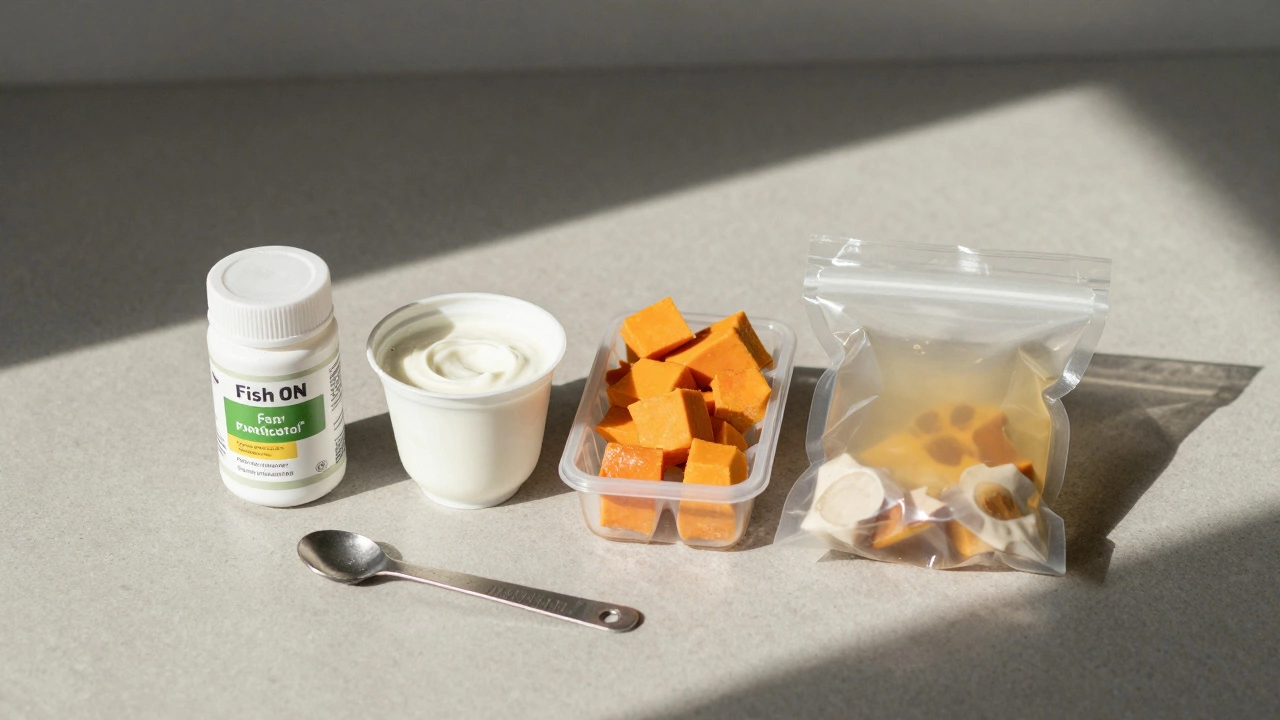
Make these additions easy. Keep a small container of fish oil next to their food bowl. Pre-portion pumpkin in ice cube trays. Buy yogurt in single-serve cups. Keep bone broth frozen in small bags. Use a measuring spoon so you don’t guess. Do it every day, even if they’re not sick. Prevention beats treatment every time. Dogs that get these daily additions live longer, move better, and have shinier coats. They also visit the vet less often.
When to Talk to Your Vet
If your dog has kidney disease, liver problems, or is on medication, check with your vet before adding anything. Some supplements can interfere with drugs. For example, omega-3s can thin the blood, which might be risky if your dog is on anticoagulants. Always tell your vet what you’re giving. It’s not about being perfect - it’s about being informed. Your vet might even have a brand recommendation that’s been tested on local dogs.
Adding these five things to your dog’s food doesn’t take much time or money. But the payoff? A happier, healthier dog who runs with more energy, sleeps more soundly, and looks like they’re thriving - not just surviving.
Can I give my dog human supplements?
No. Human supplements are dosed for our bodies and can be toxic to dogs. Even something as simple as vitamin D or iron can cause poisoning. Always use supplements made specifically for dogs, or stick to whole foods like fish oil, yogurt, and pumpkin.
How much fish oil should I give my dog?
For a 30-pound dog, use 1 teaspoon of fish oil daily. For every additional 20 pounds, add another half-teaspoon. Always choose a product labeled for dogs, and check the EPA and DHA content - aim for at least 200mg of EPA per teaspoon.
Is pumpkin safe for dogs every day?
Yes, plain canned pumpkin is safe daily. But don’t exceed 1/4 cup for medium dogs. Too much fiber can cause loose stools. Stick to 100% pure pumpkin - no spices, no sugar.
Can I use bone broth from the grocery store?
Only if it’s labeled as dog-safe and has no added salt, garlic, or onions. Most store-bought broths are too high in sodium. Homemade is best. If you must buy, rinse it under water to remove excess salt before serving.
Do I need to give supplements if I feed raw food?
Raw diets often include whole meats, bones, and organs, which naturally provide many nutrients. But even raw-fed dogs can benefit from daily fish oil and probiotics. You may not need a multivitamin, but omega-3s and gut support are still helpful. Always balance your raw diet with a vet or canine nutritionist.
Next Steps
Start with one addition - maybe the fish oil. Give it two weeks. Watch how your dog’s coat looks. Do they seem more energetic? Then add the pumpkin. After another week, try the yogurt. Don’t overwhelm yourself. Small, consistent changes beat big, sporadic ones. Keep a notebook. Note changes in stool, energy, and coat. You’ll see the difference before you think you will.
And remember - you’re not trying to make a perfect diet. You’re trying to give your dog the best shot at a long, happy life. One spoonful at a time.