Dog Flight Stress Calculator
Assess Your Dog's Flight Readiness
Based on factors from the article, calculate your dog's stress level for air travel.
Input Your Dog's Details
Thousands of dogs fly every year-some as emotional support animals, others as luggage in cargo holds. But how much does it actually scare them? If you’ve ever watched your dog tremble at the sight of a carrier, you’ve probably wondered: flying is it torture or just a rough ride?
Most dogs handle flying better than you think
Contrary to what you might assume, most dogs don’t panic mid-flight. A 2024 study by the International Air Transport Association tracked over 12,000 pets flown commercially. Only 0.05% experienced serious incidents-mostly related to temperature extremes or poor handling, not fear. Dogs that are calm at home usually stay calm in the air. Their stress levels often mirror their owner’s energy. If you’re tense, they pick up on it. If you’re relaxed, they’re more likely to nap.
Think of it like this: your dog doesn’t understand the concept of altitude or speed. They feel vibrations, noise, and movement. But if they’re used to car rides, loud vacuum cleaners, or thunderstorms, the plane’s environment isn’t that foreign. The real issue isn’t the flight-it’s the whole process leading up to it.
The real stress points: carrier, noise, and isolation
Three things trigger most dogs during air travel:
- The carrier-if it’s new, too small, or smells like vet visits, your dog will dread it. Dogs don’t associate carriers with adventure. They associate them with being locked up.
- Noise-jet engines aren’t just loud; they’re constant and unpredictable. Dogs with noise sensitivities (like thunderstorm phobias) will struggle more.
- Isolation-if your dog is flying in cargo, they’re alone in the dark for hours. No familiar faces. No voice to calm them. That’s the hardest part.
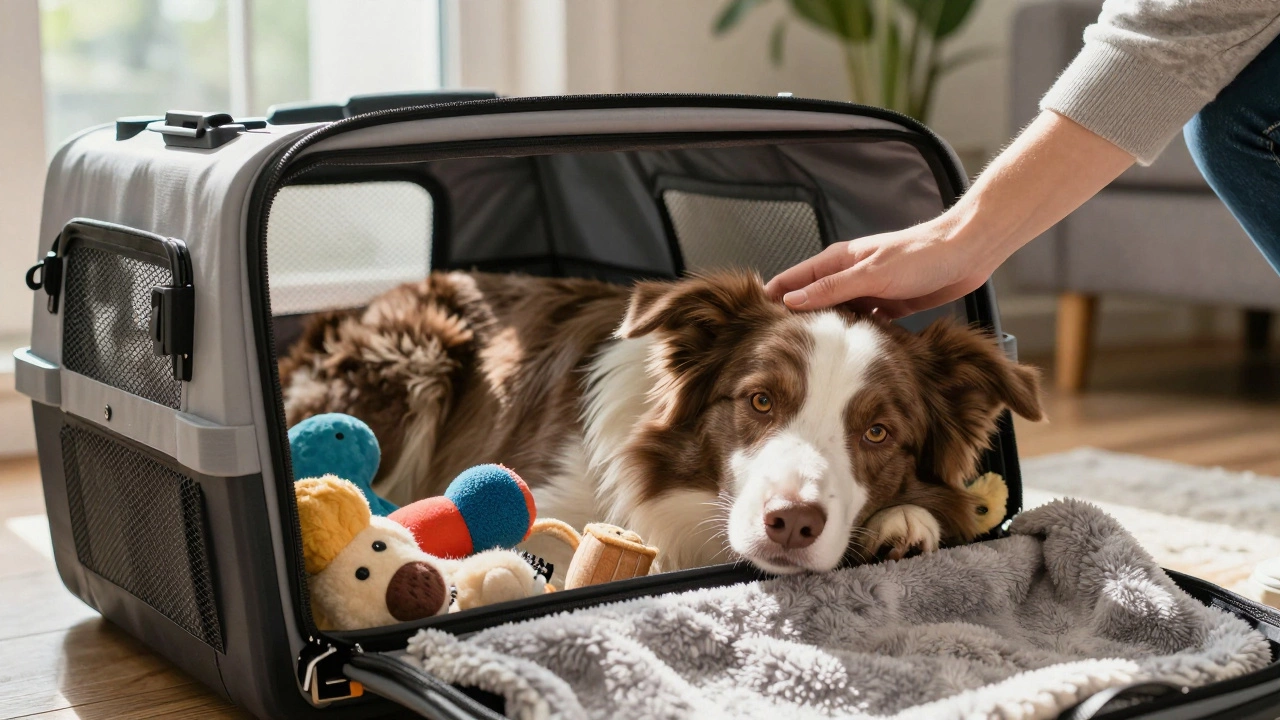
One owner in Wellington told me her dog, Luna, a 4-year-old Border Collie, started panting and whining every time she pulled out the carrier. But once they got used to it-leaving it open at home with treats inside, playing music during short car rides-Luna slept through her flight to Christchurch. The carrier wasn’t the problem. The surprise was.
Cargo vs. cabin: which is safer?
Most small dogs can fly in the cabin. Larger ones go in cargo. Many owners assume cabin = better. But that’s not always true.
Cabin flights mean your dog is near you, which helps. But they’re also exposed to sudden changes-people standing, bags slamming, announcements blaring. Some dogs get overstimulated. One vet in Auckland saw a Golden Retriever who had a panic attack during a flight because someone kept leaning over the seat to stare at him.
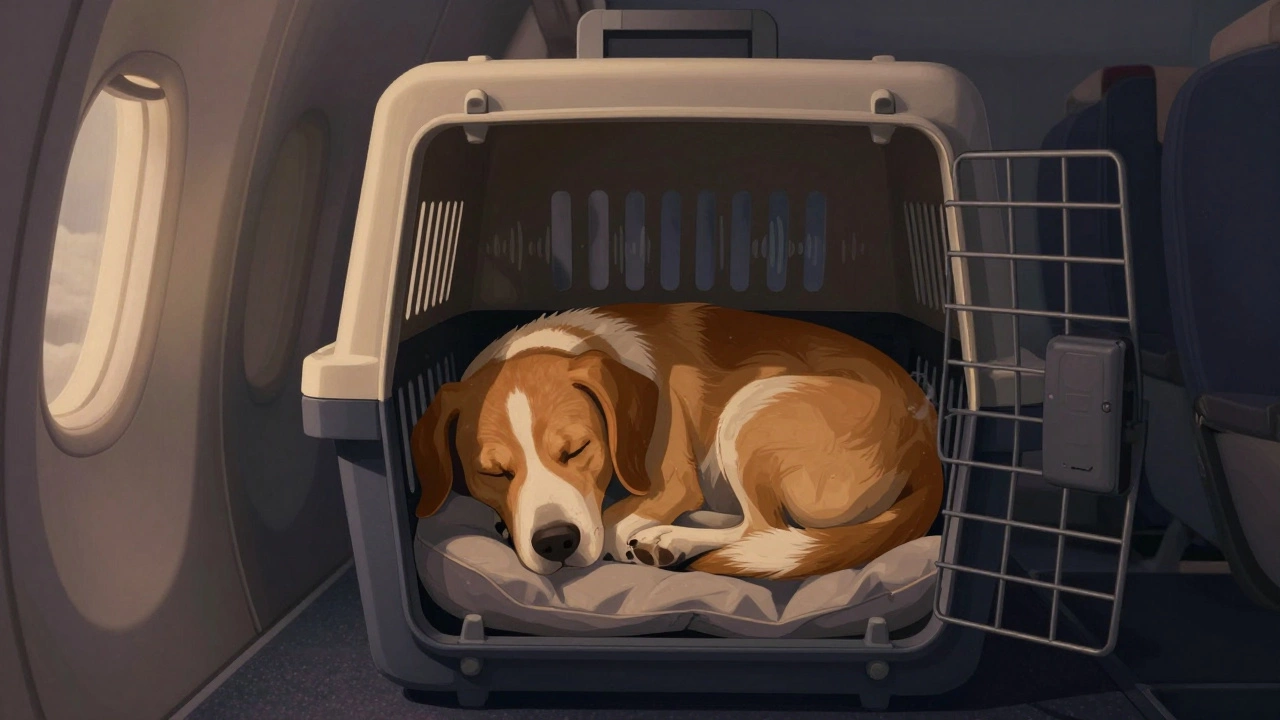
Cargo is quieter and more stable. The hold is temperature-controlled, pressurized, and dark-kind of like a cozy cave. Dogs that sleep through car rides often sleep through cargo flights. The problem? If your dog has separation anxiety, being alone in the dark for 6+ hours can be terrifying.
Bottom line: if your dog is calm and used to being alone, cargo is often the better option. If they cling to you constantly, cabin might be worth the extra cost.
What breeds struggle the most?
Not all dogs are built for flying. Brachycephalic breeds-like Bulldogs, Pugs, and Shih Tzus-are at higher risk. Their short snouts make breathing harder, especially under pressure changes. Airlines like Air New Zealand and Qantas ban these breeds from cargo holds entirely during hot months. Even in cabin, they’re more likely to develop respiratory distress.
Senior dogs and those with heart conditions also need extra care. Flying increases heart rate and oxygen demand. If your dog has been diagnosed with a condition, talk to your vet before booking. A simple blood test or ECG can tell you if they’re physically ready.
On the flip side, working breeds like German Shepherds, Labs, and Border Collies often handle flights well. They’re used to structure, routine, and following cues. A well-trained dog is a calm dog.
How to prepare your dog for a flight
Here’s what actually works:
- Get your dog used to the carrier-start at least 4 weeks before. Leave it open. Put their favorite blanket inside. Feed meals in it. Play with toys near it. Make it a safe space, not a prison.
- Practice short car rides-drive around the block, then the neighborhood, then the highway. Reward calm behavior. Don’t rush this step.
- Try a simulated flight-turn on a fan, play airport noise on YouTube (there are free 30-minute tracks), and let your dog relax in the carrier with the noise on. Do this for 10 minutes a day for a week.
- Don’t sedate them-veterinarians strongly advise against tranquilizers. They can mess with temperature regulation and breathing, especially in cargo. The risk of death from sedation is higher than from stress.
- Book direct flights-every layover means more handling, more waiting, more stress. Avoid connections if you can.
What airlines require
Every airline has rules. In New Zealand, Air New Zealand requires:
- A health certificate from a vet within 10 days of travel
- A carrier that’s IATA-approved (plastic, ventilated, with a water bowl attached)
- No feeding 4 hours before flight
- Leash and harness for cabin dogs
International flights add more: rabies certificates, import permits, microchip registration. Some countries like Australia require 10 days of quarantine. Don’t wait until the last minute. Start paperwork 3 months ahead.

Signs your dog is too stressed to fly
Watch for these red flags:
- Refusing food or water for 24+ hours before the flight
- Excessive panting, drooling, or shaking
- Diarrhea or vomiting during car rides
- Trying to escape the carrier
- History of panic attacks in enclosed spaces
If your dog shows any of these, talk to a vet. You might need a behaviorist. Or, better yet, consider alternatives-pet sitters, pet-friendly hotels, or even ground transport if it’s a short trip.
Real stories: what worked
A couple from Tauranga flew their 12-year-old Labrador, Max, from Auckland to Sydney. He’d never been on a plane. They didn’t sedate him. Instead, they:
- Put a piece of their shirt in the carrier
- Used a calming pheromone spray (Adaptil)
- Booked a morning flight so he’d nap
- Wrote his name and their number on the carrier
Max slept the whole way. They got him back with a little mud on his paws and a wagging tail.
Another owner, from Dunedin, tried flying her anxious Chihuahua. She booked cabin, brought treats, and held him the whole time. He barked nonstop. The flight attendants were nice, but she felt embarrassed. Next time, she’s using cargo-with a sound machine playing her voice recording.
Is flying traumatic for dogs? It doesn’t have to be
Flying isn’t inherently cruel. It’s not a punishment. But it’s not a vacation either. It’s a logistical challenge-and like any challenge, preparation makes the difference.
Your dog isn’t afraid of the sky. They’re afraid of the unknown. And if you take the time to make the unknown familiar, they’ll walk onto that plane like it’s just another Tuesday.
Can dogs fly in the cabin with me?
Yes, if your dog is small enough to fit under the seat in an approved carrier. Most airlines allow one pet per passenger in cabin. Weight limits vary-usually under 8 kg including carrier. Always check with your airline before booking.
Should I give my dog a sedative before flying?
No. Sedatives can interfere with breathing and temperature regulation, especially in cargo. The American Veterinary Medical Association and most airlines strongly discourage them. Instead, use behavior training, calming sprays, or pheromone products like Adaptil.
What’s the safest time of year to fly with a dog?
Spring and fall are best. Avoid summer heatwaves and winter cold snaps. Airlines restrict brachycephalic breeds during hot months (November-March in the Southern Hemisphere). Always check the weather forecast for departure and arrival cities.
Do dogs get motion sickness on planes?
Some do, especially puppies or dogs with inner ear issues. Signs include drooling, vomiting, and lethargy. Don’t feed them 4-6 hours before flying. If your dog gets sick in cars, ask your vet about anti-nausea meds like Cerenia, which are safe for air travel.
How do I know if my dog is too old to fly?
Age alone doesn’t disqualify a dog. But if they have heart disease, arthritis, or kidney issues, flying increases risk. Ask your vet for a pre-flight checkup. Bloodwork and a basic ECG can reveal hidden problems. If your vet says no, consider ground transport or a pet sitter.