Cat Feeding Strategy Calculator
Determine the best feeding approach and daily portion size for your cat based on their weight, age, and current habits.
Does your cat look at you with those wide, pleading eyes after finishing their dinner as if they haven’t eaten in weeks? You might be wondering if your pet simply doesn't know when to stop. The short answer is no, not exactly. Unlike humans, who often eat for pleasure or habit long after being physically full, cats are obligate carnivores with distinct hunting instincts that drive them to graze throughout the day rather than consume large meals until stuffed. However, this natural instinct can clash with modern indoor living, leading to confusion about whether a cat will actually stop eating when full.
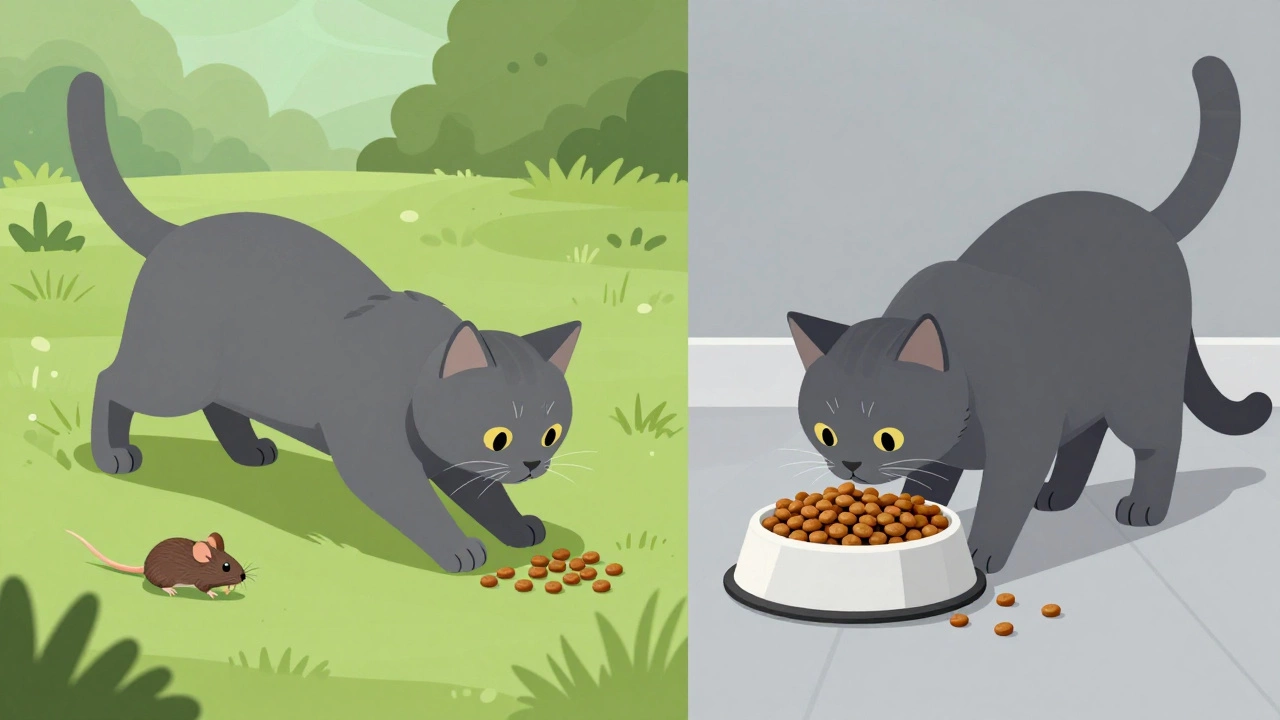
Understanding how felines perceive hunger and fullness is crucial for keeping them healthy. If you leave a bowl of dry kibble out all day, your cat will likely eat from it repeatedly, not because they are starving, but because the behavior mimics grazing on small prey. On the other hand, if you offer a measured meal of wet food, most cats will eat what they need and walk away. The key lies in distinguishing between biological satiety-the physical feeling of a full stomach-and behavioral hunger, which is driven by routine, boredom, or environmental cues.
The Biology of Feline Satiety
To understand why your cat might seem insatiable, we have to look at their physiology. Cats are designed to hunt many small meals a day. In the wild, a cat might catch ten mice in a day, eating each one quickly and then resting. This pattern creates a specific hormonal response. When a cat eats, hormones like leptin and ghrelin signal the brain about energy stores and hunger levels. Leptin tells the brain "I'm full," while ghrelin says "I'm hungry."
In domestic settings, these signals can get disrupted. A study published in the *Journal of Feline Medicine and Surgery* noted that free-feeding (leaving food out constantly) can blunt these hormonal responses. If a cat has access to high-calorie dry food 24/7, they may not feel the sharp drop in ghrelin that comes after a substantial meal. Instead, they nibble. So, will a cat stop eating when full? Physically, yes. Their stomach has a limit. But psychologically and behaviorally, they may continue to graze if the opportunity arises, especially if the food is palatable and easily accessible.
It is also important to note that cats lack the genetic ability to taste sweetness. They are driven by protein and fat. High-protein foods tend to be more satiating than carbohydrate-heavy ones. If your cat's diet is low in protein, they may never feel truly satisfied, leading them to keep eating in search of the nutrients their body craves.
Free-Feeding vs. Scheduled Meals
The way you feed your cat plays a massive role in whether they stop eating when full. There are two main approaches: free-feeding and scheduled feeding.
| Feature | Free-Feeding (Ad Libitum) | Scheduled Feeding |
|---|---|---|
| Definition | Food is available 24/7 in a bowl | Food is provided at specific times only |
| Satiety Control | Poor; encourages grazing | High; enforces meal boundaries |
| Risk of Obesity | Higher, especially with dry food | Lower, easier to monitor intake |
| Natural Behavior Match | Mimics grazing, but not hunting | Mimics successful hunts followed by rest |
| Best For | Cats with high metabolisms or multiple cats | Overweight cats or picky eaters |
If you practice free-feeding, you are essentially testing your cat's self-control. Most cats do not possess strong self-control when it comes to food. They will eat until the bowl is empty, even if their stomachs are already stretched. This is why many veterinarians recommend switching to scheduled meals. By providing two or three measured meals a day, you help your cat associate eating with a specific event rather than a constant availability. After a scheduled meal, a healthy cat will typically lick their lips, groom themselves, and walk away. This is the universal sign of satiety.
Signs Your Cat Is Actually Full
How do you know if your cat has stopped eating because they are full versus because they are waiting for something better? Here are the clear indicators of feline satiety:
- Grooming: After a satisfying meal, cats almost always engage in extensive grooming. This is a self-soothing behavior that signals contentment.
- Sleeping: Digestion requires energy. A full cat will often curl up for a nap shortly after eating.
- Avoiding the Bowl: If you refill the bowl and the cat sniffs it but walks away, they are genuinely full.
- Lip Licking: Subtle lip licking after the last bite indicates the meal is finished.
If your cat eats everything in the bowl, licks the rim clean, and then immediately starts meowing or pawing at the empty dish, they are not necessarily still hungry. They may be bored, seeking attention, or conditioned to believe that begging yields more food. This is a learned behavior, not a biological need.
When Not Stopping Is a Medical Red Flag
While some cats are just greedy grazers, an unquenchable appetite-known medically as polyphagia-can be a serious health warning. If your cat is eating constantly and still losing weight, or if they are stealing food aggressively, you need to consult a veterinarian. Several conditions can cause a cat to never feel full:
- Hyperthyroidism: Common in older cats, this condition speeds up metabolism, causing intense hunger despite weight loss.
- Diabetes Mellitus: If the body cannot process glucose effectively, cells starve for energy, triggering constant hunger signals.
- Intestinal Parasites: Worms steal nutrients from the food your cat eats, leaving them perpetually hungry.
- Exocrine Pancreatic Insufficiency (EPI): The pancreas fails to produce enough enzymes to digest food, so the cat eats more to compensate for poor absorption.
If your cat’s eating habits change suddenly-from a moderate eater to a vacuum cleaner-do not assume they just got hungrier. Get blood work done. Early detection of diabetes or thyroid issues can save your cat’s life.
Environmental Factors That Trigger False Hunger
Your home environment can trick your cat into thinking they are hungry. Cats are creatures of habit. If you usually feed them at 6 PM, they will start showing hunger behaviors at 5:30 PM, even if they ate lunch at 1 PM. This is anticipatory hunger, driven by cortisol and routine, not an empty stomach.
Boredom is another major factor. Indoor cats with little stimulation often turn to food as entertainment. If your cat wanders to the kitchen every time you open the fridge, they are associating your movements with potential treats. To break this cycle, avoid feeding table scraps and provide puzzle toys or interactive play sessions before meals. A tired cat is a well-regulated cat. Playing with a feather wand or laser pointer for 15 minutes before dinner mimics the hunt-eat-groom-sleep cycle, making the subsequent meal feel more rewarding and complete.
Practical Tips to Manage Cat Eating Habits
If you want your cat to stop eating when full, you need to control the context of the meal. Here are actionable steps to help regulate your cat's intake:
- Switch to Wet Food: Wet food has higher water content and protein, which promotes faster satiety compared to dry kibble. It also requires more chewing, slowing down the eating process.
- Use Slow Feeder Bowls: If your cat inhales their food, they may not give their brain enough time to register fullness. Puzzle bowls force them to work for each bite, extending the meal duration.
- Set Strict Meal Times: Feed twice a day at the same times. Remove any uneaten food after 20 minutes. This teaches your cat that food is available only during specific windows.
- Weigh Your Cat Regularly: Monitor your cat's weight monthly. If they are gaining fat, reduce portions slightly. If they are losing muscle mass, increase protein intake.
- Ignore Begging: Do not reward meowing with treats. Consistency is key. If you give in once, you reinforce the behavior.
By understanding that cats are biologically wired to graze but socially conditioned to beg, you can create a feeding strategy that respects their nature while protecting their health. A cat will stop eating when full if you define what "full" means through structured meals and high-quality nutrition.
Do cats know when they are full?
Yes, cats have physiological mechanisms that signal fullness, such as stomach stretching and hormone release. However, they often ignore these signals if food is constantly available or if they are motivated by boredom or attention-seeking behavior.
Why does my cat keep eating even after a full bowl?
This could be due to free-feeding habits where the cat grazes throughout the day, or it could indicate a medical issue like hyperthyroidism or diabetes. If your cat is losing weight despite eating more, see a vet immediately.
Is it better to free-feed or schedule meals for a cat?
Scheduled meals are generally recommended for most indoor cats to prevent obesity and allow owners to monitor intake. Free-feeding can lead to overeating, especially with calorie-dense dry foods.
What are the signs that a cat is medically hungry?
Medical hunger, or polyphagia, is characterized by constant eating, scavenging for food, and often weight loss despite increased intake. Other symptoms may include increased thirst and urination.
Can boredom make a cat overeat?
Yes, many indoor cats eat out of boredom or stress. Providing enrichment activities, puzzle toys, and regular playtime can reduce non-hunger-related eating.