Cargo Hold Safety for Dogs: What You Need to Know Before Flying
When you fly with your dog in the cargo hold, the unpressurized or partially pressurized lower compartment of an airplane where checked luggage and pets are transported. Also known as airline pet cargo, it’s not a place you want to leave your dog without preparation. Many pet owners assume if the airline allows it, it’s safe. But that’s not true. Cargo hold safety for dogs depends on temperature control, crate quality, airline policies, and how well you prepare your pet for the flight.
Not all airlines treat pets the same. Some let you book a spot in the cabin if your dog fits under the seat—others require cargo hold travel for larger breeds. The airline pet rules, the specific guidelines set by carriers about pet transport, including size limits, crate requirements, and temperature restrictions. vary wildly. United, Delta, and American all have different temperature cutoffs—some won’t fly dogs if it’s over 85°F on the tarmac. Others ban certain breeds like Bulldogs or Pugs entirely because of their breathing risks. And forget about giving your dog a sedative—most airlines forbid it. That’s why choosing the right dog crate, a sturdy, airline-approved container designed to protect your pet during air travel. is non-negotiable. It needs to be large enough for your dog to stand, turn, and lie down, but not so big it shifts during turbulence. Hard-sided plastic crates with metal doors are the gold standard. Soft carriers? Not allowed in cargo.
Temperature extremes are the biggest killer. Pets have died in cargo holds because the plane sat on a hot tarmac for hours, or the hold got too cold during a long layover. Always check the weather at every stop—not just your departure and arrival. Book direct flights whenever possible. Layovers mean more time in uncontrolled environments. Also, avoid flying during holidays or extreme seasons. Summer and winter are the riskiest. And never, ever ship your dog as cargo if they’re elderly, sick, pregnant, or a brachycephalic breed. If your dog has any health issues, talk to your vet first. Some vets will even give you a letter to show the airline, which can help if they’re hesitant.
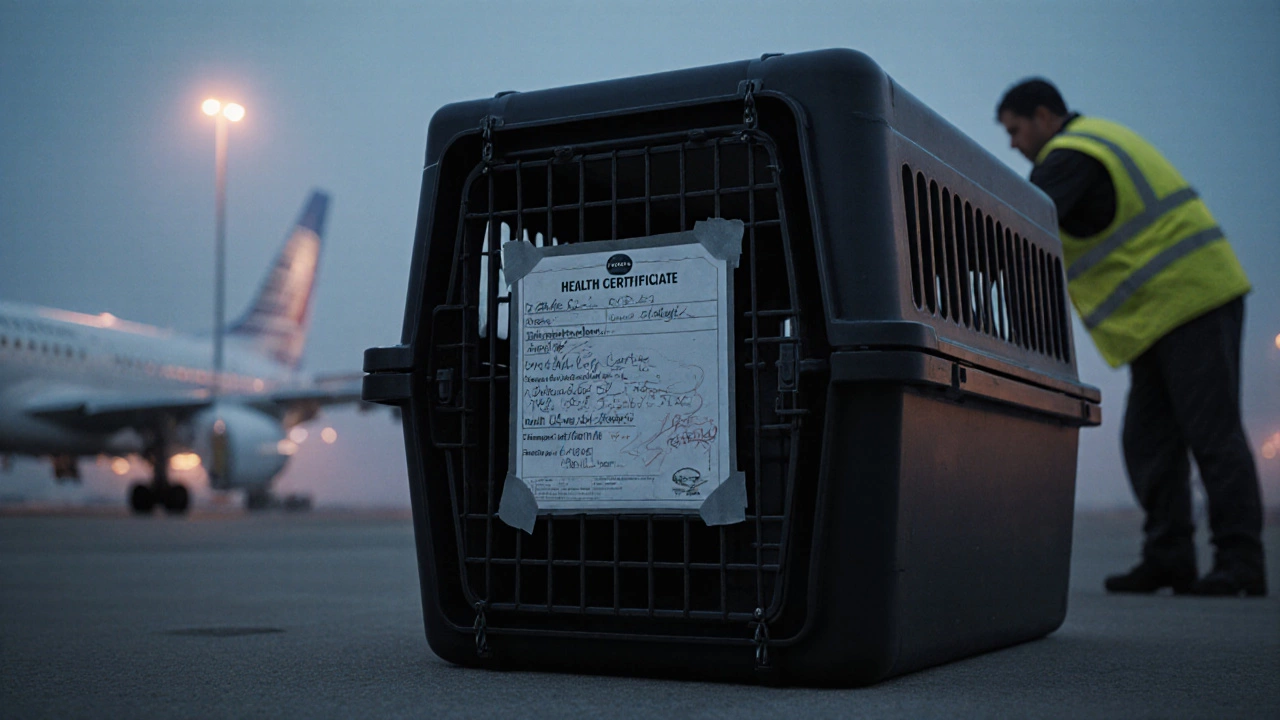
What about paperwork? You’ll need proof of rabies vaccination, a health certificate issued within 10 days of travel, and sometimes an acclimation certificate if temperatures are borderline. The pet travel safety, the set of practices and precautions that reduce risks to animals during transportation by air, road, or rail. isn’t just about the crate—it’s about timing, documentation, and knowing your dog’s limits. You wouldn’t send your kid on a long flight without snacks, water, and a comfort item. Same goes for your dog. Line the crate with a soft, absorbent bed. No toys with small parts. No food 4–6 hours before the flight. Water should be attached to the crate door so they can drink during the trip.
There’s a reason why so many posts here talk about crate training, dog anxiety, and airline rules. Flying isn’t just about getting from point A to point B—it’s about making sure your dog arrives healthy and calm. The articles below cover everything from how to pick the right carrier to what to do if your dog panics during travel. You’ll find real tips from people who’ve been there—no fluff, no guesswork. Just what actually works to keep your dog safe when they’re in the belly of the plane.
Is the Cargo Hold Safe for Dogs? What You Need to Know Before Flying
Flying your dog in cargo can be risky-especially for brachycephalic breeds or older dogs. Learn what really happens in the cargo hold, which airlines are safest, and how to protect your pet.
read more