Dog Food Cost Calculator
Dog Food Cost Calculator
Results
Estimated Weekly Cost: $0.00
Estimated Monthly Cost: $0.00
Annual Savings: $0.00
Tip: Home-cooked meals like chicken and rice are often more nutritious than commercial kibble at half the cost. Just be sure to follow proper nutrition guidelines.
View Full Comparison *Costs based on average food consumption and market prices
Buying commercial dog food can feel like paying for a luxury subscription you didn’t sign up for. A single 15kg bag of mid-range kibble can cost $80 or more. For large breeds or multi-dog households, that adds up fast. But what if you could feed your dog just as well - or even better - for half the price? The truth is, cheaper alternatives to commercial dog food aren’t just possible. They’re common. And many pet owners are already doing it.
Why commercial dog food is so expensive
Not all dog food is created equal. Premium brands use high-quality proteins, added vitamins, and fancy packaging. But a lot of what you’re paying for isn’t nutrition - it’s branding, marketing, and retail markup. Some kibble contains more filler than meat. Corn, wheat, soy, and cheap by-products make up the bulk of budget brands. You’re not just paying for food. You’re paying for the story on the bag.
Real dog nutrition is simple: protein, fats, some carbs, and essential vitamins. Your dog doesn’t need 17 flavors or ‘grain-free’ hype. They need real food that works. And that’s where cheaper options come in.
Plain cooked chicken and rice - the classic
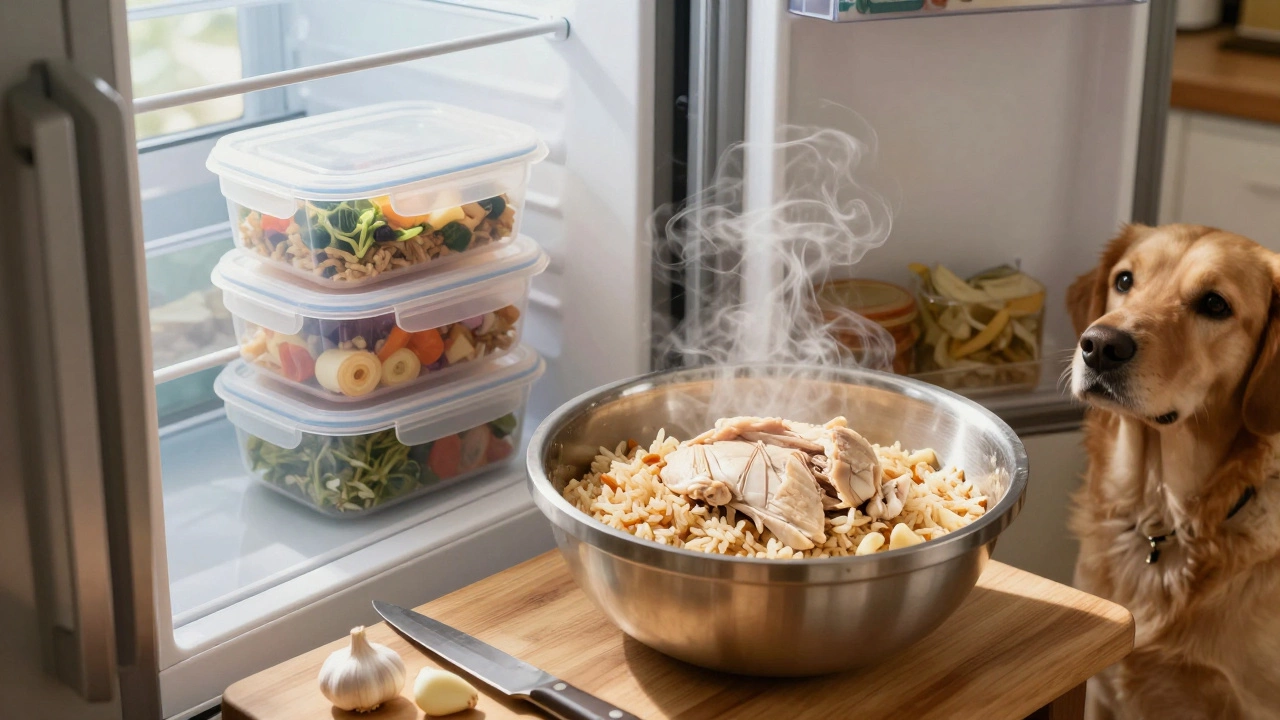
Chicken and rice is the go-to for sick dogs. But it’s also a perfectly fine regular meal - if you do it right. Cook plain, boneless, skinless chicken breasts. No salt, no oil, no seasoning. Steam or boil it. Pair it with white or brown rice. A 2:1 ratio of chicken to rice works well for most dogs.
For a 20kg dog, you’ll need about 300g of chicken and 150g of rice per day. That’s less than $2 a day in ingredients. Compare that to $2.50-$4 per day for mid-tier kibble. You save money, and you know exactly what’s in the bowl.
Pro tip: Cook a big batch on Sunday. Portion it into containers and freeze. Thaw a day’s portion each morning. It’s easy, fast, and keeps your fridge from turning into a dog-food warehouse.
Leftovers - yes, really
Before you cringe, hear this: dogs have eaten human scraps for thousands of years. The key isn’t giving them your pizza crusts or chocolate cake. It’s giving them safe, wholesome leftovers.
Boiled vegetables like carrots, zucchini, and green beans? Great. Cooked eggs? Excellent. Plain yogurt? Healthy for digestion. Lean ground beef or turkey from last night’s dinner? Perfect. Just avoid onions, garlic, grapes, raisins, and anything with xylitol.
One Auckland vet I spoke with told me she sees fewer digestive issues in dogs fed a mix of commercial food and home-cooked scraps. Why? Because real food has enzymes and moisture that kibble doesn’t. Your dog’s coat gets shinier. Their breath improves. Their energy stays steady.
Use leftovers as 30-50% of their daily intake. Top up with a little kibble if needed. You’re cutting costs without cutting nutrition.
Raw food - not as scary as it sounds
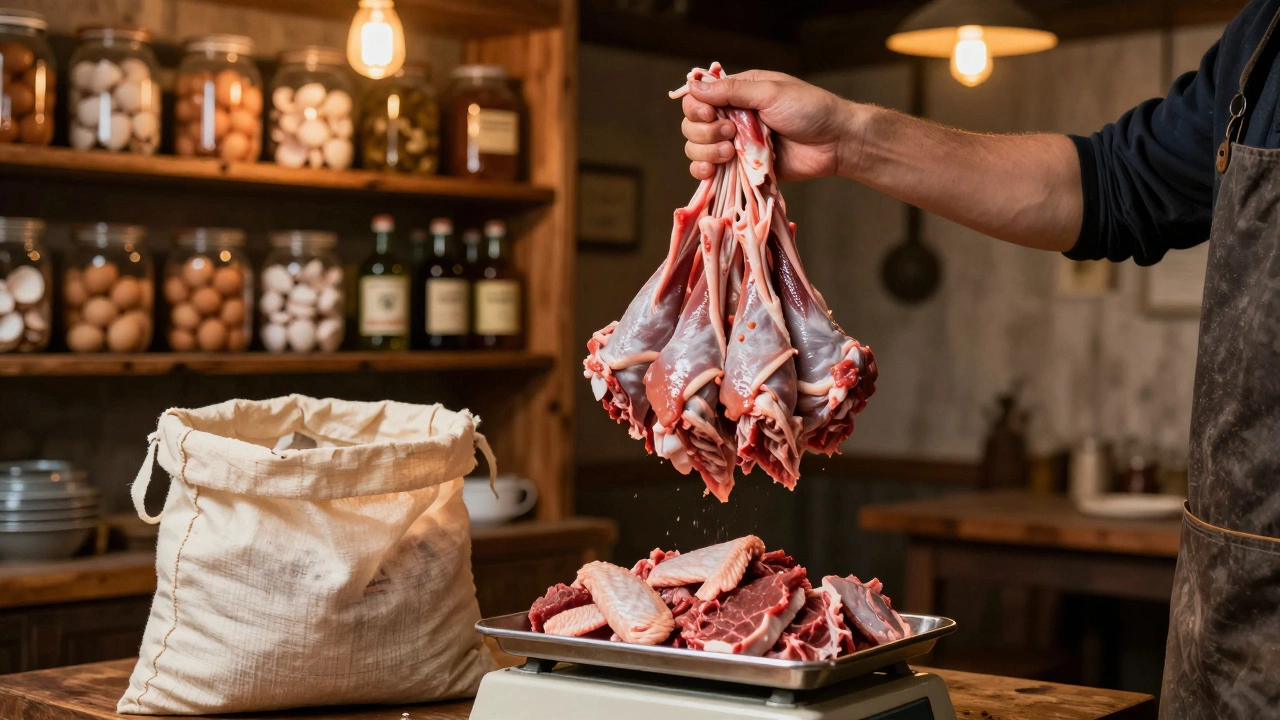
Raw feeding sounds extreme. But it’s one of the cheapest options if you buy smart. You don’t need organic, grass-fed beef. You need affordable cuts. Chicken necks, wings, and backs are cheap. Beef trimmings from the butcher? Often $5-$8 per kg. Liver and heart? Even cheaper.
A basic raw diet for a 20kg dog: 70% muscle meat, 10% bone, 10% organ meat (half of that liver), and 10% veggies or fruit. That’s about 300-400g per day. At $4/kg for chicken parts, you’re spending $1.20-$1.60 a day.
Some people worry about bacteria. Dogs have stomach acid 10 times stronger than humans. They handle raw meat fine. Just wash your hands. Clean the bowl. Don’t leave raw food out for hours. That’s it.
Buy in bulk. Freeze portions. Thaw as needed. Many local butchers offer bulk discounts. Ask for ‘pet-grade’ meat - it’s not for human sale, but it’s safe for dogs.
Commercial budget brands - the smart pick
Not all kibble is bad. Some budget brands are surprisingly good. Look for these labels:
- First ingredient is a named meat (chicken, beef, lamb) - not ‘meat meal’ or ‘animal by-product’
- No corn, wheat, or soy listed in the first five ingredients
- Contains added taurine, omega-3s, and glucosamine
Brands like Wagg, Canidae All Life Stages, or Blue Buffalo Basics (on sale) often cost $40-$50 for a 15kg bag. That’s $1.30-$1.70 per day. Still cheaper than premium brands. And if you mix it with a little home-cooked food, you stretch it even further.
Check local pet stores. Sometimes smaller brands offer better deals than big chains. Or buy in bulk online - shipping is often free on large orders.
Supplements you actually need
If you’re cooking at home or using budget kibble, you might need to add a few things:
- Calcium: If you’re feeding boneless meat, add 800-1,000mg of calcium per kg of food. Crushed eggshells (baked and ground) work fine. One teaspoon = about 2,000mg.
- Fish oil: 1,000mg per 20kg dog, 2-3 times a week. Helps skin, joints, and brain health. Buy in bulk - it’s cheaper than pet-specific brands.
- Probiotics: Plain, unsweetened yogurt or a powdered supplement. Helps digestion. Especially useful if your dog has loose stools.
You don’t need expensive vet supplements. A $15 jar of calcium powder lasts 3-4 months. A $20 bottle of fish oil lasts 6 months. That’s less than $1 a month.
What NOT to feed
Some ‘cheap’ foods are dangerous:
- Raw salmon or trout - can carry parasites
- Processed meats like bacon, ham, sausages - too much salt and fat
- Bones from cooked chicken or beef - they splinter and can puncture intestines
- Dairy in large amounts - many dogs are lactose intolerant
- Avocado, chocolate, caffeine, alcohol - all toxic
Stick to simple, whole foods. If you wouldn’t eat it, don’t give it to your dog.
How to transition safely
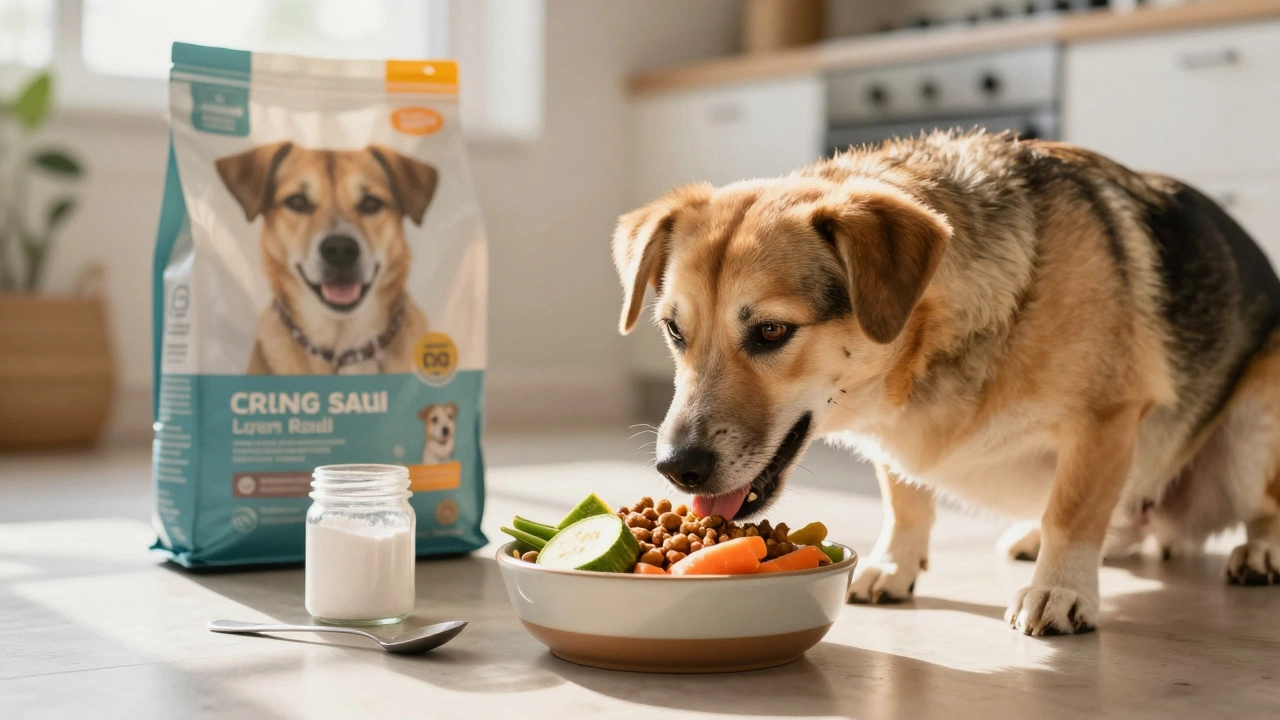
Don’t switch overnight. Your dog’s gut needs time to adjust. Over 7-10 days:
- Day 1-2: 75% old food, 25% new food
- Day 3-4: 50% old, 50% new
- Day 5-6: 25% old, 75% new
- Day 7-10: 100% new food
Watch for loose stools or vomiting. If it happens, slow down the transition. Some dogs take longer. That’s normal.
Real cost comparison
Here’s what a 20kg dog eats in a week, depending on the diet:
| Diet Type | Weekly Cost | Monthly Cost |
|---|---|---|
| Premium kibble (15kg bag, $90) | $18 | $72 |
| Mid-range kibble (15kg bag, $50) | $10 | $40 |
| Chicken and rice (home-cooked) | $7 | $28 |
| Raw diet (chicken parts + organs) | $6 | $24 |
| Leftovers + budget kibble (50/50) | $8 | $32 |
That’s up to $50 a month saved. That’s a vet visit. Or a new leash. Or a weekend trip to the beach.
When to stick with commercial food
Not every dog can switch. Puppies under 6 months, senior dogs with kidney disease, or dogs with allergies may need specially formulated food. If your dog has chronic health issues, talk to your vet before changing their diet.
But for healthy adult dogs? Most can thrive on cheaper, real food. You don’t need to go full raw or cook every meal. Even adding one home-cooked meal a day cuts costs and improves health.
Start small. Swap one meal a week. See how your dog reacts. Then add another. Before you know it, you’re feeding better food - for less money.