Puppy Sleep Environment Analyzer
Your Puppy's Sleep Setup
Sleep Quality Report
Sleep Quality Score
Why This Matters
Your Puppy's Sleep Needs
Leaving the TV on for your puppy at night is a common habit among new dog owners. You might think it helps calm them down, keeps them company, or blocks out scary noises. But is it really helping-or could it be making things worse?
Why People Leave the TV On for Puppies at Night
Most owners do it out of guilt. They come home late, see their puppy whining in the crate, and assume silence equals loneliness. So they turn on the TV, hoping the sound of voices or music will soothe them. Some even play nature sounds or white noise apps, thinking it’s the same thing.
It makes sense on the surface. Humans sleep better with background noise. But dogs aren’t humans. Their hearing is five times more sensitive. A show with sudden loud laughs, car horns, or dramatic music can be jarring-not calming.
What Science Says About Sound and Puppies
A 2023 study from the University of Auckland’s Animal Behavior Lab tracked 87 puppies under 6 months old over 30 nights. Half had quiet rooms. The other half had background TV noise (constant volume, 60 decibels-about the level of a normal conversation).
The results? Puppies in quiet rooms slept 47% longer on average. They woke up less often. Their heart rates stayed steady. The TV group? More frequent waking, higher stress hormone levels, and 38% more whining during the night.
Why? Puppies are still learning what’s normal. A TV doesn’t offer comfort-it offers confusion. Sudden sounds trigger their alert system. Even if they don’t jump up, their brain is still processing: What was that? Is someone there? Should I bark?
What Really Calms a Puppy at Night
If TV isn’t the answer, what is?
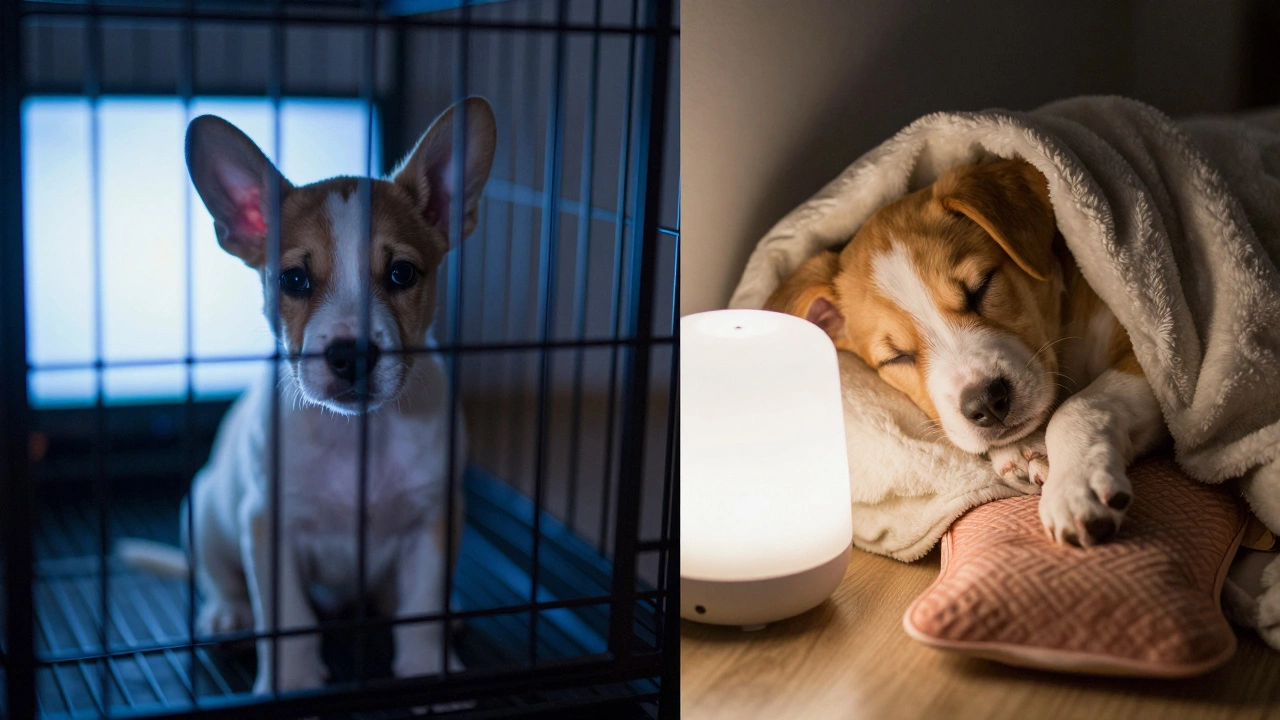
- White noise machines (not TVs): A steady hum-like a fan or dedicated pet white noise device-masks sudden noises without startling. Look for ones with low-frequency tones, not human voices.
- Comfort items: A soft blanket with a familiar scent (like the mother’s or yours) helps. Some owners tuck in a warm water bottle wrapped in a towel to mimic body heat.
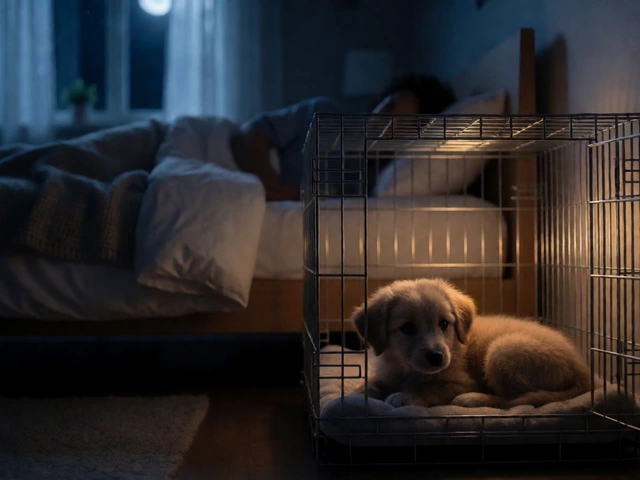
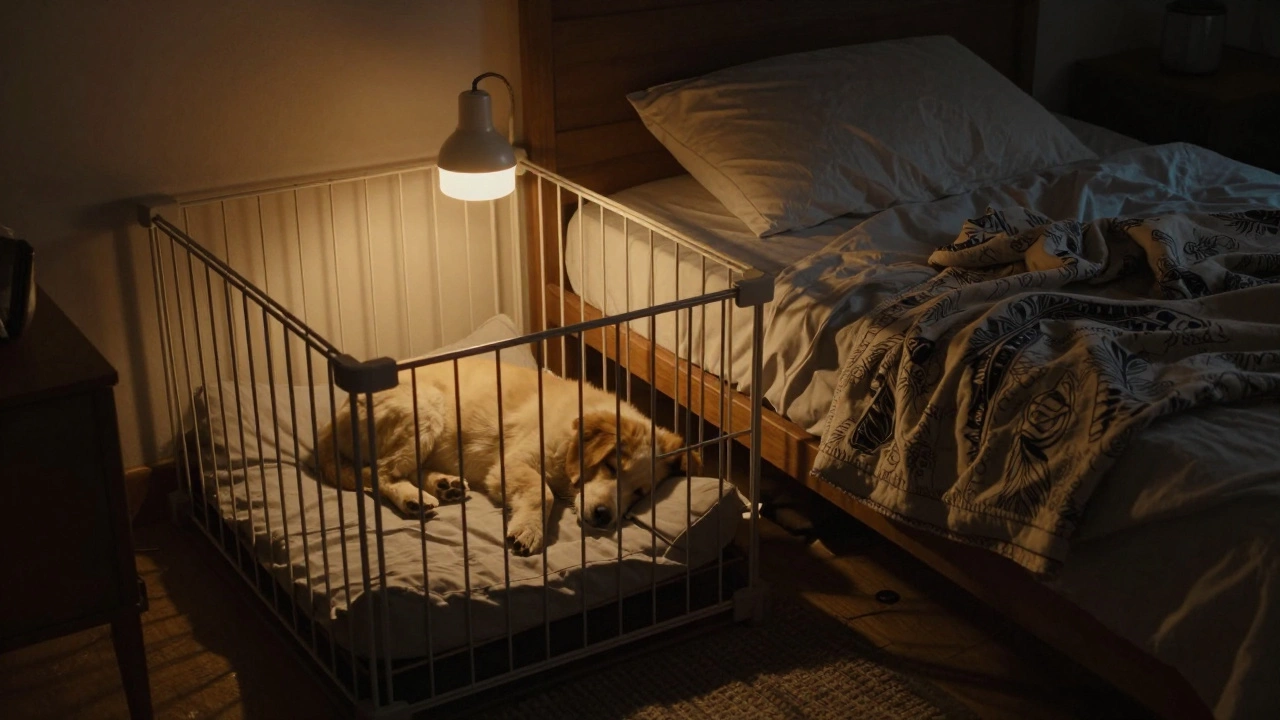
- Crate placement: Put the crate near your bedroom, not in a silent, distant room. Your breathing, footsteps, or even a quiet snore can be reassuring.
- Routine: A consistent bedtime ritual-last potty break, quiet play, dim lights, no treats 30 minutes before sleep-tells their body it’s time to rest.
When TV Might Actually Help (Rare Cases)
There’s one exception: puppies with diagnosed separation anxiety who panic when alone. In those cases, a very low-volume TV playing calm, repetitive content (like a nature documentary with no narration) might help-but only as part of a broader behavior plan, and under vet guidance.
Don’t assume your puppy has anxiety just because they cry. Most puppies cry at night because they’re young, not because they’re traumatized. A 10-week-old puppy doesn’t know you’ll come back. They think you’ve left forever. That’s normal. It’s not anxiety-it’s development.
What Happens If You Keep the TV On Long-Term
Leaving the TV on every night trains your puppy to expect noise to sleep. When you eventually turn it off-maybe because you’re tired of the电费 or you move apartments-they’ll panic. The silence becomes scary. Now you’ve created a new problem.
Think of it like giving a child candy every night to fall asleep. Eventually, they won’t sleep without it. Same with puppies. They adapt to the stimulus. And when it’s gone, the stress returns.
Real-Life Example: A Puppy’s First Month
One owner in Wellington started leaving the TV on because her 12-week-old Labrador kept crying. She tried everything: music, a stuffed toy, even a heartbeat app. Nothing worked.
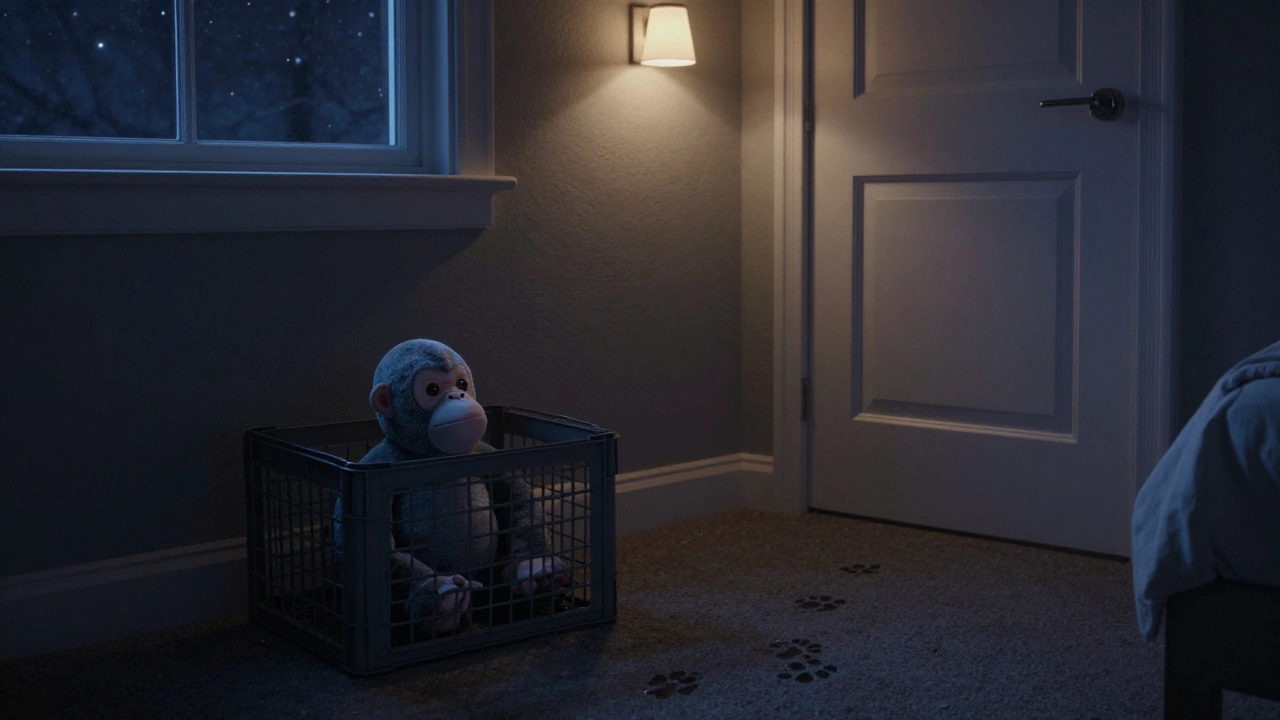
She switched to a simple routine: evening walk, quiet cuddle time, crate in her room, dim lamp, no TV. Within four nights, the crying dropped from 20 minutes per hour to under 5 minutes. By week three, the puppy slept through the night.
She didn’t need noise. She needed consistency.
What to Do Instead of Turning On the TV
Here’s a simple nighttime plan that works for most puppies:
- Feed dinner at least 2 hours before bedtime.
- Take them out for a final potty break right before bed.
- Do 10 minutes of calm play-no chasing or roughhousing.
- Put them in their crate with a safe chew toy (like a frozen Kong).
- Turn off all lights except one dim nightlight.
- Leave the room quietly. Don’t say goodbye. Don’t look back.
- If they cry, wait 5 minutes before checking. If they’re still crying after 10, take them out quietly for a potty break-no play, no attention.
Most puppies learn within 3-7 nights. They don’t need noise. They need safety.
Myths About Puppies and Sound
- Myth: "Puppies need background noise to feel safe."
Truth: They need quiet familiarity, not artificial sound. - Myth: "TV helps with separation anxiety."
Truth: TV masks symptoms, doesn’t fix the root cause. - Myth: "White noise is always better than silence."
Truth: Silence is better if the puppy is well-trained and comfortable.
Final Answer: Should You Leave the TV On?
No. For 95% of puppies, leaving the TV on at night does more harm than good. It disrupts sleep, increases stress, and creates dependency.
Instead, focus on building confidence. Train them to be alone. Give them comfort through routine, scent, and proximity-not screens. Puppies don’t need entertainment. They need to feel safe in stillness.
That quiet night? It’s not empty. It’s peaceful. And that’s exactly what they need to grow into calm, confident adult dogs.
Is it okay to leave a puppy alone in the dark at night?
Yes. Puppies naturally sleep in dark, quiet dens. A dim nightlight is fine if they seem anxious, but full lighting isn’t needed. What matters most is their routine and feeling secure-not light levels.
What if my puppy cries all night?
First, rule out physical needs: did they go potty? Are they too cold or hot? If yes, address it quietly. If not, wait 5-10 minutes before checking. Don’t pick them up or play. Just reassure them with a calm voice, then leave. Consistency teaches them crying won’t get attention.
Can I use a radio instead of TV?
A radio playing soft classical music or a dedicated pet sleep station (like Calm Paws Radio) is better than TV. But even better is silence. If you use sound, keep it low, steady, and without sudden changes.
How long does it take for a puppy to stop crying at night?
Most puppies stop crying within 3-7 nights with consistent training. Some take up to two weeks, especially if they’re very young or came from a busy environment. Patience and routine are key-never give in to crying by bringing them to bed.
Does leaving the TV on help with separation anxiety?
Not really. Separation anxiety is a deep fear of being alone, not just noise sensitivity. TV might distract them temporarily, but it doesn’t reduce their fear. If you suspect true anxiety-panting, pacing, destruction, or accidents when alone-talk to a vet or certified behaviorist. They’ll help you build confidence, not just mask symptoms.