Puppy Confinement & Bladder Calculator
Enter Puppy Details
Bladder Capacity Estimate
Enter age to calculate.
Crate Training
Best for safety, den instinct, and preventing accidents in young puppies.
- ✔ High security against destruction
- ✔ Best for bladder holding
- ✘ Limited movement space
Exercise Pen
Best for freedom of movement and socialization for older or trained pups.
- ✔ More physical freedom
- ✔ Better visibility of home
- ✘ Higher risk of accidents
Please enter your puppy's details above to receive a recommendation.
Leaving your new puppy home alone is one of the first major hurdles in dog ownership. You want them to be safe, you want them to learn good habits, and you definitely don't want to come home to a shredded sofa or a flooded living room. The big question every new owner asks is: should I put my puppy in a puppy crate or an exercise pen? There is no single right answer for every dog, but there is a clear logic to choosing the right setup based on your puppy’s age, bladder control, and energy levels.
I’ve spent years observing how different confinement methods affect puppy development here in Auckland. Some owners swear by crates, while others find pens more humane. The truth lies somewhere in the middle. It isn't about which tool is 'better' in a vacuum; it's about which tool fits your specific situation right now. If you are looking for other types of directories or resources, sometimes you just need to look at this resource to see how different listing structures work, though that is hardly related to dogs, it serves as an example of finding verified information online.
Understanding the Core Difference: Confinement vs. Space
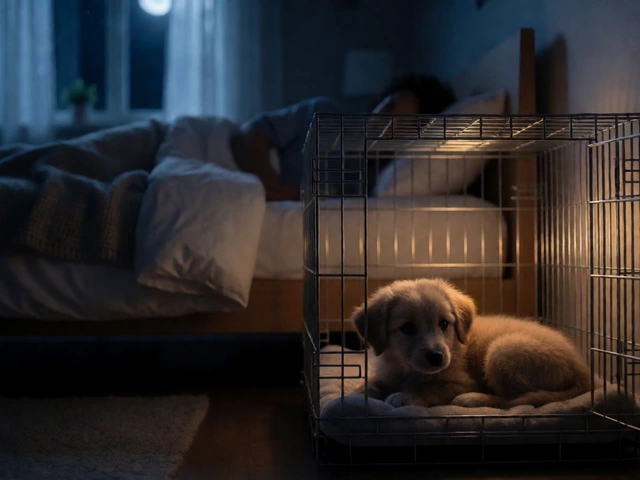
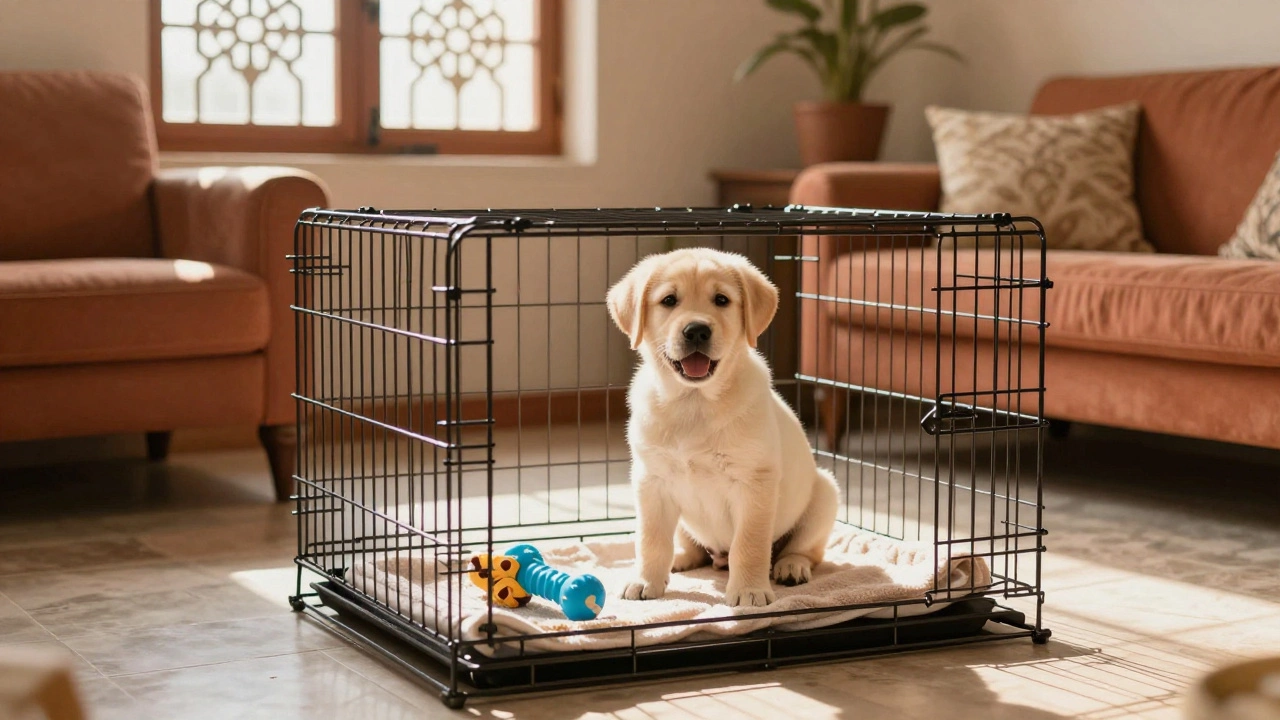
To make the right choice, you have to understand what each tool actually does. A Puppy Crate is a small, enclosed space designed to mimic a den. It limits movement almost entirely. This restriction is powerful because it leverages a dog's natural instinct not to soil their sleeping area. If the crate is the right size-just big enough to stand, turn around, and lie down-the puppy will hold their bladder until let out.
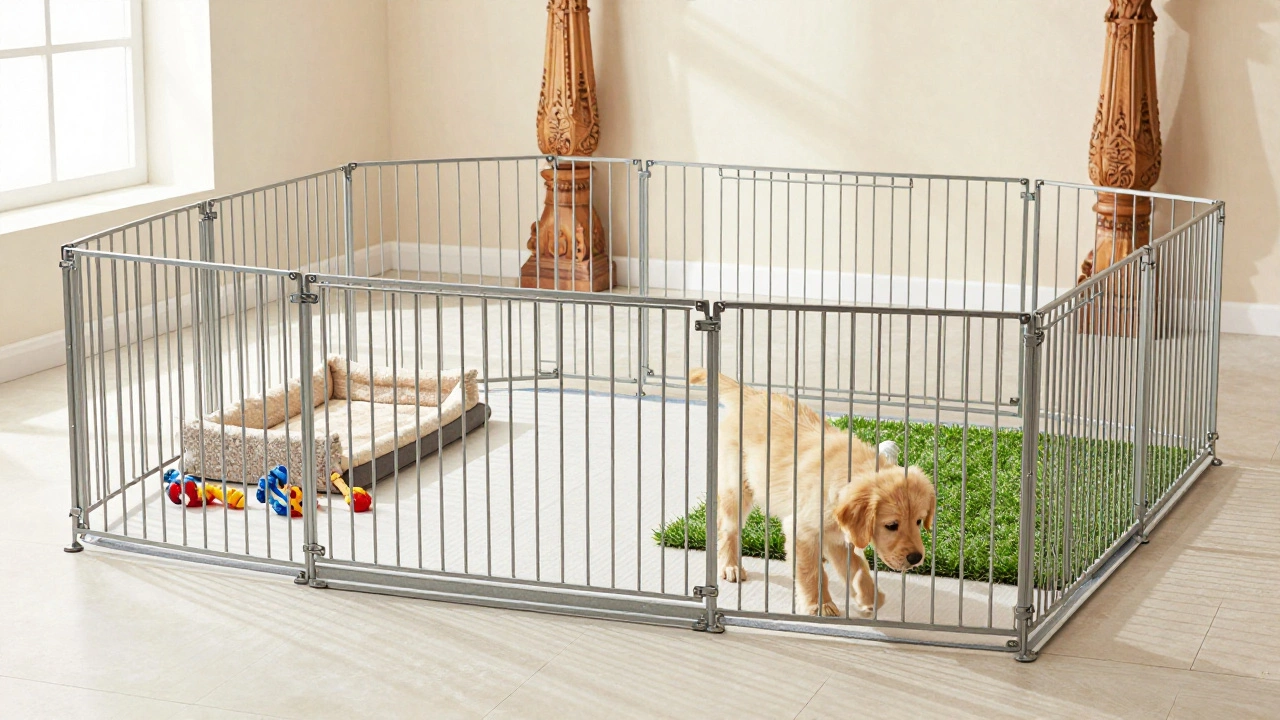
An Exercise Pen (often called a playpen or x-pen) is a larger, fenced-off area that allows freedom of movement. In a pen, a puppy can walk, run, chew on toys, and nap in different spots. The trade-off is obvious: if they can move away from their bed, they might also decide to pee in the corner. Pens require more frequent bathroom breaks and more supervision, but they offer significantly more physical freedom.
The Bladder Control Factor: Age Matters Most
The single most important factor in deciding between a crate and a pen is your puppy's ability to hold their urine. Young puppies simply do not have the muscle control to wait long periods. A general rule of thumb is that puppies can hold their bladder for roughly one hour per month of age, up to a maximum of eight hours for adults.
- 8-10 Weeks: Bladder capacity is tiny. They need to go every 1-2 hours. A crate is usually safer here because it prevents accidents and keeps them calm. A pen is risky unless you are home to let them out constantly.
- 12-16 Weeks: They can hold it for 2-3 hours. Crates still work well, but some robust puppies might start getting frustrated with the tight quarters.
- 4+ Months: Many puppies can handle 4-5 hours. This is where pens become a viable option for daytime confinement, provided you have set up a proper potty spot inside the pen.
If you leave your puppy for 8 hours a day while at work, a standard pen is rarely sufficient for a young pup. They will likely get bored, anxious, or have accidents. In these cases, a crate combined with a large pen (see below) is often the only practical solution.
The Hybrid Approach: Crate Inside a Pen
You don't always have to choose just one. Many professional trainers recommend a hybrid setup, especially for longer absences. This involves placing the crate inside a larger exercise pen. Here is why this works so well:
- Safety First: When you leave the house, the gate to the pen is closed, and the puppy is crated. They are secure, cannot destroy furniture, and are less likely to have an accident.
- Freedom When Supervised: When you are home, you open the crate door. The puppy can step out into the pen, stretch their legs, play with toys, and relax without being trapped in the small box.
- Mental Stimulation: The pen becomes a 'safe zone' filled with Kongs, chew bones, and soft beds. It teaches the puppy that confinement isn't punishment; it's just where they hang out when humans aren't watching.
This method gives you the best of both worlds: the reliability of crate training for housebreaking and the comfort of a pen for mental well-being.
Pros and Cons: Crate Training
Crate training is controversial among some modern pet owners who view cages as cruel. However, when done correctly, it is one of the fastest ways to achieve a house-trained dog. Let's look at the specifics.
| Aspect | Benefit | Drawback |
|---|---|---|
| Housebreaking | Highly effective due to den instinct | Requires strict schedule; accidents happen if left too long |
| Safety | Prevents chewing wires, shoes, and toxic items | Puppy may injure teeth/jaws if trying to escape bars |
| Anxiety | Provides a secure, dark den-like environment | Can increase anxiety in dogs with severe separation issues |
| Travel | Essential for car rides and vet visits | Bulky to transport if using a large wire crate |
The key to successful crate training is never using the crate as punishment. If you yell at your puppy and then shove them in the crate, they will hate it. Instead, feed them meals in there, give them high-value treats, and keep the door open when you are home so they learn to enter voluntarily.
Pros and Cons: Exercise Pens
Exercise pens feel more 'natural' because the puppy has room to roam. They are excellent for socialization and allowing the puppy to observe the household without interacting destructively.
- Movement: Puppies can change positions, which is better for joint development than lying in one spot for hours.
- Visibility: They can see you moving around the house, which reduces feelings of isolation.
- Potty Training Challenge: As mentioned, they will likely eliminate in the pen. You must manage this by placing a pee pad or indoor grass patch in one corner and keeping the rest of the pen clean. Over time, they learn to use that specific spot.
- Escape Artists: Some clever breeds, like Border Collies or Huskies, can figure out how to unlatch gates or climb over low panels. Pens require sturdy construction.
Pens are ideal for short absences (under 2 hours) or for puppies who are already reliably house-trained but still need boundaries while you work from home.
Signs Your Puppy Is Struggling
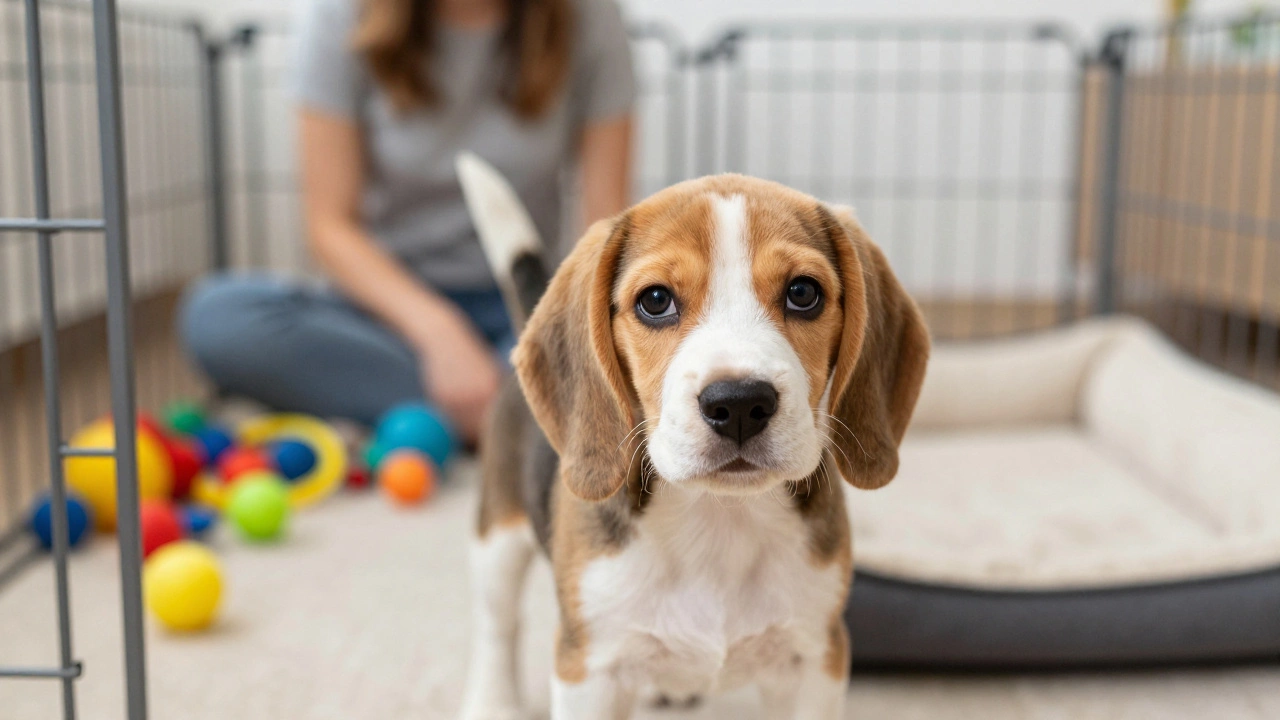
No matter which method you choose, watch for signs of distress. Every puppy is different. Some love their crate; others panic. Look out for:
- Excessive Whining or Barking: Occasional whining is normal, especially in the first few days. Constant, frantic noise suggests fear or a need to eliminate.
- Destructive Behavior: Chewing the bars of the crate or scratching at the pen walls indicates anxiety or boredom.
- Refusal to Enter: If your puppy refuses to go into the crate even for treats, you may need to slow down the training process or switch to a pen temporarily.
- Accidents: If they pee in the crate, it is too small (if they are older) or they were left in too long. Never punish them for this; just adjust the schedule.
Setting Up the Environment for Success
Whether you use a crate or a pen, the setup matters. You want the space to be comfortable and engaging.
For Crates: Use a washable blanket or towel. Avoid thick plush bedding that can be shredded and swallowed. Add a frozen Kong stuffed with peanut butter and kibble to keep them occupied. Cover part of the crate with a light sheet to create a den effect, which calms many puppies.
For Pens: Create zones. One side for sleeping (with a bed), one side for playing (with durable toys), and one side for eliminating (pee pads or artificial grass). Rotate toys daily to keep interest high. Ensure the floor is non-slip; hardwood floors can cause hip dysplasia issues in growing puppies if they slip frequently.
Final Thoughts on Making the Choice
There is no magic bullet. If you have a 9-week-old Labrador and work 9-to-5, a crate is likely your safest bet for housebreaking success. If you have a 5-month-old Beagle who is mostly trained and you only leave for lunch breaks, a pen might be kinder and more enjoyable for them. The goal is not to confine your puppy for the sake of convenience, but to provide a safe environment that supports their physical and emotional development. Start with a crate for structure, and expand to a pen as they mature and earn more trust.
How long can I leave my puppy in a crate?
For puppies under 6 months, limit crate time to 2-4 hours maximum during the day. Older puppies (6-12 months) can handle 4-6 hours. Adult dogs can generally handle 8 hours, but this should be avoided if possible. Always provide a bathroom break before and after.
Is it cruel to crate train a puppy?
No, crate training is not cruel when done correctly. Dogs are den animals and often feel secure in enclosed spaces. Cruelty occurs when the crate is used for punishment, is too small, or the puppy is left confined for excessive periods without bathroom breaks.
Should I cover my puppy's crate?
Yes, covering three sides of the crate with a breathable cloth can help reduce visual stimuli and create a calming den-like atmosphere. This is especially helpful for nervous puppies or those prone to barking at noises outside.
Can I use an exercise pen for housebreaking?
It is more challenging but possible. You must designate a specific potty area within the pen (using pee pads or grass) and keep the rest of the pen clean. Puppies naturally avoid soiling their sleeping and eating areas, so separating these zones helps.
What size crate should I get for a growing puppy?
Buy a crate sized for the adult dog, but use a divider to shrink the space as the puppy grows. If the crate is too big initially, the puppy will use one end for sleeping and the other for eliminating, defeating the purpose of housebreaking.