Dog Bed Alternative Finder
Find Your Dog's Perfect Bed Alternative
Based on your dog's preferences and your home environment, we'll recommend the best alternative to store-bought dog beds.
How does your dog normally sleep?
Does your dog prefer warm or cool surfaces?
What's your dog's age?
Remember: Your dog's comfort is more important than brand names. Look around your home for options that match your dog's natural preferences. If they reject the bed after 3-5 days, try something different.
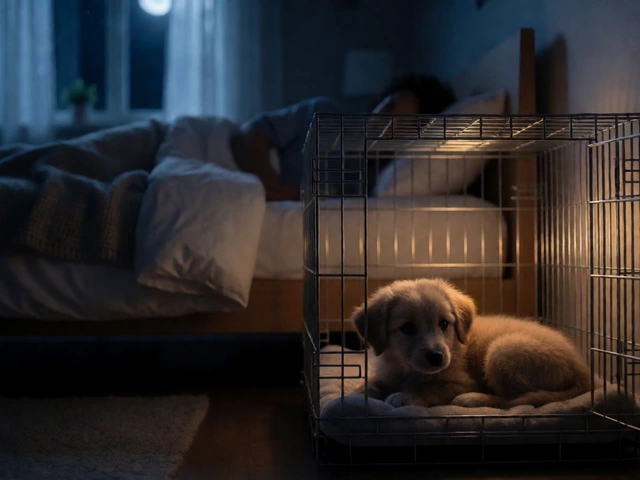
Most dog owners buy a dog bed because it seems like the right thing to do. But what if your dog refuses to use it? Or what if you’re moving, traveling, or just trying to save money? You don’t need a fancy orthopedic pad for your pup to sleep well. Dogs have been sleeping on floors, rugs, and even cardboard boxes for thousands of years. The real question isn’t whether you need a dog bed-it’s what works for your dog.
Your Dog Doesn’t Care About Brand Names
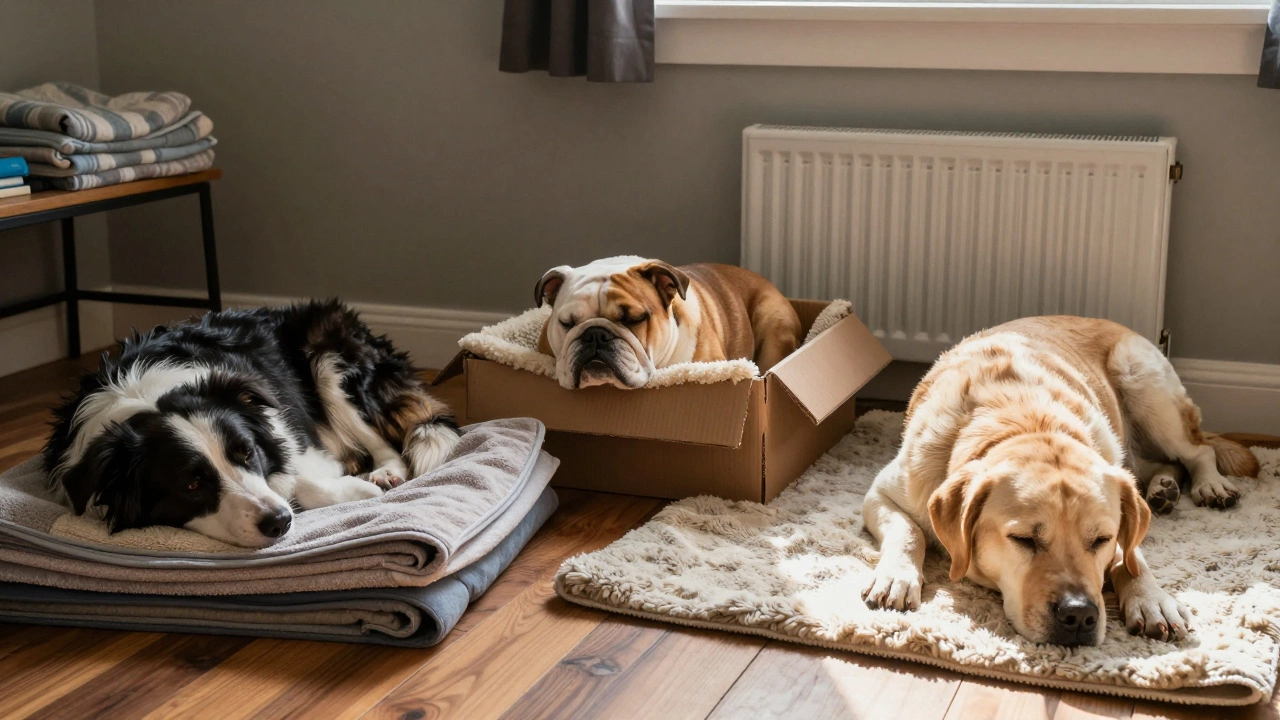
Dogs aren’t shopping for luxury. They care about warmth, comfort, and security. A $200 memory foam bed won’t matter if your dog prefers curling up on the cold tile floor. I’ve seen border collies sleep on bare wood, bulldogs on old towels, and senior labs on folded blankets in the laundry room. The key isn’t the product-it’s the conditions around it.Start by watching your dog. Where do they naturally choose to nap? Behind the couch? Under the kitchen table? On your pillow? That’s their instinct talking. They’re looking for a spot that feels safe, warm, or slightly enclosed. You don’t need to buy anything. You just need to replicate what they already like.
1. Old Blankets and Towels
This is the simplest, cheapest option-and it works for most dogs. Fold a thick cotton blanket or two old bath towels into a thick pad. Place it on a hard floor, near a heat vent, or in a draft-free corner. Dogs love the texture of woven fabric, and the fold gives them something to dig into. Wash them weekly. That’s it.Pro tip: Use a waterproof liner underneath if your dog tends to drool or has accidents. A cheap plastic tablecloth or even a cut-up shower curtain works. No need to buy a fancy waterproof dog pad.
2. Cardboard Boxes (Yes, Really)
Dogs love enclosed spaces. That’s why they squeeze into suitcases, under beds, and behind the washing machine. A medium-sized cardboard box-clean, dry, and free of tape or staples-can become a cozy den. Line it with a towel or fleece blanket. Cut a low entrance so your dog can easily step in and out.It’s not pretty, but it’s effective. Many rescue dogs, especially those with anxiety, will choose a box over a store-bought bed. And if it gets chewed or wet? Toss it. Replace it for $0.50 at the grocery store.
3. Pillows and Cushions from Your Couch
If your dog already steals your throw pillows, why not give them one of their own? Use an old sofa cushion, a decorative pillow, or even a bean bag chair (if it’s sturdy and non-toxic). Remove the cover if it’s delicate and replace it with a washable cotton slipcover.Large dogs like Labradors and Golden Retrievers often prefer flat, wide surfaces. A firm pillow gives them room to stretch out. Small dogs like Chihuahuas or Pugs like to burrow-so a soft, deep pillow lets them dig in.
4. Rugs and Mats
A thick, non-slip rug isn’t just for your living room. A 100% cotton or jute rug placed in a quiet corner gives your dog traction and cushioning. Avoid shag rugs-they trap fur and dirt, and can cause paw injuries. Look for low-pile, washable options.Outdoor mats designed for patios or entryways work great indoors too. They’re easy to clean, durable, and often have a slightly raised texture that dogs find satisfying to scratch into.
5. Repurposed Furniture
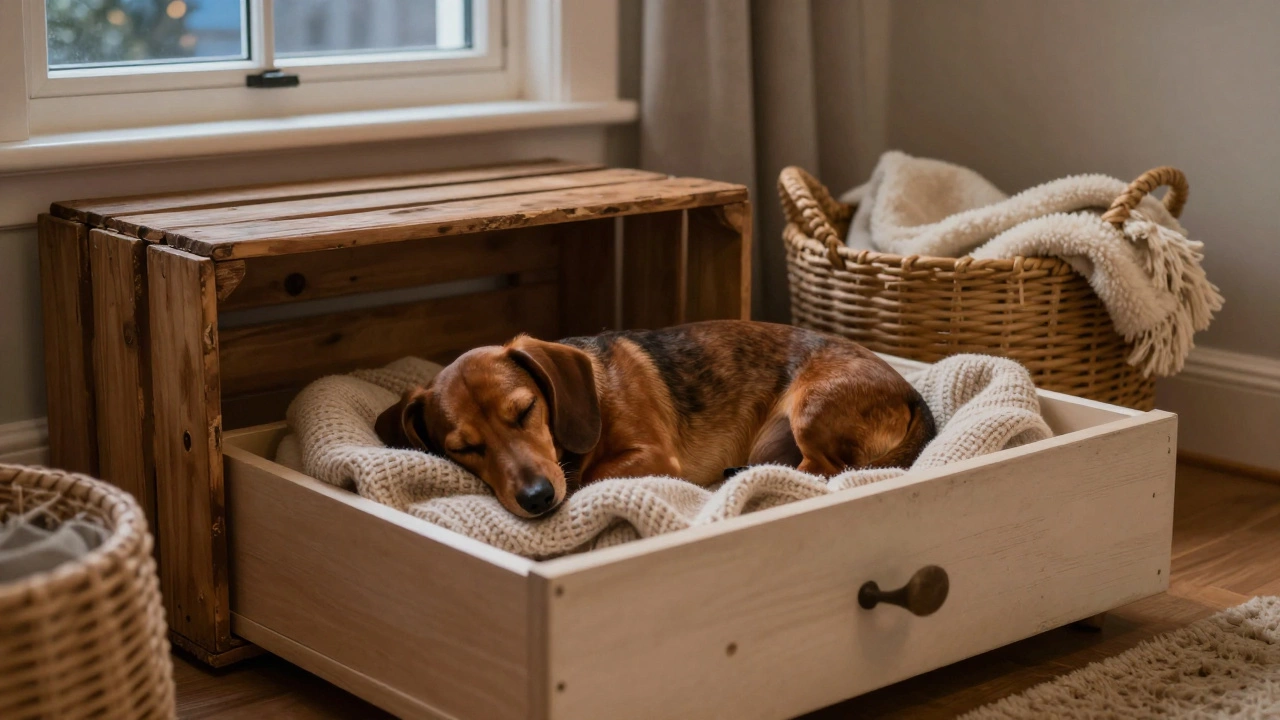
An old wooden crate, a small bookshelf with the front removed, or even a plastic storage bin with a cut-out entrance can become a custom dog bed. Add padding inside with foam scraps or old clothing. This is especially useful for dogs who like to feel surrounded.I’ve seen a 12-year-old dachshund sleep happily in a repurposed dresser drawer. The low sides let her climb in easily, and the enclosed space gave her the security she lost after losing her littermate. She slept better than she ever did on her $80 bed.
6. Heated Options (For Cold Climates or Older Dogs)
If you live somewhere chilly-like Auckland in winter-or your dog is arthritic, warmth matters more than padding. A heating pad designed for pets (not human electric blankets!) placed under a blanket can make all the difference. Look for ones with automatic shut-off and chew-resistant cords.Or try a simple hot water bottle wrapped in a towel. Fill it with warm (not boiling) water, seal it tightly, and tuck it under their resting spot. It stays warm for hours. Remove it in the morning. No electricity needed.
7. The Floor (Yes, Really)
Some dogs just don’t need anything. I’ve owned three dogs who refused every bed I bought. One of them, a terrier mix named Moko, slept on the concrete floor of our garage. He’d dig a little hollow, curl up, and sleep like a rock. He never had joint problems. He was 14 when he passed.It’s not about what’s comfortable for you. It’s about what your dog actually uses. If your dog chooses the floor, give them a clean, dry spot. Put down a washable mat or rug just to make cleanup easier. Don’t force a bed.
8. Pet-Safe Foam Scraps
Got old mattress foam or packing foam lying around? Cut it into a rectangle that fits your dog’s size. Cover it with a cotton pillowcase or old T-shirt. It’s not as soft as memory foam, but it gives support without the price tag.Make sure it’s non-toxic and won’t break apart easily. Dogs who chew might tear it up, so supervise them at first. For senior dogs with hip issues, even a 2-inch foam pad can reduce pressure on joints.
9. DIY Bed from a Basket or Hamper
A large woven basket, laundry hamper, or even a plastic storage bin with a lid removed can become a stylish dog bed. Line it with a thick fleece blanket or a cut-up sweater. Tuck the edges under so they don’t bunch up.This works especially well for small to medium breeds. The raised sides give them something to lean against. And if you choose a basket with a natural fiber weave, it’s breathable and doesn’t trap heat.
10. Your Bed (With Boundaries)
Let’s be honest: many dogs already sleep on your bed. If you’re okay with it, and your dog doesn’t disrupt your sleep, why not just let them? Use a washable dog blanket or towel on your mattress to protect it. Teach them to stay on their side with a simple cue like “your spot.”Some dogs prefer the warmth and scent of their human. That’s normal. If you’re worried about allergies or hygiene, wash bedding weekly and keep your dog clean. There’s no rule that says dogs must sleep in their own bed.
What to Avoid
Not all substitutes are safe. Skip these:- Memory foam from old office chairs-it often contains toxic flame retardants
- Feathers or down pillows-they can trigger allergies or be swallowed
- Plastic bags or bubble wrap-they’re choking hazards
- Soft, fluffy toys that can be torn apart-pieces can cause intestinal blockages
- Electric blankets not made for pets-they overheat and can burn
How to Test If It’s Working
Your dog doesn’t need to love it right away. Give them 3-5 days to adjust. Watch for these signs:- They lie down on it willingly
- They sleep for more than 20 minutes at a time
- They don’t keep moving around or scratching at it
- They seem relaxed when they’re on it-no tense shoulders or wide eyes
If they ignore it, try a different spot or material. Maybe they need more warmth. Maybe they need more privacy. Maybe they just don’t like fabric. Adjust. Repeat.
Final Thought: It’s Not About the Bed
The best dog bed is the one your dog actually uses. You don’t need to spend money to make them comfortable. You just need to pay attention. Dogs aren’t asking for luxury. They’re asking for safety, warmth, and a place they can call their own.So next time you’re wondering what to use instead of a dog bed, look around your house. What’s already there? What’s clean? What’s quiet? That’s your answer.
Can I use a human pillow as a dog bed?
Yes, if it’s firm and clean. Remove the pillowcase and cover it with a washable cotton slipcover. Avoid down or feather pillows-they can trigger allergies or be chewed apart. Make sure your dog can’t swallow any stuffing. For small dogs, a single pillow works fine. Large dogs may need two stacked together.
Is cardboard safe for dogs to sleep on?
Clean, dry cardboard is perfectly safe. Avoid boxes with tape, staples, or ink that could be toxic. Cardboard is breathable, insulating, and easy to replace. Many shelter dogs prefer cardboard boxes because they feel enclosed and secure. Just monitor your dog if they’re a chewer-some may tear it apart.
What’s the best material for a dog bed substitute?
Cotton, fleece, and low-pile rugs are the safest and most practical. They’re washable, non-toxic, and comfortable. Avoid synthetic materials like polyester fleece if your dog has sensitive skin. Natural fibers breathe better and don’t trap heat. For older dogs, combine a firm foam base with a soft top layer for support and comfort.
Should I buy a dog bed if my dog won’t use it?
No. If your dog ignores the bed after a week, stop buying them. It’s not a failure-it’s just not what they need. Focus on what they already choose. Maybe they prefer the floor, the couch, or a corner behind the door. Respect that. You’re not failing as a pet owner-you’re just learning what works for your individual dog.
Can I use a baby crib mattress for my dog?
Technically yes, but it’s not ideal. Baby mattresses are designed for small, lightweight humans and may be too firm or too thin for most dogs. They also often contain chemicals not meant for pets. If you use one, cover it with a thick, washable fabric. Better options include foam scraps, old pillows, or rugs. Stick to pet-safe materials when possible.
How often should I wash dog bed alternatives?
Wash any fabric substitute weekly-especially if your dog sheds a lot, drools, or has accidents. Towels, blankets, and pillowcases can go in the washer on a gentle cycle with pet-safe detergent. Avoid fabric softener-it reduces absorbency and can irritate skin. Let them air dry completely before letting your dog use them again.
Do dogs need a bed if they sleep on the floor?
No, they don’t. Dogs have slept on the ground for millennia. What matters is whether the surface is clean, dry, and free of drafts. If your dog chooses the floor and sleeps soundly, they’re fine. Adding a washable mat underneath helps with hygiene and warmth, but it’s not required. The myth that dogs need a bed for joint health only applies to older dogs with arthritis-not all dogs.