Crate Time for Puppies: What You Need to Know
When we talk about crate time for puppies, a structured, safe space used to help young dogs learn boundaries, rest, and house training. Also known as puppy crate training, it’s one of the most effective tools for raising a calm, well-behaved dog. But too much crate time? That’s where things go wrong. Puppies aren’t small adults—they have tiny bladders, short attention spans, and need constant supervision. The goal isn’t to lock them away, but to give them a cozy den they learn to love.
Puppy sleep schedule, a daily rhythm that includes naps, meals, play, and potty breaks is the backbone of successful crate use. An 8-week-old pup can’t hold it for more than 2–3 hours, so crating them for 6 hours straight? That’s not training—it’s cruelty. A good schedule means feeding at set times, taking them out right after meals, and using the crate for naps and overnight, not all day. And when you do use the crate, it should feel like a safe spot, not a punishment. Toss in a soft blanket, a chew toy, and never use it when you’re home and they’re whining—you’ll teach them that crying gets them out, not that the crate is calm.
Puppy potty training, the process of teaching a young dog where and when to eliminate ties directly into crate time. Dogs don’t like to soil where they sleep, so a properly sized crate helps with that natural instinct. But if you leave them in too long, they’ll learn to ignore it—and then you’ve created a bigger problem. That’s why most experts say: crate for the number of hours equal to their age in months plus one. So a 3-month-old pup? Max 4 hours. And even then, only if they’re not showing signs of stress. Signs like constant whining, scratching, or panting mean it’s time to reassess.
Crates aren’t magic. They’re tools. Used right, they help puppies feel secure, prevent destructive chewing, and make house training faster. Used wrong? They cause fear, anxiety, and trust issues. The best owners don’t just stick their pup in a crate and walk away—they build a routine around it. Feed meals near the crate. Give treats inside. Let them nap there after play. Make it a happy place. And always, always pair it with potty breaks, playtime, and human interaction.
You’ll find posts here that cover everything from how long a puppy should be crated at night to what size crate works for a growing pup, and why some breeds struggle more than others. We’ve got tips on crate placement, what to do when your puppy cries, and how to tell if you’re overdoing it. No fluff. No theory. Just what works for real pups and real owners.
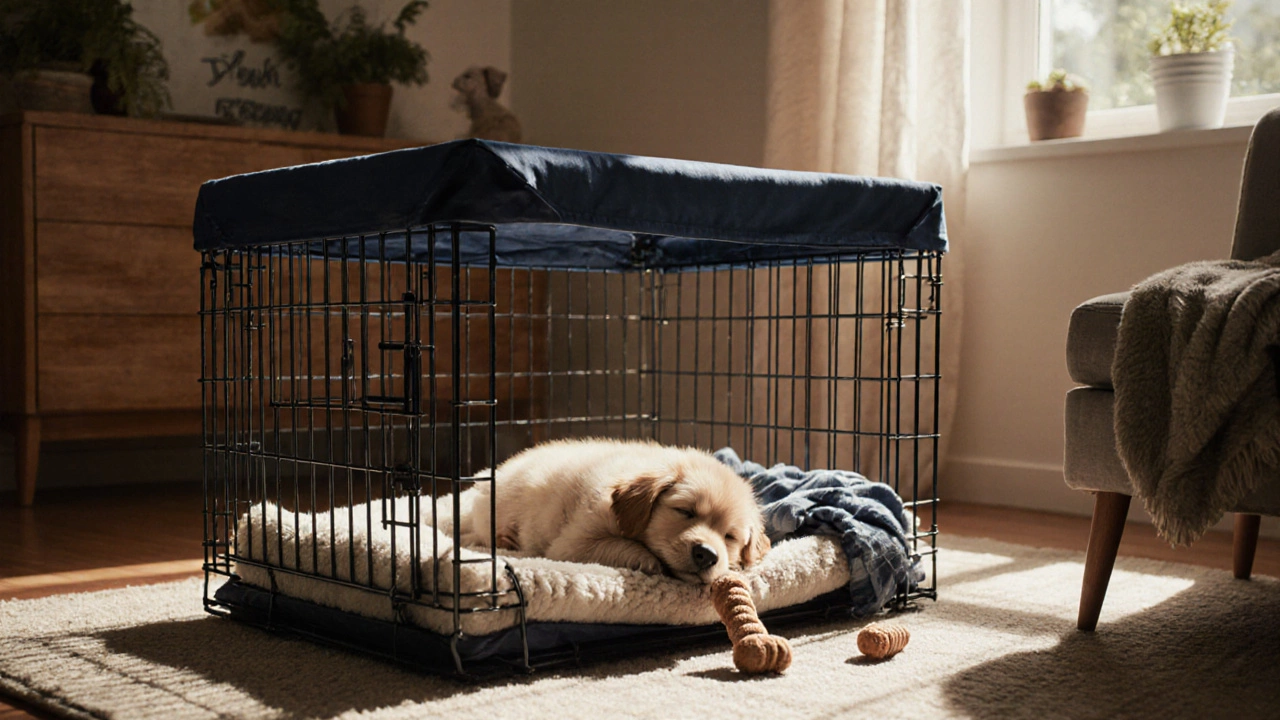
Should I Lock My Puppy in His Crate During the Day?
Crating your puppy during the day can be helpful-but only if done correctly. Learn how long is safe, what alternatives exist, and how to turn the crate into a safe space-not a prison.
read more