Cat Feeding Schedule Calculator
Find the Perfect Feeding Schedule
Get personalized recommendations for how many times a day your cat should eat based on their age, weight, and health status.
Recommended Feeding Schedule
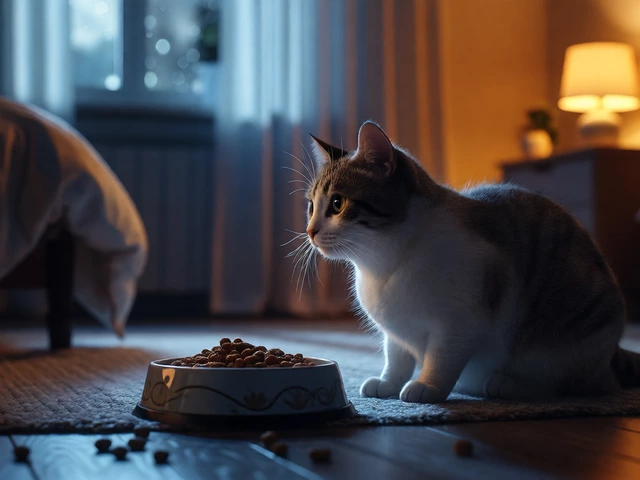
Most cat owners wonder: how many times a day should a cat eat? It’s not as simple as feeding them once in the morning and calling it done. Cats aren’t dogs. They don’t gulp down a big meal and nap for hours. Their bodies are built for small, frequent meals - and getting this wrong can lead to weight gain, digestive issues, or even diabetes.
Adult Cats: Two Meals a Day Is the Sweet Spot
For healthy adult cats (1 to 7 years old), two meals a day works best. Most vets and feline nutritionists agree on this. Feed them once in the morning and once in the evening. This matches their natural hunting rhythm - they’re most active at dawn and dusk. In the wild, cats catch several small prey throughout the day. Two meals mimic that pattern without overloading their system.
Each meal should be about 1/4 to 1/3 cup of dry food, or 5.5 to 6 ounces of wet food, depending on the brand and your cat’s weight. Always check the feeding guide on the bag or can, then adjust based on your cat’s body condition. If you can easily feel their ribs but not see them, they’re at a good weight. If their belly hangs low or you can’t feel their spine, they’re overweight.
Kittens Need More Frequent Meals - Up to Four Times a Day
Kittens under six months old have tiny stomachs and high energy needs. They burn through calories fast. Feeding them just twice a day won’t cut it. Aim for three to four small meals daily until they’re about six months old. After that, you can slowly reduce to three meals, then two by the time they turn one.
For example, a 3-month-old kitten might need 1/4 cup of kitten-specific food divided into four meals. Use a scale if you’re unsure. A 2-pound kitten needs about 120 calories a day. Most kitten foods list calories per cup, so do the math. Don’t guess. Underfeeding a kitten slows growth; overfeeding leads to obesity later.
Senior Cats: Watch for Changes in Appetite
Cats over seven years old may start eating less or more depending on their health. Some develop dental problems, kidney disease, or hyperthyroidism - all of which change their appetite. If your senior cat suddenly skips meals or eats like a starving animal, it’s not normal. Take them to the vet.
For healthy seniors, stick with two meals a day. But if they seem hungrier or pickier, offer smaller portions more often. Some older cats prefer wet food because it’s easier to chew and helps with hydration. A 12-year-old cat with mild kidney issues might do better with three small meals of canned food than two large ones of dry.
Free Feeding? It’s Risky for Most Cats
You’ve probably seen people leave a bowl of dry food out all day. It’s called free feeding. It seems convenient - but it’s a recipe for obesity in most cats. Studies show that cats fed free-choice gain weight 2.5 times faster than those on scheduled meals. Why? Cats don’t know when to stop. They eat because food is there, not because they’re hungry.
There’s one exception: multi-cat households where one cat is a grazer and another is a food thief. In those cases, free feeding can cause stress and bullying. Better to use puzzle feeders or timed feeders to control portions and reduce competition.
Wet vs. Dry Food: How It Changes Your Schedule
Wet food spoils fast. If you leave it out for more than four hours, it’s not safe. That’s why wet food is best served in scheduled meals. Dry food can sit out longer, but that doesn’t mean it should.
If you feed wet food, you’re already locked into a feeding schedule - which is actually good. Wet food has 70-80% water. Cats on dry food only get about 10% of their water from food. That’s why many vets recommend feeding mostly wet food, especially for cats with urinary or kidney issues. If you’re feeding wet food twice a day, you’re helping your cat stay hydrated without even trying.
Signs You’re Feeding Too Much or Too Little
Watch your cat’s body and behavior. Here’s what to look for:
- Too much: Round belly, difficulty grooming, lethargy, litter box issues, breathing heavily after light activity.
- Too little: Visible ribs or spine, dull coat, constant meowing near food, weight loss over weeks, increased vocalization at night.
Don’t rely on how much they beg. Cats are experts at manipulating humans. If they meow at 5 a.m., it’s not because they’re starving - it’s because they’ve trained you to respond. Ignore the begging. Stick to your schedule.
Special Cases: Pregnant, Nursing, or Sick Cats
Pregnant or nursing cats need way more food - up to two to three times their normal intake. Their bodies are working overtime. Switch to kitten food during pregnancy and nursing - it’s higher in calories and nutrients. Feed them three to four times a day, or leave high-quality dry food out for them to graze on.
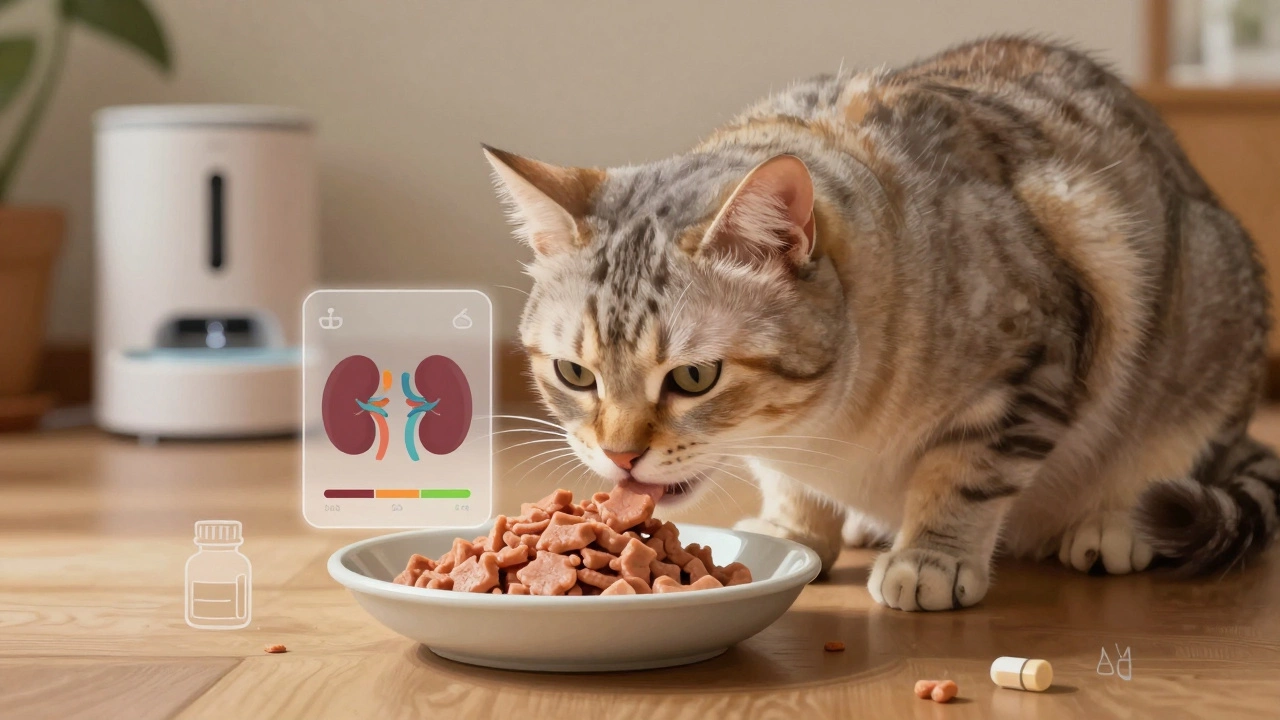
If your cat is sick, appetite changes are common. Some cats lose interest; others eat nonstop. Don’t force food. Don’t switch brands abruptly. Talk to your vet. They might recommend a prescription diet or appetite stimulant. In some cases, hand-feeding small amounts every few hours helps.
Tools That Make Feeding Easier
You don’t need fancy gear, but a few things help:
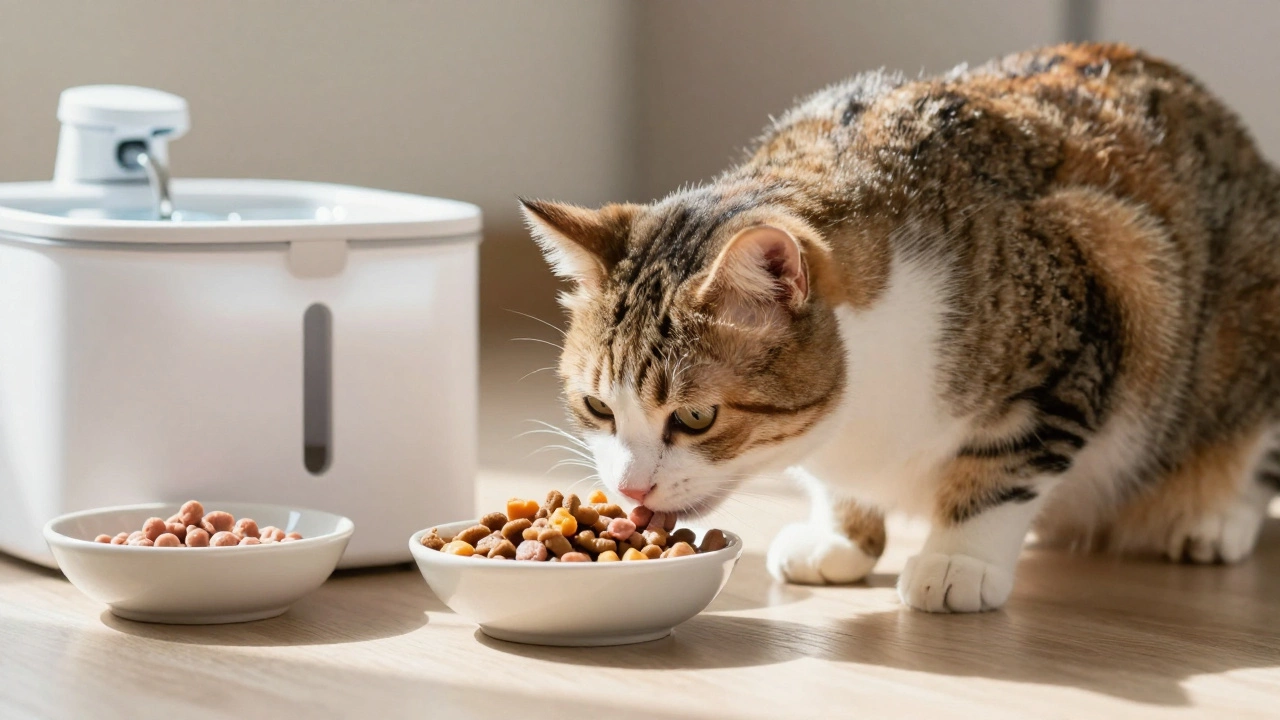
- Automatic feeder: Set it to dispense food at 7 a.m. and 7 p.m. Perfect for busy owners.
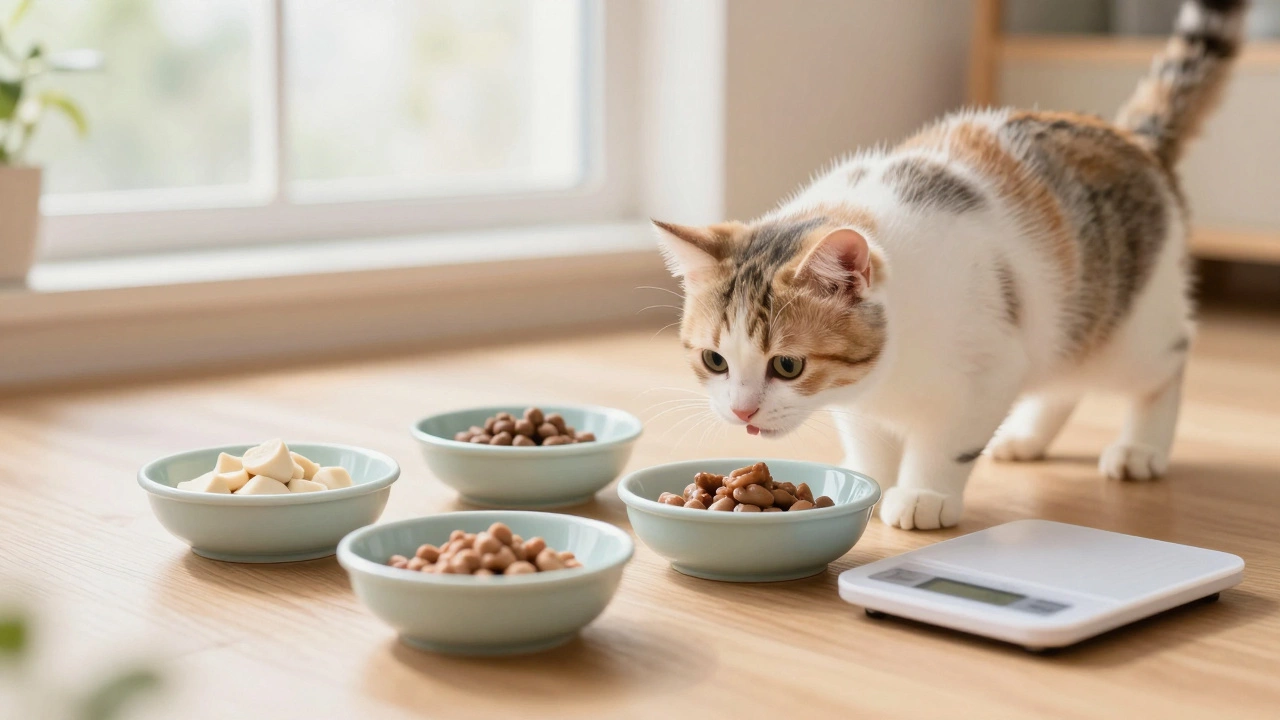
- Food scale: Weigh portions. A tablespoon of dry food weighs about 8 grams. Don’t eyeball it.
- Puzzle feeder: Slows down fast eaters and makes mealtime mentally stimulating.
- Water fountain: Encourages hydration, especially if you feed dry food.
Most cats do better with routine. Feed at the same times every day. Even on weekends. Cats notice when things change. If you’re inconsistent, they’ll get anxious - and start demanding food at odd hours.
What About Treats?
Treats should be no more than 10% of your cat’s daily calories. That’s about one or two small treats a day. If you’re giving treats for training, cut back on their main meals. Otherwise, you’re adding extra calories without realizing it.
Avoid human food. Cheese, tuna, chicken - even if it’s healthy for us - isn’t balanced for cats. Too much tuna causes mercury buildup. Too much chicken leads to nutrient deficiencies. Stick to cat-specific treats.
Can I feed my cat only dry food?
Yes, but it’s not ideal. Dry food is convenient and cheaper, but it lacks moisture. Cats don’t drink enough water naturally, so they’re at higher risk for urinary tract issues and kidney disease. If you feed dry food, make sure your cat has access to fresh water at all times - ideally from a fountain. Consider mixing in wet food a few times a week.
My cat begs for food all the time. Should I give in?
No. Begging is usually a learned behavior, not hunger. Cats are excellent at manipulating humans. If you give in once, they’ll keep doing it. Stick to your feeding schedule. If your cat seems genuinely underweight or unwell, consult a vet - but don’t reward begging with food.
How do I know if my cat is overweight?
Look from above - your cat should have a visible waistline behind the ribs. Feel their sides - you should be able to feel ribs without pressing hard. If their belly hangs down or you can’t feel their spine, they’re carrying extra weight. A vet can give you a body condition score - most use a 1 to 9 scale, where 5 is ideal.
Is it okay to feed my cat once a day?
Some adult cats can handle one meal a day, especially if they’re lean and active. But most do better with two. One meal increases the risk of overeating, vomiting, and digestive upset. It also makes it harder to notice if your cat stops eating - a red flag for illness. Two meals are safer and more natural.
Should I feed my cat at the same time every day?
Yes. Cats thrive on routine. Feeding at the same time every day reduces stress and helps regulate digestion. It also makes it easier to spot changes in appetite, which can be early signs of illness. Even if you’re away on weekends, try to keep the schedule consistent.
If you’re still unsure, start with two meals a day using measured portions. Watch your cat’s weight and energy. Adjust slowly. Your cat’s health isn’t about the perfect schedule - it’s about consistency, balance, and paying attention.