Puppy Crate Time Calculator
Calculate Your Puppy's Safe Crate Time
Based on the latest veterinary recommendations for healthy puppy development
Crates aren’t cages. They’re safe spaces - like a den where your puppy feels secure. But how long is too long? If you’ve ever watched your puppy whine in the crate and wondered if you’re being cruel, you’re not alone. The answer isn’t a single number. It depends on age, temperament, and routine. But here’s the truth: crating too long can harm your puppy’s development, while too little can lead to chaos. Let’s break it down with real-world advice, not just theory.
Age Matters More Than You Think
Your puppy’s bladder and bowel control are still developing. A general rule? One hour per month of age, plus one. So a 3-month-old pup can hold it about 4 hours. That doesn’t mean you should leave them in there for that long every day. It’s the maximum, not the target.
- 8-10 weeks old: 30-60 minutes max
- 11-14 weeks old: 1-2 hours max
- 15-18 weeks old: 2-3 hours max
- 19-26 weeks old: 3-4 hours max
- 6 months and older: 4-5 hours max (rarely longer)
These are windows for single sessions. No puppy should be crated for 8+ hours straight unless they’re sleeping through the night. Even then, 10 hours is pushing it. If you work a 9-to-5 job, you can’t just drop them in a crate at 7 a.m. and pick them up at 6 p.m. That’s 11 hours. Too much.
What Happens When You Crate Too Long?
Crating isn’t punishment - but overuse turns it into one. Puppies need movement, stimulation, and social interaction. Too much time alone in a crate can lead to:
- Accidents in the crate - which breaks trust and makes training harder
- Anxiety or fear of the crate - your puppy starts panting, pacing, or howling
- Behavioral issues like chewing, barking, or digging when let out
- Physical strain on growing joints and muscles
A 2023 study from the University of Auckland’s Animal Behavior Lab found that puppies crated more than 5 hours daily at 12 weeks old were 3.5 times more likely to develop separation anxiety by 8 months. That’s not a small risk. It’s a red flag.
Daytime Crating: The Smart Way
You don’t need to leave your puppy in a crate all day. Instead, split it up. Here’s a realistic daily schedule for a 12-week-old puppy:
- 6:30 a.m. - Wake up, potty break, then 1 hour in crate while you get ready
- 7:30 a.m. - Play, potty, snack, walk
- 8:30 a.m. - 2 hours in crate while you’re out (if you have a pet sitter or dog walker)
- 10:30 a.m. - Out again for potty, play, nap
- 12:30 p.m. - 2 hours in crate (if no one’s home)
- 2:30 p.m. - Out for walk, training, cuddles
- 4:30 p.m. - 1 hour in crate (if needed)
- 5:30 p.m. - Dinner, play, potty
- 7:00 p.m. - Nighttime crate (8-10 hours is fine for sleep)
That’s 5 hours total crated during the day - split into three sessions. Far better than one 8-hour block. And if you have someone come in at lunchtime? Even better. A quick potty break and 10 minutes of play resets their whole day.
Nighttime Crating: It’s Different
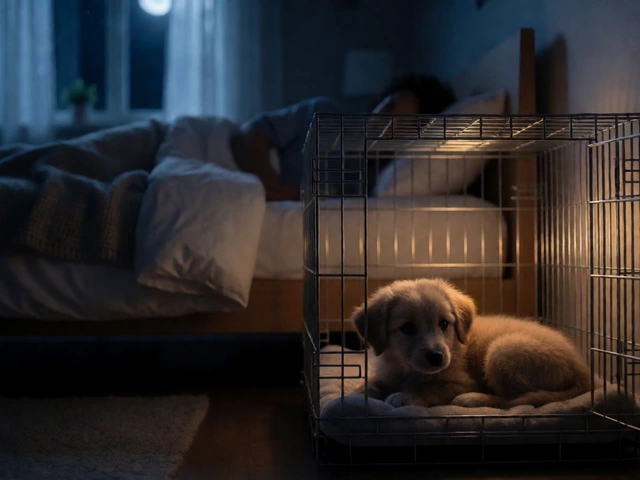
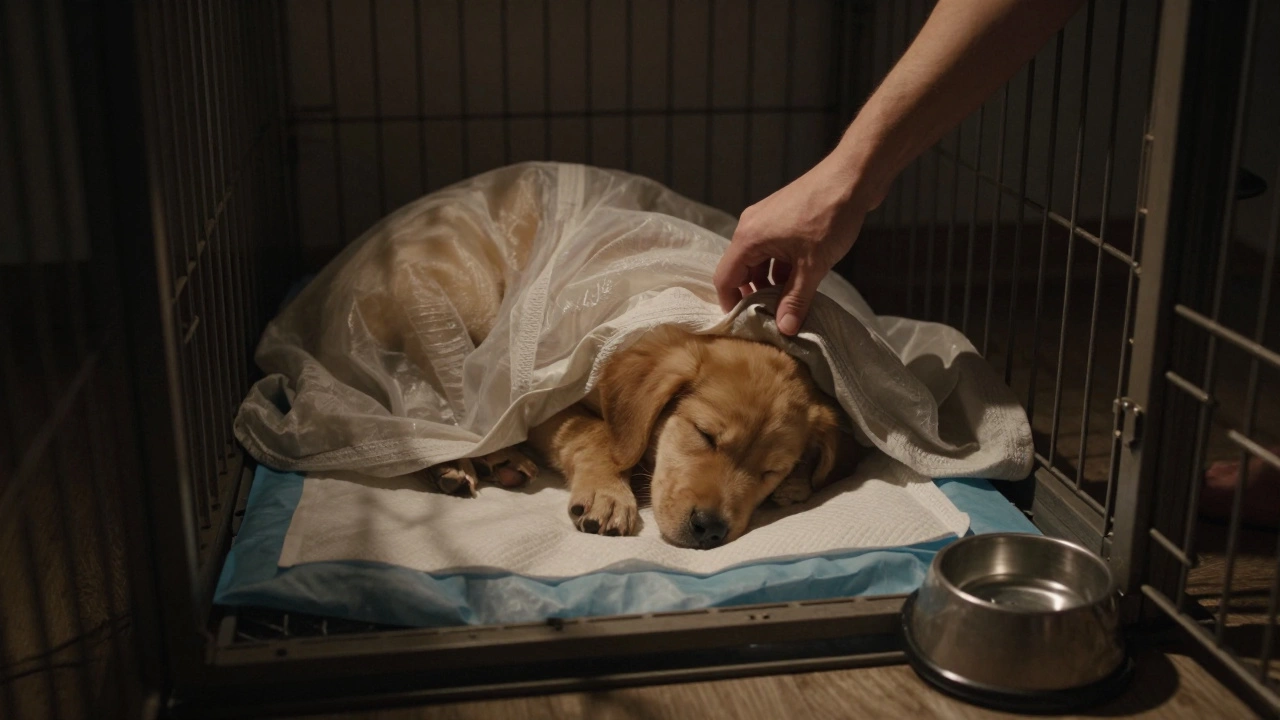
At night, crating is usually fine for longer stretches. Puppies sleep 18-20 hours a day. If they’re tired, they’ll rest. But make sure:
- The crate is cozy - not too big, not too small
- They’ve had a potty break right before bed
- No food or water 1-2 hours before bedtime
- You don’t respond to whining - unless it’s urgent (they’re sick or scared)
Most puppies sleep through the night by 4-5 months. But if your 6-month-old is still waking up to pee, they’re probably not ready for 10 hours. Adjust the schedule. Maybe move bedtime earlier. Or let them sleep in your room, just outside the door.
What About Crates as Punishment?
Never use the crate to stop barking, chewing, or misbehavior. That turns it into a prison. Your puppy should see the crate as their safe spot - like a cozy bedroom. If they bark, redirect them. If they chew shoes, give them a toy. Crates aren’t for discipline. They’re for safety and routine.
Signs You’re Crating Too Much
Watch for these red flags:
- They urinate or defecate in the crate - even if they were trained before
- They tremble, whine, or pace when you put them in
- They refuse to go in, even with treats
- They seem exhausted or lethargic after being let out
- They develop obsessive behaviors - like licking paws or spinning in circles
If you see any of these, cut crate time immediately. Talk to a vet or certified trainer. This isn’t stubbornness - it’s stress.
Alternatives to All-Day Crating
You don’t need to crate your puppy all day. Try these instead:
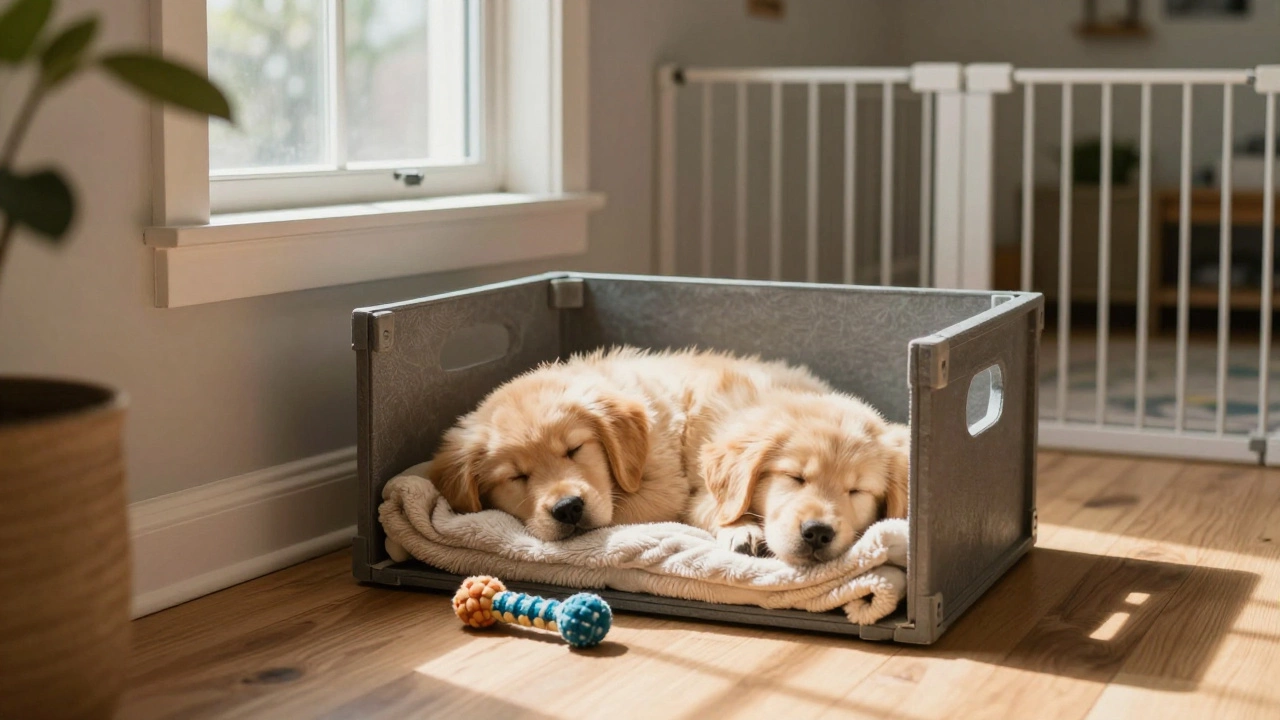
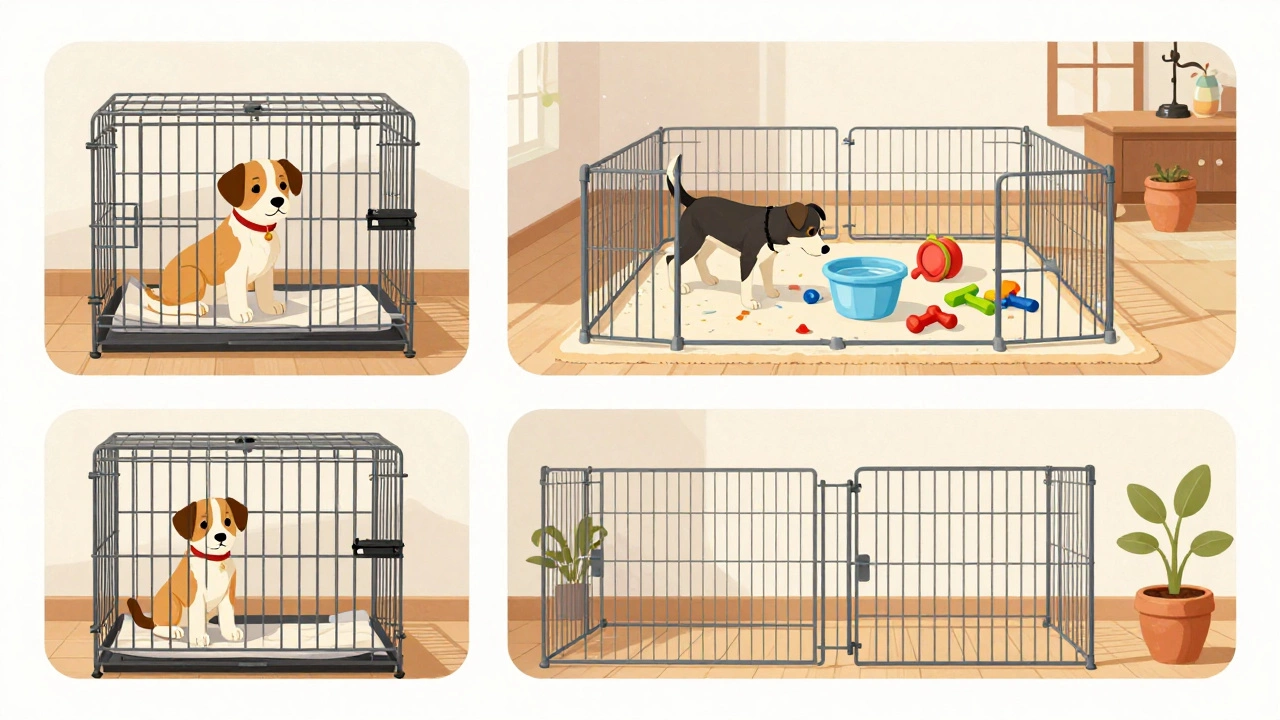
- Exercise pen - A large, safe space with a potty pad, toys, and water
- Baby gates - Block off one room (kitchen or laundry) where they can move, rest, and stay safe
- Pet sitter or dog walker - Even a 15-minute break midday makes a huge difference
- Daycare - Great for social pups who need playtime
Some owners use a combination: crate for naps, pen for awake time. That’s ideal. It gives structure without isolation.
Final Rule: Less Is More
There’s no magic number. But here’s the bottom line: if your puppy spends more than 5 hours a day in a crate, you’re probably overdoing it. Puppies aren’t robots. They need to explore, sniff, play, and bond. Crates help - but only when used wisely.
Think of it like this: Would you lock a toddler in a room for 8 hours while you worked? You’d never do it. Puppies are the same. They just can’t talk. Give them space, not silence. Give them routine, not isolation.
Can I leave my puppy in a crate overnight?
Yes, but only if they’re old enough and have had a potty break right before bed. Puppies under 4 months may need to go out once during the night. By 6 months, most can sleep 8-10 hours without accidents. Always make sure the crate is comfortable and not too big - they shouldn’t have room to use one end as a bathroom.
What size crate should I get for my puppy?
Get a crate just big enough for your puppy to stand, turn, and lie down. If you’re buying for a growing pup, choose one with a divider panel. That lets you adjust the space as they grow. A crate that’s too big encourages accidents. A crate that’s too small causes stress. Measure your puppy’s length from nose to tail and add 2-4 inches.
Should I cover the crate at night?
A light blanket over part of the crate can create a den-like feel, which many puppies find calming. But never fully cover it - you need airflow. If your puppy starts panting or seems overheated, remove the cover. Some pups prefer total darkness; others get anxious. Watch their reaction and adjust.
My puppy cries in the crate. Should I let them out?
If it’s whining or light barking, wait it out. They’re testing boundaries. But if it’s screaming, howling, or frantic scratching, check on them. They might be scared, too hot, need to potty, or sick. Never ignore distress. Learn the difference between attention-seeking noise and real panic. If it happens often, consider retraining or consulting a behaviorist.
Is it okay to crate my puppy while I’m home?
Yes - but only for short periods. If you’re cooking, on a call, or in the shower, 15-30 minutes is fine. Don’t use the crate as a babysitter while you’re awake. Puppies need interaction. Use it for naps or quiet time, not as a way to avoid responsibility. Let them be near you when you’re home - even if it’s just on a bed or in a pen nearby.
If you’re unsure about your puppy’s crate schedule, start small. Track how much time they spend in the crate each day for a week. If it’s over 5 hours, adjust. Every pup is different - but none of them need to be alone for hours on end. They’re still learning. You’re their guide. Make it safe. Make it kind.