Dog Travel Eligibility Checker
Check Your Dog's Travel Eligibility
Answer these questions to determine if your dog can travel in-cabin or must go in cargo, along with safety recommendations.
Travel Recommendation
Key Requirements
Safety Tips
When you’re flying with your dog, the biggest question isn’t always about the carrier or the paperwork-it’s how are dogs loaded on planes? You’ve seen the videos of pets being wheeled into the belly of a jet, and maybe you’ve wondered: Is my dog safe? Are they scared? What happens between check-in and landing?
The truth is, loading dogs onto planes isn’t random. It’s a carefully managed process designed to keep animals as safe and calm as possible. But if you don’t know the steps, it’s easy to feel anxious-or worse, make a mistake that delays your trip or puts your dog at risk.
Where Do Dogs Go on a Plane?
Dogs don’t sit in the cabin with you unless they’re service animals or small enough to fit under the seat. Most dogs travel in the cargo hold, which is a pressurized, temperature-controlled area beneath the passenger cabin. It’s not a dusty, noisy basement like some people imagine. Modern cargo holds are climate-regulated, ventilated, and monitored during flight. The temperature stays between 18°C and 24°C, even when it’s freezing outside. Airlines like Qantas, Delta, and Air New Zealand track the hold’s conditions in real time.
Large dogs, like German Shepherds or Labradors, always go in cargo. Small dogs that fit in an FAA-approved carrier under the seat can travel in-cabin, but only if you book ahead. Most airlines limit the number of in-cabin pets per flight-sometimes just two or three. If you miss that window, your dog goes in cargo.
What Happens at the Airport?
Here’s the step-by-step flow from the moment you arrive at the airport until your dog is on the plane.
- You check in your dog at the airline’s pet counter, not the regular check-in line. Bring your health certificate, vaccination records, and the carrier’s documentation.
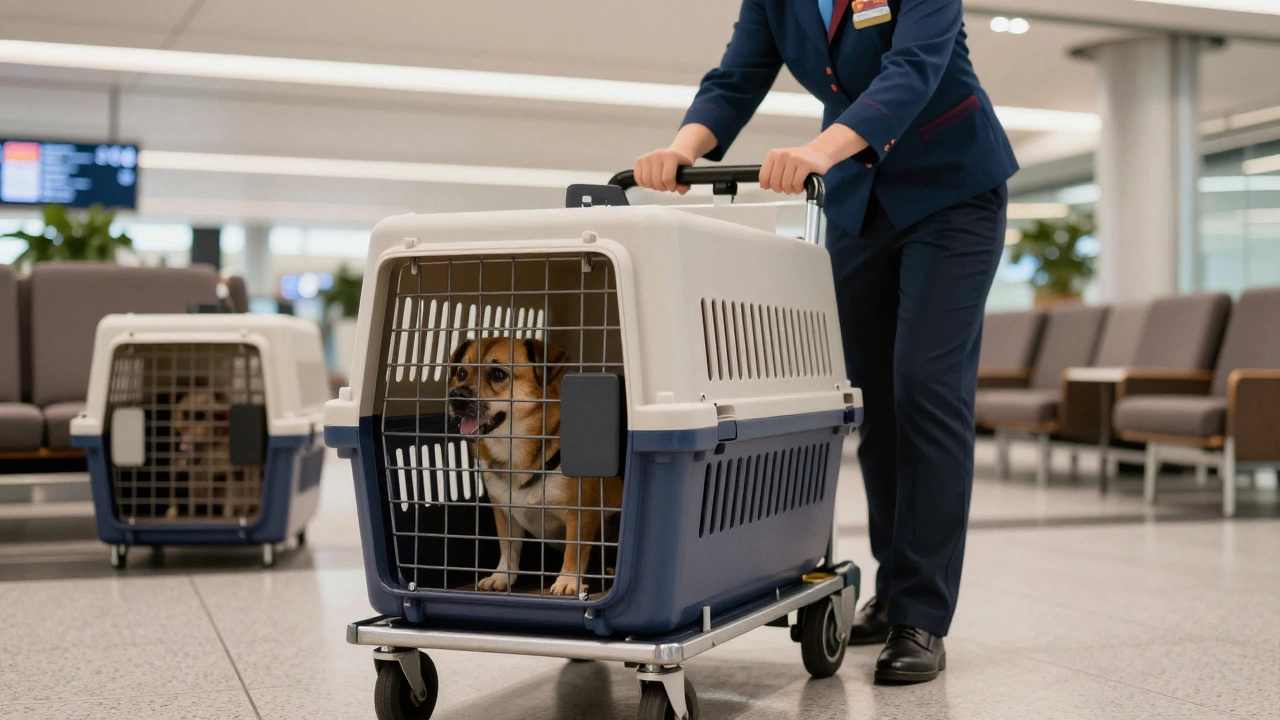
- Staff inspect the carrier. It must be IATA-compliant: sturdy, well-ventilated, leak-proof, and big enough for your dog to stand, turn, and lie down. No soft-sided carriers for cargo.
- Your dog gets a tag with your flight number, destination, and your contact info. A second tag goes on the carrier itself.
- They weigh the dog and carrier together. Weight matters-some airlines charge extra if it’s over 20 kg.
- You sign a declaration that your dog is healthy, not pregnant, and hasn’t been fed in the last 4-6 hours (to avoid motion sickness).
- Then, the carrier is wheeled to the cargo terminal. Your dog is not left unattended.
At major airports like Auckland International, there’s a dedicated Pet Lounge where dogs wait in a quiet, climate-controlled room until loading. Staff check on them every 30 minutes. Water bowls are filled, and dogs are never left near loud machinery or other stressed animals.
How Are Dogs Actually Loaded Onto the Plane?
Once your dog’s carrier is cleared, it’s loaded onto a pallet with other pet crates. These pallets are stacked like luggage and moved by forklift into the cargo hold. The loading happens after all passenger bags are secured, so your dog isn’t waiting around while the plane fills up.
Crates are placed in the front section of the hold-closer to the cockpit. Why? Because it’s the most stable part of the plane. Less vibration, less noise. Airlines avoid placing pet crates next to baggage that might shift or near fuel lines.
On wide-body jets like the Boeing 787 or Airbus A330, the cargo hold has a separate door near the front. Crews use a special lift to slide the pallets in. No tossing. No dragging. Every crate is handled with care.
Once inside, the doors are sealed. Sensors monitor temperature, oxygen levels, and pressure. If something goes wrong, the flight crew gets an alert. It’s not just a box in the hold-it’s a monitored system.

What About Layovers?
If you’re flying with a connection, your dog might need to be unloaded and reloaded. This is the riskiest part. Not all airports have pet-friendly layover facilities. In Auckland, dogs on international flights with connections are kept in the Pet Lounge for up to 4 hours. Staff walk them on a leash if needed and offer water.
But at smaller airports? It’s hit or miss. Some places just leave crates on the tarmac while they switch planes. That’s why you should avoid long layovers in extreme weather. If your flight stops in Chicago in January or Dubai in July, ask the airline: “Will my dog be kept indoors during the layover?” If they hesitate, consider changing your route.
What Happens When the Plane Lands?
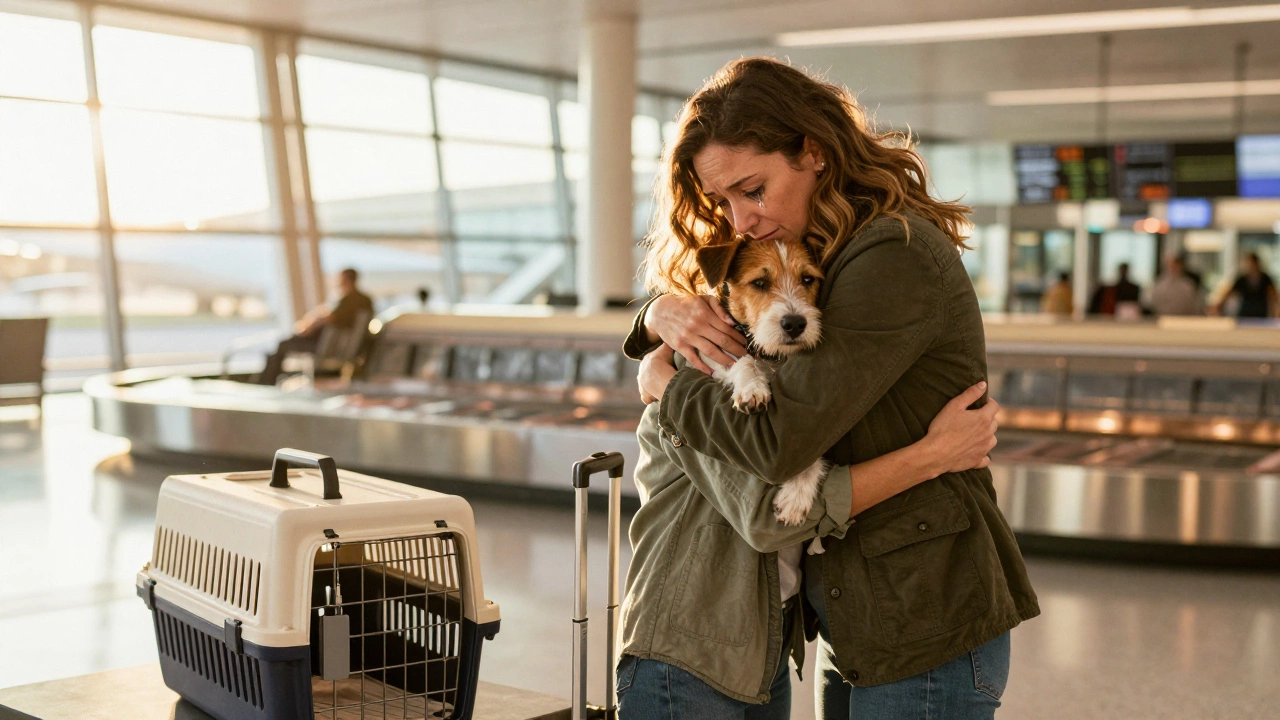
After landing, the cargo hold is opened, and pet crates are the first items unloaded. Why? Because airlines know how stressful this is for animals. They’re moved to the front of the baggage carousel area, often right next to the arrival gate.
At Auckland Airport, pet owners can wait in a designated pickup zone. Staff call your name when your dog’s crate arrives. You’ll need to show your ID and flight details. Then, you sign a release form and walk out with your dog-no waiting in line for luggage.
Some airlines even offer a “pet delivery” service for an extra fee. They’ll bring your dog to the terminal door if you’re arriving late or have mobility issues. It’s not free, but it’s worth it if you’re tired or stressed.
What Can Go Wrong?
Most dogs fly without issue. But mistakes happen. Here are the most common problems-and how to avoid them.
- Carrier too small: Airlines will refuse to load it. Measure your dog’s height and length before buying. Add 2 inches for safety.
- Too much food or water: Dogs can vomit during turbulence. Don’t feed them 4-6 hours before check-in. Offer water until 2 hours before.
- Last-minute bookings: Pet space fills up fast. Book your dog’s spot at the same time you book your ticket.
- Extreme weather: Many airlines ban pet travel if the temperature is below 4°C or above 29°C at any point in the journey. Check the forecast for every stop.
- Missing paperwork: New Zealand requires a health certificate signed by a vet within 10 days of travel. Other countries have different rules. Always double-check the destination’s pet entry laws.
What Do Airlines Do to Keep Dogs Safe?
Airlines don’t just wing it. They follow strict global standards set by IATA (International Air Transport Association). Every pet carrier must meet IATA Live Animal Regulations. Staff get special training. In New Zealand, Air New Zealand requires all pet handlers to complete a 12-hour animal handling course.
Some airlines even use GPS trackers on high-value pet crates. You can get updates on your dog’s location via text. United Airlines offers this for $75 per flight. It’s not necessary for most dogs, but if you’re flying a rare breed or a senior dog, it’s a good backup.
There’s also a quiet rule: no sedatives. Vets and airlines strongly discourage calming meds. They can interfere with breathing at high altitudes. Instead, use pheromone sprays (like Adaptil) or a familiar blanket with your scent. Dogs recognize smells. That’s often enough to calm them.
Real Story: A Dog’s First Flight
A friend from Wellington flew her 8-year-old rescue terrier, Mabel, to Sydney last year. She was terrified. Mabel had anxiety and hated car rides. But she followed every step: bought the right carrier, skipped dinner the night before, sprayed the blanket with Adaptil, and booked a morning flight when the cargo hold was coolest.
Mabel didn’t bark once. When they met at the gate, she licked her face and curled up on her lap. No shaking. No panting. Just tired and happy.
That’s what happens when you treat pet travel like a planned trip-not a last-minute emergency.
Final Tips Before You Fly
- Book your dog’s flight at the same time as yours. Pet spots are limited.
- Use IATA-approved carriers. Don’t guess-buy one with a label that says “IATA compliant.”
- Label the carrier with your name, phone, and destination on all sides.
- Do a test run: put your dog in the carrier at home for 2 hours. Reward them with treats.
- Never fly with a puppy under 8 weeks, a senior dog with health issues, or a brachycephalic breed (like Bulldogs or Pugs) in hot weather.
- Call the airline 48 hours before departure to confirm your dog’s booking.
Flying with your dog isn’t magic. It’s preparation. And if you do it right, your dog won’t just survive the flight-they’ll walk off the plane like they’ve been doing it their whole life.
Can I bring my dog in the cabin with me?
Only if your dog is small enough to fit in an approved carrier under the seat in front of you. Most airlines allow only one or two in-cabin pets per flight, and you must book this when you buy your ticket. Service dogs are allowed regardless of size, but they need documentation.
Are dogs sedated before flying?
No. Airlines and veterinarians strongly advise against sedating dogs before flying. Sedatives can interfere with breathing at high altitudes and increase the risk of heatstroke or respiratory distress. Instead, use calming aids like pheromone sprays or familiar blankets.
What if my dog barks during loading?
It’s normal. Most dogs get nervous in new environments. Staff are trained to handle this. They’ll move your dog to a quieter area if needed. Avoid yelling or punishing your dog-this makes anxiety worse. Calm, reassuring tones help more than anything.
How long before the flight should I arrive with my dog?
Arrive at least 3 hours before departure for international flights, and 2 hours for domestic. Pet check-in takes longer than regular check-in. You’ll need time for paperwork, carrier inspection, and waiting in the Pet Lounge.
Can I track my dog during the flight?
Some airlines, like United and Delta, offer optional GPS tracking for pet crates for an extra fee. You’ll get text updates on location and temperature. It’s not required, but it gives peace of mind, especially on long or multi-leg trips.